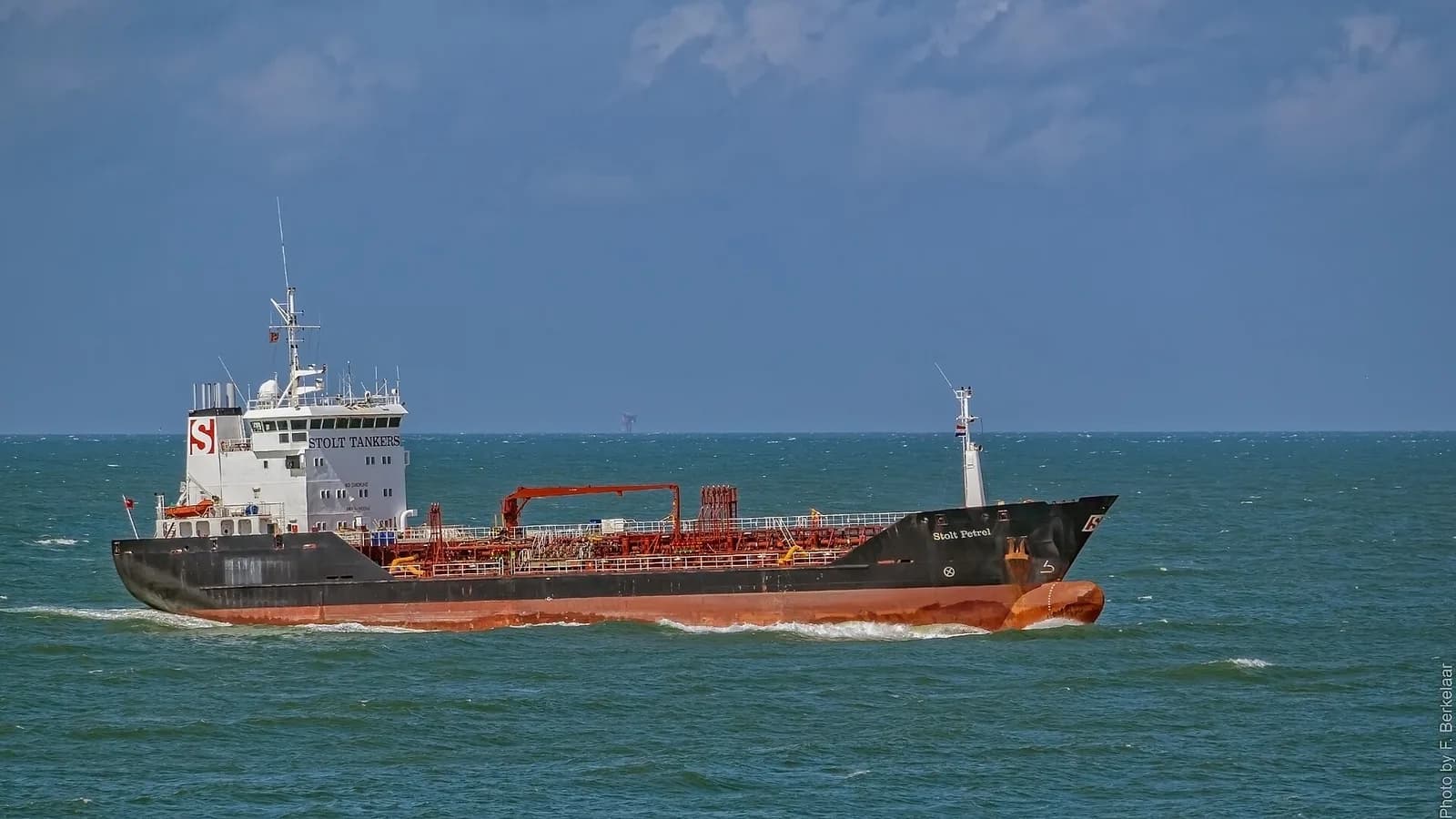
When a tanker reroutes around trouble in the Strait of Hormuz, the industry counts the added sea miles and the war-risk premium. It rarely counts the money moving underneath the voyage. Yet the moment a route changes, so does the payment corridor: the chain of port agents, bunker suppliers and service providers that has to be paid, in their currencies and their jurisdictions, often at a few days' notice.
The currency risk hiding inside a dollar invoice
"When the vessel route changes, so does the payment corridor," says David Lord, Director of Maritime Services at Ebury. The exposure is easy to miss because most maritime invoices are cut in dollars. "The assumption is that currency risk is limited, but the underlying costs very rarely are," Lord says. A disbursement billed in dollars still rests on local wages, tugs, pilotage and fuel priced in dirhams, rupees or rand, and a sudden call at an unplanned port strips out whatever local-currency terms an operator had negotiated with its usual agents.
The figure Lord puts on it is not trivial. "A rerouting scenario that looks like a $200,000 additional cost on paper could easily be $220,000 or more once you account for the FX effect on underlying local costs." Across a fleet running many voyages through a disrupted chokepoint, that slippage compounds into real money.
Contingency is financial, not just operational
Oman's proposal to manage the strait through voluntary transit fees may eventually take some heat out of the crossing, but its fate is uncertain and the disruption is here now. The lesson for operators is that a rerouting plan that stops at the chart is only half a plan. Payment infrastructure that can switch currencies and counterparties as fast as a vessel switches ports is becoming part of how a shipping company manages risk, not an afterthought to it.
Cover image: T3n60, CC BY-SA 3.0, via Wikimedia Commons.

As Editor in Chief of The Maritime, I lead content development, interviews, and digital storytelling across our multimedia maritime platform. With over 10 years of experience in the maritime industry, I create and publish in-depth stories and video features that highlight key players, emerging trends, and operational realities across global shipping. Before launching The Maritime, I worked as a Vessel Operator at Imza Marine A.S., gaining hands-on commercial shipping and voyage operations experience. I also served as Marketing Communications Specialist at Gimas Ship Supply & Services, where I managed corporate communication, digital strategy, and industry outreach for shipowners and maritime clients. I hold a Master’s degree in Maritime Transportation Management from Istanbul Technical University and a Master’s degree in Publishing from Marmara University. My work is driven by the belief that the maritime world deserves strong, informed, and accessible media representation. I am committed to sharing the stories of maritime professionals and contributing to the sector’s visibility, knowledge exchange, and future development.