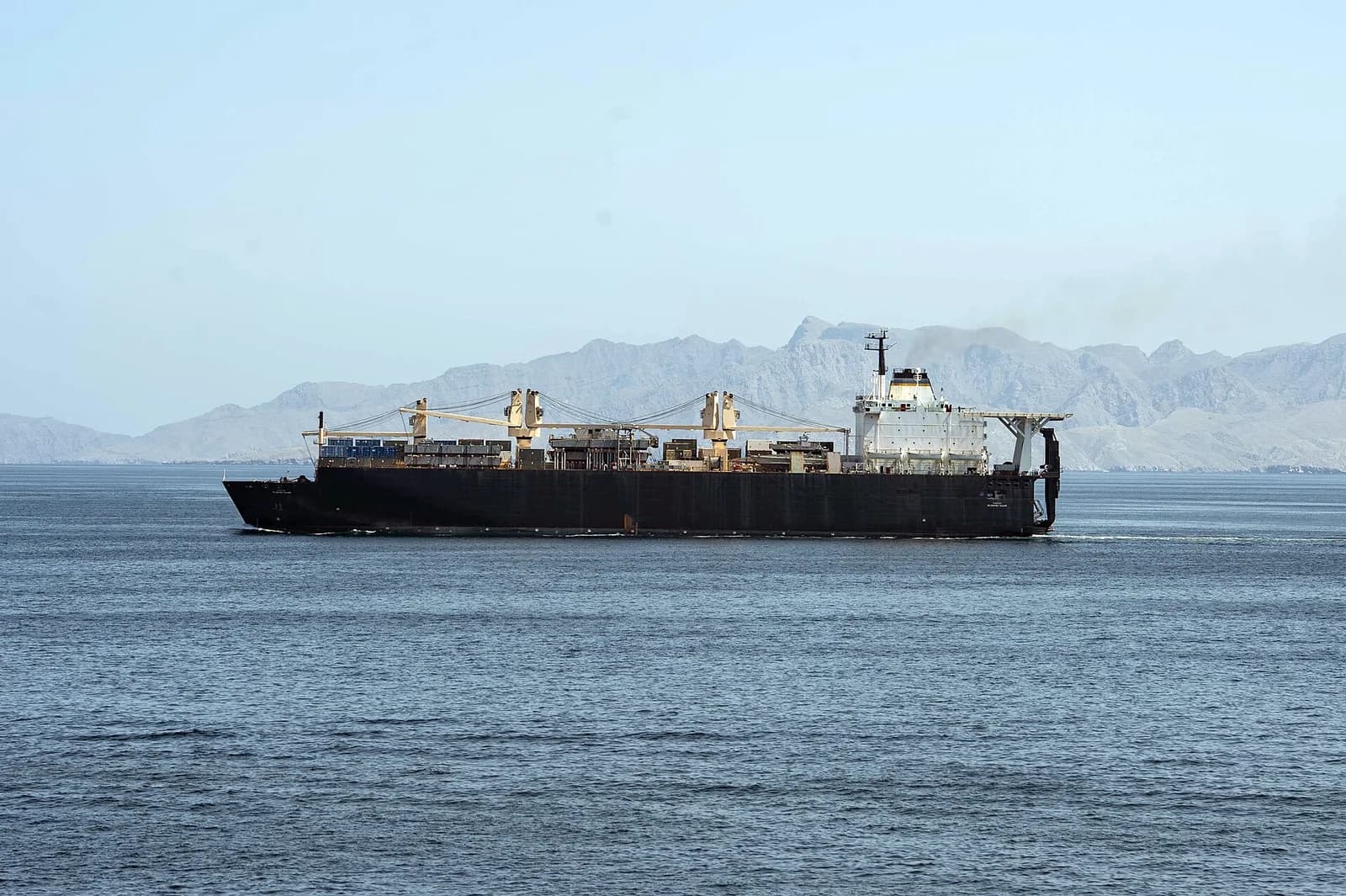
Iran is moving to turn the Strait of Hormuz from a waterway into a screening desk. A draft bill under consideration in Tehran would make passage conditional on a vessel's politics rather than its cargo, barring ships it links to the United States, Israel, and other states it deems hostile from the strait and the wider Persian Gulf. The headline is the ban. The weapon is the word "linked."
A bill that reaches past the flag
The proposals go well beyond a flag prohibition. They would block military and civilian cargoes tied to Israel, and could bar countries or individuals accused of damaging Iran from transiting at all until compensation has been paid. Violations would carry fines of up to twenty percent of the value of a vessel's cargo. That is not a nuisance penalty. On a laden tanker or a full box ship it is a number large enough to reprice the voyage on its own.
Why the flags are the least of it
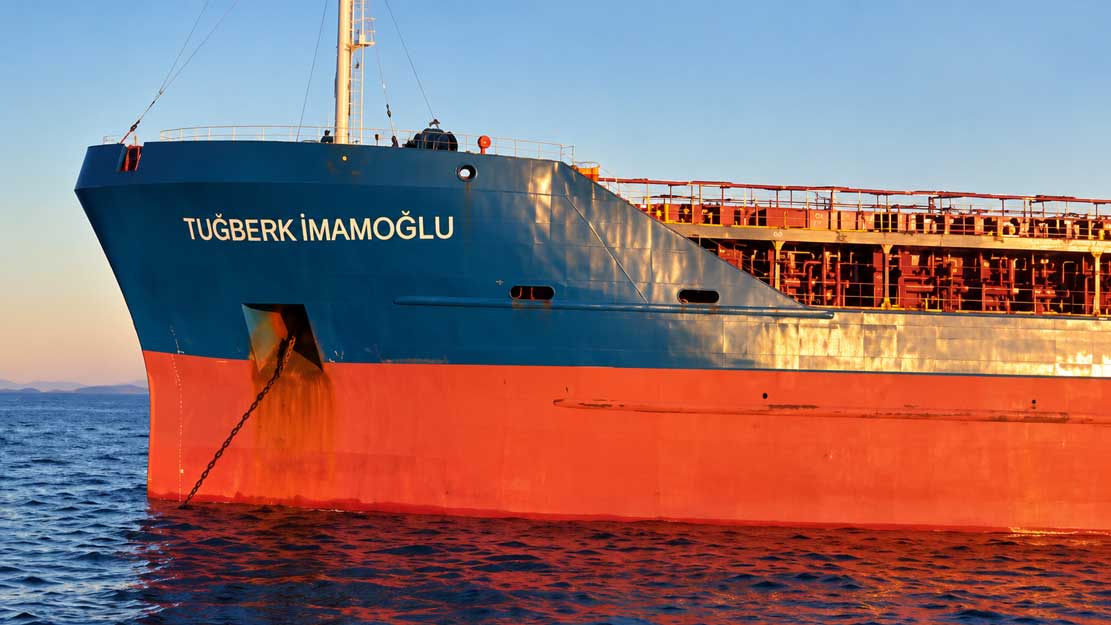
Taken literally, a ban on American and Israeli vessels lands on almost nothing, because very few ships fly either flag. If that were the whole measure, it would be theatre. The commercial substance sits in how Tehran chooses to define an American- or Israeli-linked ship, and modern shipping makes that definition almost infinitely elastic. Ownership, financing, and management are routinely spread across separate jurisdictions: a hull can be registered under one flag, managed from a second country, financed through a third, and chartered to a trader in a fourth. Under a "linked vessel" test, exposure detaches from the flag entirely. A ship that flies no hostile ensign at all can still be deemed linked through its charterer, its lender, or its beneficial owner.
That is what turns a symbolic ban into an operational risk. The question stops being "what flag do I fly" and becomes "can any party in my ownership, finance, or charter chain be construed as hostile," a question no master can answer from the bridge and no owner can fully close out in advance.
The chokepoint as a bargaining instrument
A discretionary penalty scaled to cargo value is a tool built for leverage, not for maritime safety. It lets a transit be converted into a negotiation whenever Tehran wishes to press a grievance or extract compensation, and it does so at the one point on the map where the global oil and gas trade has no easy detour. That fits the wider pattern: Iran has insisted that any full reopening of the strait must come alongside the lifting of the US maritime blockade, and has tied broader maritime normalisation to sanctions relief. The waterway is being held as collateral in the larger bargain, and this bill is one more claim staked on it.
What it means for the desk
For owners, charterers, and brokers the takeaway is that the risk to price is shifting from the flag to the paper trail. Until "linked" is given a workable definition and the standoff between blockade and reopening is resolved, due diligence on beneficial ownership, charterer identity, and cargo origin becomes part of the cost of a Hormuz voyage, not an afterthought to it. War-risk cover, too, has to reckon with more than a missile: it now has to price a discretionary penalty regime that can attach a twenty-percent claim to a cargo on a finding no owner controls. In that environment the safest assumption is that transparency of the ownership chain, not the colour of the ensign, is what keeps a ship trading through Hormuz.

As Editor in Chief of The Maritime, I lead content development, interviews, and digital storytelling across our multimedia maritime platform. With over 10 years of experience in the maritime industry, I create and publish in-depth stories and video features that highlight key players, emerging trends, and operational realities across global shipping. Before launching The Maritime, I worked as a Vessel Operator at Imza Marine A.S., gaining hands-on commercial shipping and voyage operations experience. I also served as Marketing Communications Specialist at Gimas Ship Supply & Services, where I managed corporate communication, digital strategy, and industry outreach for shipowners and maritime clients. I hold a Master’s degree in Maritime Transportation Management from Istanbul Technical University and a Master’s degree in Publishing from Marmara University. My work is driven by the belief that the maritime world deserves strong, informed, and accessible media representation. I am committed to sharing the stories of maritime professionals and contributing to the sector’s visibility, knowledge exchange, and future development.