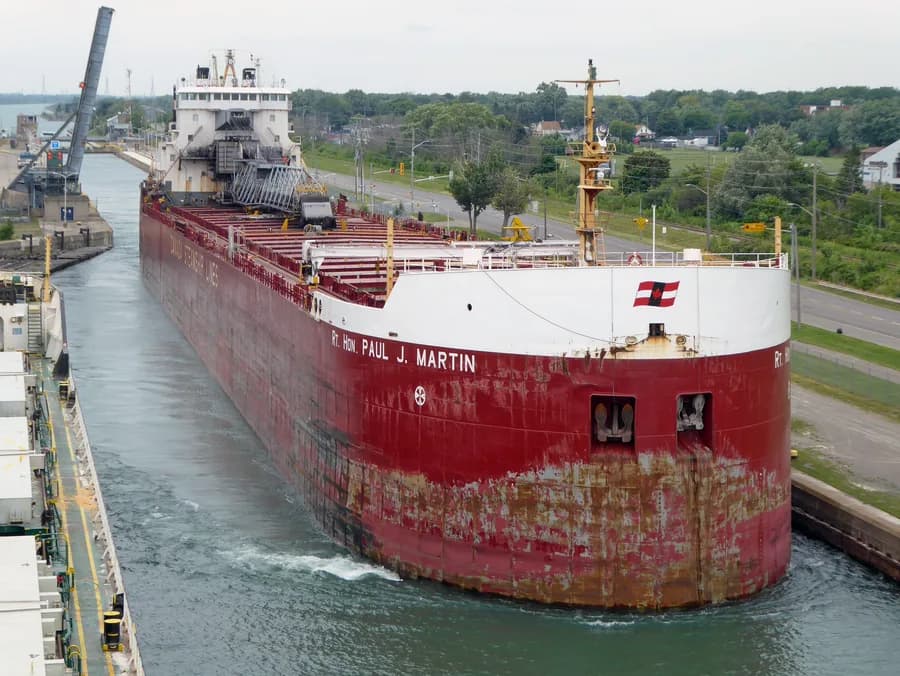
Near-MissMinor
Aug 22, 2026Pointe aux Pins, QUEBEC (QC)
On 22 August 2026, the bulk carrier "RT. HON. PAUL J. MARTIN", while under the conduct of a pilot, reported having experienced a close quarters situation with the sailing pleasure craft "LA MARLO" in the St. Lawrence River off Sorel, QC.
GroundingMinor
Apr 12, 2026Beauharnois Lock (upper), QUEBEC (QC)
On 12 April 2026, the bulk carrier "RT. HON. PAUL J. MARTIN" reported having sustained a total engine failure and a subsequent loss of propulsion above the upper lock wall at Beauharnois, QC. While the crew was restarting the engines, the vessel made bottom contact near the breakwater. The vessel was secured to the wall and inspected before resuming its voyage to Québec, QC. The vessel later reported a damaged ballast tank on its starboard side, and another inspection was planned.
GroundingSerious
Nov 7, 2025Windmill Point, MI, USA, Outside Provincial Boundaries
On 07 November 2025, the bulk carrier "RT. HON. PAUL J. MARTIN", with 23 people on board, reported having run aground while departing from an anchorage in the Detroit River off Detroit, MI, USA. The vessel was anchored as a precaution and was refloated the next day with assistance from the tugs "MINNESOTA" and "OHIO".
Personnel CasualtySerious
Oct 28, 2025Picton, ONTARIO (ON)
On 28 October 2025, the bulk carrier "RT. HON. PAUL J. MARTIN" reported that one of its crew members was injured during cargo operations in Picton, ON. The injured crew member was transported to hospital.
Machinery FailureMinor
Sep 20, 2025Ninemile Point, MI, Outside Provincial Boundaries
On 20 September 2025, the bulk carrier "RT. HON. PAUL J. MARTIN" reported having sustained a steering system failure in the St. Marys River, MI, USA. The vessel was anchored outside the navigation channel, and the crew assessed the issue.
Machinery FailureMinor
Jul 28, 2025Port Colborne, ONTARIO (ON)
On 28 July 2025, the self-discharging bulk carrier "RT. HON. PAUL J. MARTIN", reported having sustained a failure of its steering gear while transiting downbound in the Welland Canal. The vessel berthed in Port Colborne, ON for the crew to perform the repairs then the vessel resumed its voyage.
Machinery FailureMinor
Nov 8, 2024Écluse de Côte-Sainte-Catherine, QUEBEC (QC)
On 08 November 2024, the bulk carrier "RT. HON. PAUL J. MARTIN", while under the conduct of a pilot, reported having sustained a total engine failure causing a loss of propulsion in Canal de la Rive Sud off Sainte-Catherine, QC. Propulsion was restored, and the vessel proceeded to a nearby wharf to determine the cause of the issue.
Damage/UnseaworthySerious
Aug 21, 2024Québec, QUEBEC (QC)
On 21 August 2024, the bulk carrier "RT. HON. PAUL J. MARTIN" reported a crack in its No. 1 port ballast tank while secured in Québec, QC. The vessel proceeded to Montréal, QC and the crew conducted repairs while underway.
Recorded marine occurrences naming this vessel.