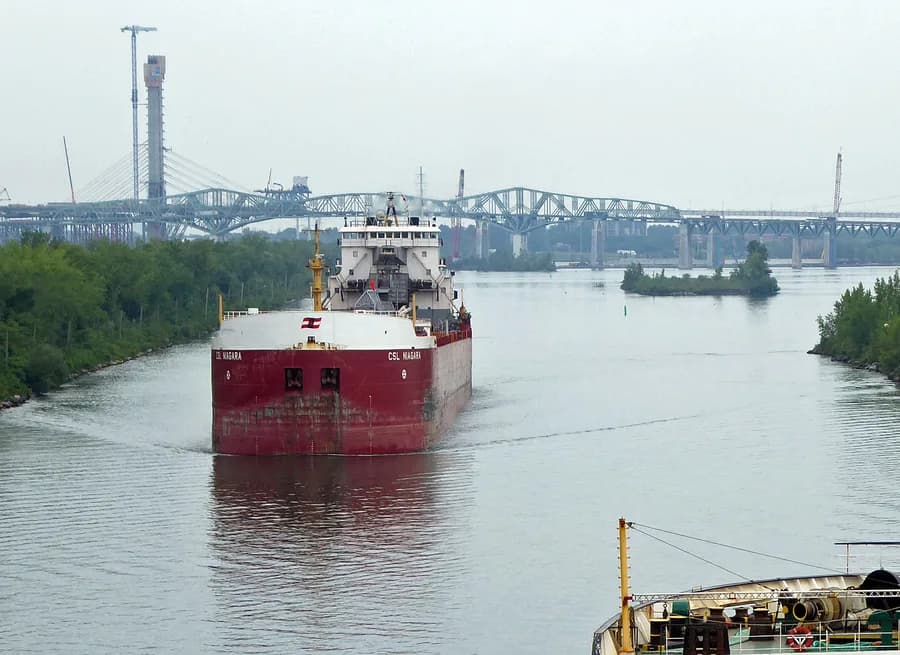
GroundingMinor
Jun 2, 2026Pointe aux Pins, QUEBEC (QC)
On 02 June 2026, the bulk carrier "CSL NIAGARA", while under the conduct of a pilot, reported having made bottom contact while approaching section No. 14 of Sorel, QC. The vessel was secured and the crew reported no apparent damage.
Personnel CasualtySerious
Nov 1, 2025Johnstown, ONTARIO (ON)
On 01 November 2025, the bulk carrier "CSL NIAGARA" reported that one of its crew members was injured while unloading cargo in Johnstown, ON. The Fire Department transported the injured crew member to a hospital.
Striking/AllisionSerious
Apr 9, 2025Beauharnois, QC, QUEBEC (QC)
On 09 April 2025, the bulk carrier "CSL NIAGARA", reported having struck the lower wall of lock number 3 located in Beauharnois, QC while transiting the seaway upbound. The vessel anchored to assess the damages, major damage to the forepeak ballast tank was reported.
Machinery FailureMinor
Jul 11, 2020Montreal, QC., QUEBEC (QC)
On 11 July 2020, the bulk carrier "CSL NIAGARA" reported being disabled whilst transiting the St. Lawrence River abeam of section 94 in the Port of Montreal, QC. The vessel anchored, restored its propulsion power, and berthed at section 98. Repairs were carried out by shore technicians to the main engine control system and the vessel resumed its intended voyage.
GroundingSerious
Dec 18, 2019Chatham-Kent, ON, Outside Provincial Boundaries
On 18 December 2019, the self-discharging bulk carrier "CSL NIAGARA" reported a bottom contact while following the North shore routing on Lake Erie. A breach was identified in the no.3 starboard ballast tank following the impact. The vessel proceeded to wharf 16 in Port Colborne, ON.
Damage/UnseaworthySerious
Apr 25, 2014Sarnia, ON, ONTARIO (ON)
On 25 April 2014, the MV "CSL NIAGARA" reported two fractures in its hull in the vicinity of the engine room whilst transiting the St. Claire River off Sarnia, ON. The vessel proceeded to Erie, PA in order to carry out repairs. No injuries or pollution reported.
GroundingMinor
Apr 17, 2014Naubinway, MI, Outside Provincial Boundaries
On 17 April 2014, the MV "CSL NIAGARA" made contact with the bottom after drifting whilst anchored on Lake Michigan off Naubinway, MI. The vessel proceeded to Sarnia, ON for an underwater survey and then to Erie, PA in order to carry out repairs in drydock. No injuries or pollution reported.
GroundingSerious
Nov 17, 2013SANDUSKY, OHIO, USA
On 17 November 2013, the ''CSL NIAGARA'' ran aground while exiting Moseley channel into Lake Erie, off Sandusky, Ohio, USA. No injuries, pollution or apparent damage to vessel reported. The vessel was refloated with the assistance of three tugs.
Recorded marine occurrences naming this vessel.