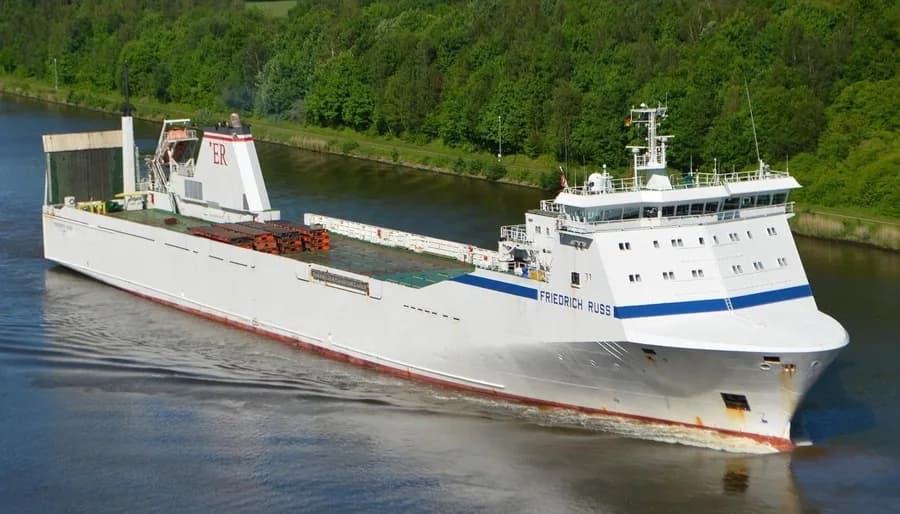
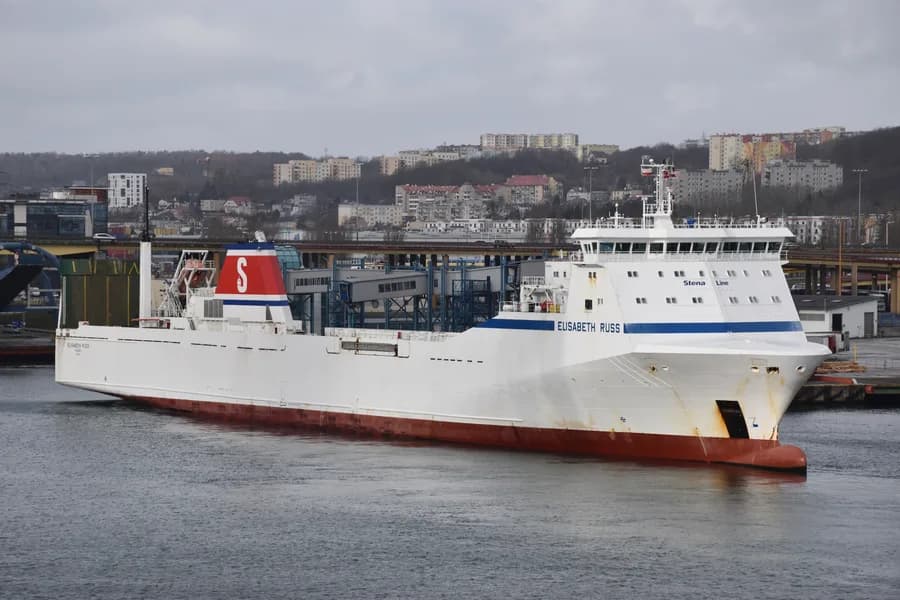
Technical Specifications
Live Tracking
Resolved from the live AIS destination. Distance is the real sea route (around land and through canals). “Off the port” is steaming time only; “likely alongside” adds the wait this port has actually kept comparable ships for. The queue is a typical case, not a promise — berth waits vary far more than they average. A destination is the crew’s stated intent, not a confirmed fixture.
Intelligence
Verified reported figure. Band is peer-relative, not official IMO CII.
Compliance
Fire drills; Remote Means of control (opening,pumps,ventilation,etc.) Machinery spaces; Ventilation; Mooring Ropes/Lines and Wires; Fixed fire extinguishing installation; Towing and Mooring Equipment; Fire fighting equipment and appliances
Port-State-Control detentions.
Build Series
Sister hulls share a yard, segment, build year (±1) and deadweight (±3%): the cleanest comparables for valuation. Derived in-house from our fleet register; coverage is limited to hulls carrying a recorded builder, so a series may be incomplete.
Operational Status
Making way at sea speed on its latest broadcast.
Read from the single most-recent AIS broadcast we hold for this hull. We keep no position history, so this is a point-in-time posture, not a dwell inference. Derived in-house from our own AIS feed; weight it by the broadcast age above.
Arrivals, time in port and the load/discharge inferred from the draught change, detected from AIS track history. An open call means the vessel is still in port (no departure observed yet).
Method: each call is a run of fixes inside a port’s geofence confirmed by a stop (or an AIS gap); load/discharge is the sign of the draught delta over the call. Indicative: arrivals before our AIS history began read from the first observation.
Time-in-port summed by port from the AIS-detected port-call history: the ports this vessel has spent the most time at, longest first.
Based on 34 completed calls observed since . Open calls (no departure yet) are excluded. The distribution sharpens as AIS history accrues.
Composite Risk
Multiple adverse factors, or a hard ship-specific signal, lift this hull above the fleet norm.
A coverage-weighted blend of the 3 components we could read for this hull; the weights renormalise over only the components present, so a thin read is never inflated and a hull is never credited a “safe 0” for a signal it has no row for. Higher means riskier. Derived in-house from government-open port-State-control, flag, sanctions and our own vessel data; weight it by the coverage above.
Estimated
Container · summer draught 6 m · 20.5 t per cm immersion
Estimate only: modelled from deadweight (hull geometry) using a first-principles hydrostatic model, not measured hydrostatic tables. The design draught it is anchored to is unreliable across the fleet.
density DWT/GT=0.70 is consistent with declared container
Declared type is consistent with the class implied by the vessel’s size signals. Inferred via our shared size-based classifier.
Commercial
Price it in the Route Planner between any two commercial ports: ballast and laden legs, two fuels at live bunker prices, port and canal costs, the weather on the way, and the TCE set against the market.
Typical Ro-Ro speed and burn. Replace them with the ship's own figures in the planner.

Visual Archive
Explore More