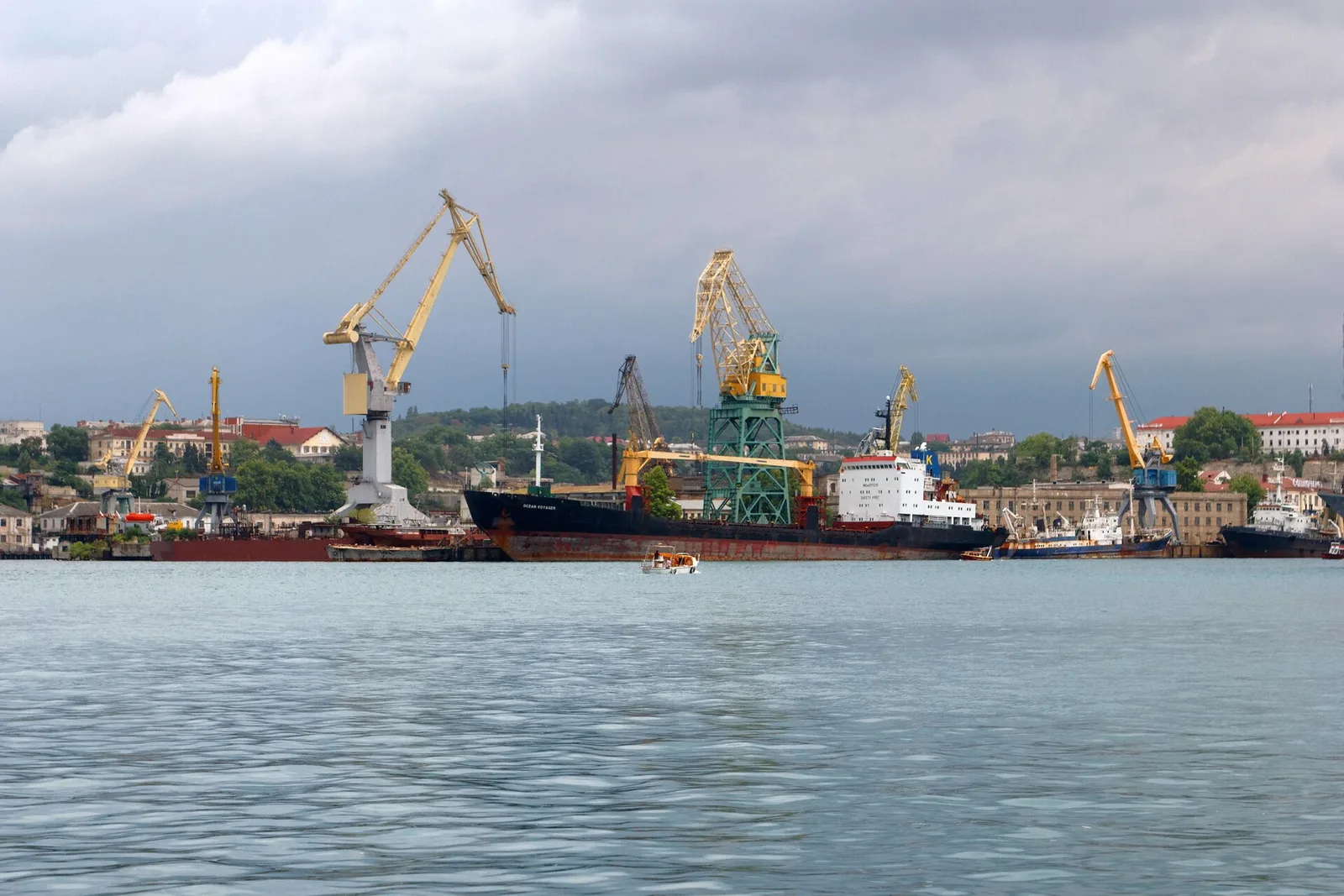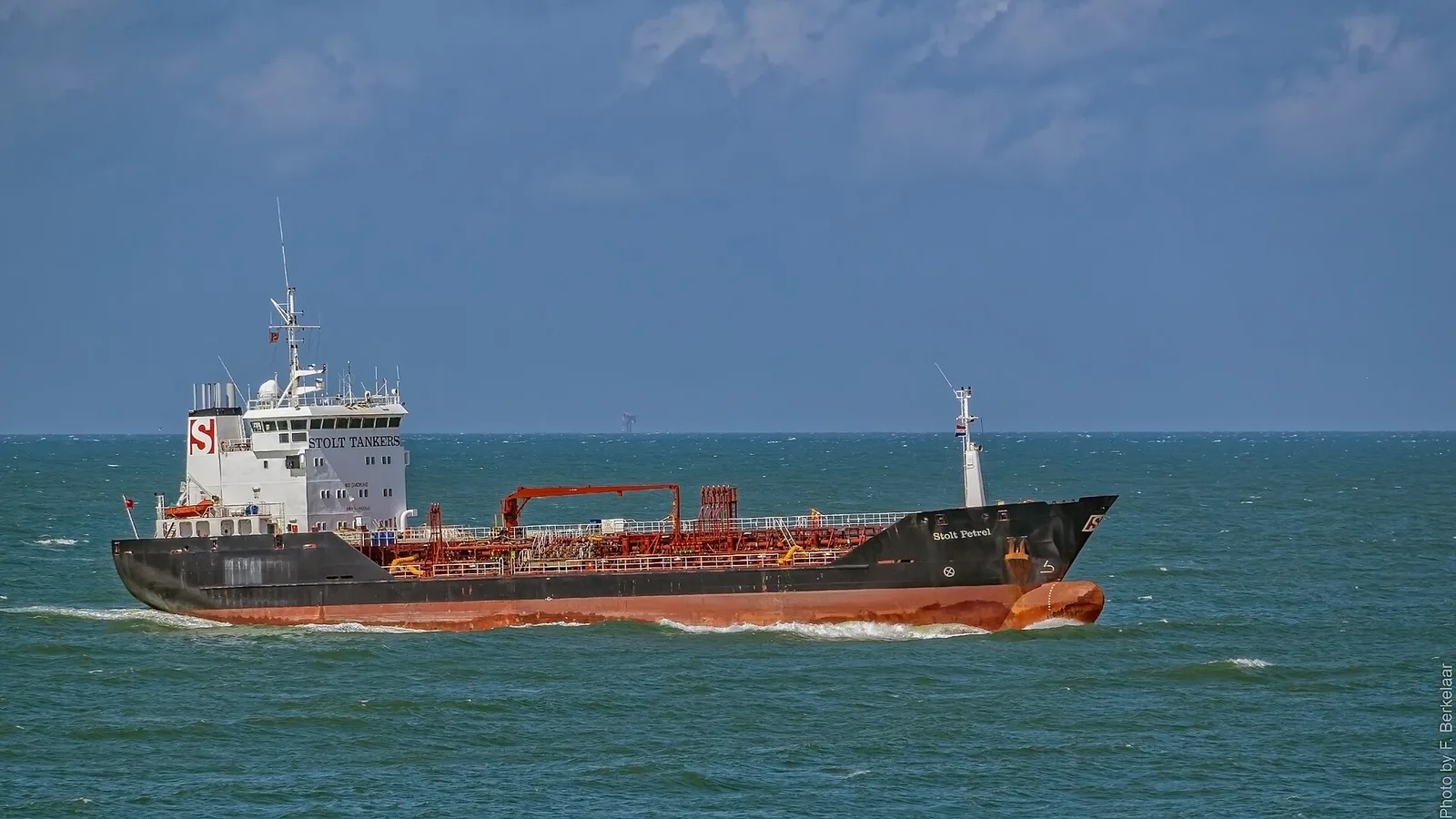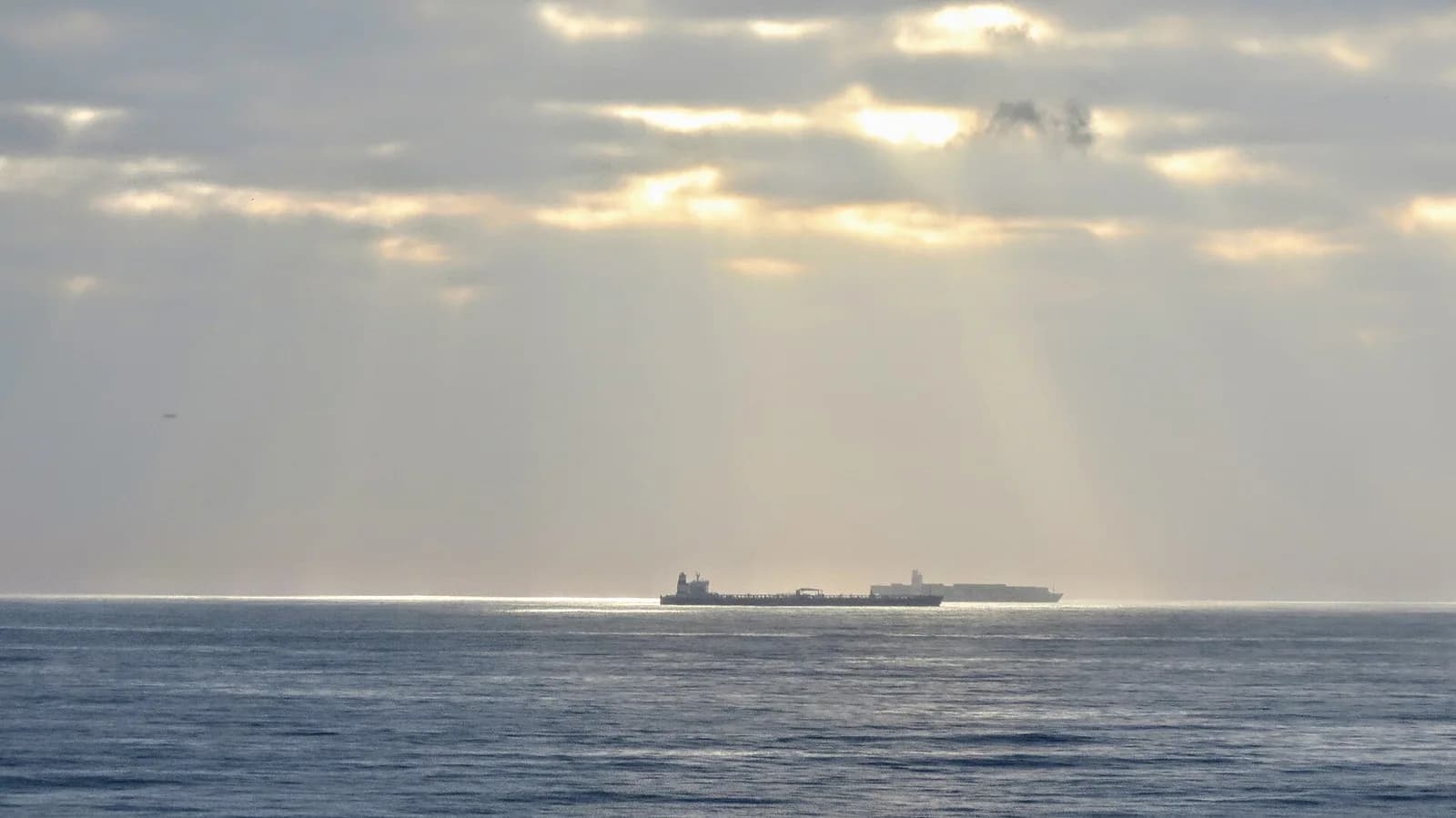
Two bulk carriers were hit by projectiles in separate transits of the Strait of Hormuz over the weekend, leaving one seafarer dead and another wounded. The fatality was aboard the Liberia-flagged Minoan Dignity, struck in the engine room by an unidentified munition; the remaining crew were taken off by the Omani Coast Guard. No pollution was reported. UKMTO logged the incidents under Warning 115-26 and advised transiting masters to maintain the highest level of vigilance in the inner strait and the approaches to Bandar Abbas.
For the operators of the two ships the immediate story is one of casualty response, salvage, and a very long insurance claim. For the wider market, the significance is different, and larger. Bulk carriers do not usually get shot at. Their appearance on the casualty list confirms what tanker owners have been telling their brokers for weeks: the discipline that once kept commercial shipping notionally off-target is fraying, and the risk pool now includes anything with a load line passing through the strait.
Why Hormuz is not substitutable
The Strait of Hormuz is not a chokepoint in the loose sense the word gets used ashore. It is the chokepoint. Roughly 21 million barrels of crude and condensate move through it every day, alongside a fifth of global LPG and about a quarter of seaborne LNG. That is close to a fifth of world oil consumption squeezed through a two-mile-wide inbound lane and a two-mile-wide outbound lane, separated by a thin buffer, running between Iranian territorial water to the north and Omani water to the south.
The stretch handles somewhere on the order of thirty to forty laden VLCC transits a day in normal conditions, plus a comparable fleet of Suezmaxes, Aframaxes, LPG carriers, LNG carriers, and the bulker traffic that supplies the Gulf's steel, alumina and grain trades. There is no meaningful bypass. Saudi Arabia's East-West pipeline to Yanbu can shift perhaps five million barrels a day if fully utilised, and the UAE's Habshan-Fujairah line adds another 1.5 million. Even fully loaded, the pipeline network moves less than a third of what the strait moves, and only Saudi and UAE crude can use it. Iranian, Iraqi, Kuwaiti and Qatari volumes have no landward exit.
That is the market's asymmetry in a sentence. A shock to Hormuz has no elastic offset. Traders can substitute Atlantic Basin crude at the margin, at a price, but the ton-mile arithmetic, a VLCC ex-Ras Tanura loads for China in twenty days; the same barrels ex-US Gulf take fifty, is unforgiving.
From tanker war to indiscriminate risk
Until recently the pattern of attacks in and around the strait followed a rough logic that owners and their war-risk underwriters could price. Vessels tied to specific flag states, or trading between specific counterparties, were the target set. Dry bulk on charter to a European commodity house calling Sohar for alumina was, in the phrase one broker used to us, "background traffic."
The Minoan Dignity attack breaks that pattern. So does the second bulker strike logged in the same warning. Neither ship was carrying petroleum. Neither was under an obvious politically-exposed charter. That is precisely why the incident is being read as an escalation rather than a data point.
"The moment a boxship, a bulker or a car carrier is treated as a legitimate target, the entire war-risk model has to be rewritten," a London-based tanker broker told our desk. "You are no longer pricing a route; you are pricing a coin flip on whether the drone operator can tell a chemical carrier from a Kamsarmax at three miles in poor visibility."
Insurers moved quickly. Additional premium quotes for hull war cover on Hormuz transits, which had settled in a range of roughly 0.3 to 0.5 percent of insured value earlier in the year, are being requoted case by case. Underwriters at the London market are now attaching per-voyage add-ons and, in some cases, higher deductibles for engine-room damage after the Minoan Dignity. On a $60 million Kamsarmax that is real money, the war premium alone can add $200,000 to $300,000 to the voyage cost, and it is being passed through to charterers where the fixture recap allows.
The human toll behind the tonnage
Fifteen seafarers had been confirmed killed on merchant ships in and around the region since attacks intensified earlier this year, per the count kept by international welfare bodies. The Minoan Dignity fatality makes sixteen. Dozens more have been injured, and a growing number of crew members have refused to sign on for Gulf-bound voyages, forcing operators to rotate crews at Fujairah or Khor Fakkan rather than sailing in with a full complement.
The demographics matter here. The global merchant fleet is crewed overwhelmingly by nationals of the Philippines, India, Indonesia, China and Ukraine, with Eastern European officers concentrated on the technical side. On a typical Panamax bulker under a Greek or Japanese owner, the master and chief engineer may be European, everyone else is Filipino or Indian. When a projectile hits the engine room of a bulker transiting Hormuz, the casualty is almost never a European officer on the bridge. It is a motorman from Cebu or Cochin who signed a nine-month contract because a shore job in his hometown paid a third of what a sea berth pays.
Manning agencies in Manila and Mumbai have started attaching hardship allowances to Gulf rotations, sometimes doubling basic wages for the leg through the strait. Not every owner is paying, and the market is bifurcating: quality operators are absorbing the cost, sub-standard tonnage is quietly losing crew and delaying voyages.
"Owners can insure the hull, they can insure the loss of hire, they can even insure the war risk on the cargo," a P&I club underwriter said, speaking on background. "What they cannot insure is a mother in Iloilo who has decided her son is not going back."
Freight rate transmission
The rate implications are already visible in the fixture book. The dry-bulk composite for larger sizes has firmed on the back of a widening avoidance premium for Gulf-loading business, Saldanha and Tubarao iron ore fixtures are competing with Middle East alumina and bauxite lifters, and owners are demanding compensation for the incremental risk. Kamsarmax and Ultramax operators looking at Bandar Abbas discharge orders are pricing in an additional day or two of laytime buffer to account for convoy-style transits through the strait.
The tanker-rate composite for very large crude carriers has been more volatile still. Middle East Gulf to China voyages, which normally clear at time-charter equivalents in the mid-$30,000s per day, spiked into the high $70,000s intra-week on the news, before easing as owners realised the physical damage to trade had been limited. The pattern is now familiar: an incident, a spike, a mean-reversion, a new baseline that is fractionally higher than the last. Each event ratchets the floor up.
Ton-mile demand for Atlantic Basin crude has drifted higher for the same reason. Refiners in South Korea and Japan have quietly increased WTI and Brent-grade purchases in the last month, and US Gulf loadings for East Asia are running above the trailing three-month average. That is not a substitution decision at the margin any more; it is a live hedge against the possibility that the strait becomes unusable for a period measured in weeks rather than days.
What operators are actually doing
Practical mitigation, in the phrase used on the ring, comes down to time-of-day, convoy discipline, and hardening. Owners are increasingly instructing masters to transit at night on the darker phase of the lunar cycle. Convoys of three to five vessels, spaced tightly, have become common on the outbound leg. Bridge windows are being taped or shuttered. Non-essential crew are being moved off the bridge and out of the accommodation superstructure during the transit window itself. On some ships, engine-room watchkeepers now wear ballistic vests.
None of this is sustainable at scale, and none of it changes the underlying calculus. Captains do not U-turn a 300-metre laden VLCC on a whim; once committed to the inbound lane, the ship is on rails. The tools available to the master are marginal, a slight speed change, a slight course adjustment inside the traffic separation scheme, a call to UKMTO, and the reaction time against a small fast craft or a drone measured in seconds.
"We are asking master mariners to make combat decisions with a merchant-service toolkit," a commodity strategist at a European trading house observed. "Sooner or later a wider incident forces a broader response, and that response will not be a P&I circular."
Bottom line
The Minoan Dignity is not, in isolation, a market-moving event. Ships have been hit in the strait before and freight rates have recovered inside a week. What matters is the direction of travel. Two bulkers hit in the same warning, one fatality, a war-risk market that has moved from route-priced to incident-priced, and a manning market that is starting to say no. Any one of those on its own is manageable. Together they describe a chokepoint whose commercial usability is quietly narrowing while its strategic importance has not budged an inch.
What to watch: the trajectory of hull war additional premia on Gulf transits over the next two fixture cycles; whether major charterers begin to insert war-risk deviation clauses into standard COAs; and, most tellingly, whether Philippine and Indian manning agencies impose a formal Gulf premium as a floor rather than as a negotiated extra. When crewing catches up with underwriting, the market has repriced for real.
Cover image: Calistemon, CC BY-SA 4.0, via Wikimedia Commons.

As Editor in Chief of The Maritime, I lead content development, interviews, and digital storytelling across our multimedia maritime platform. With over 10 years of experience in the maritime industry, I create and publish in-depth stories and video features that highlight key players, emerging trends, and operational realities across global shipping. Before launching The Maritime, I worked as a Vessel Operator at Imza Marine A.S., gaining hands-on commercial shipping and voyage operations experience. I also served as Marketing Communications Specialist at Gimas Ship Supply & Services, where I managed corporate communication, digital strategy, and industry outreach for shipowners and maritime clients. I hold a Master’s degree in Maritime Transportation Management from Istanbul Technical University and a Master’s degree in Publishing from Marmara University. My work is driven by the belief that the maritime world deserves strong, informed, and accessible media representation. I am committed to sharing the stories of maritime professionals and contributing to the sector’s visibility, knowledge exchange, and future development.