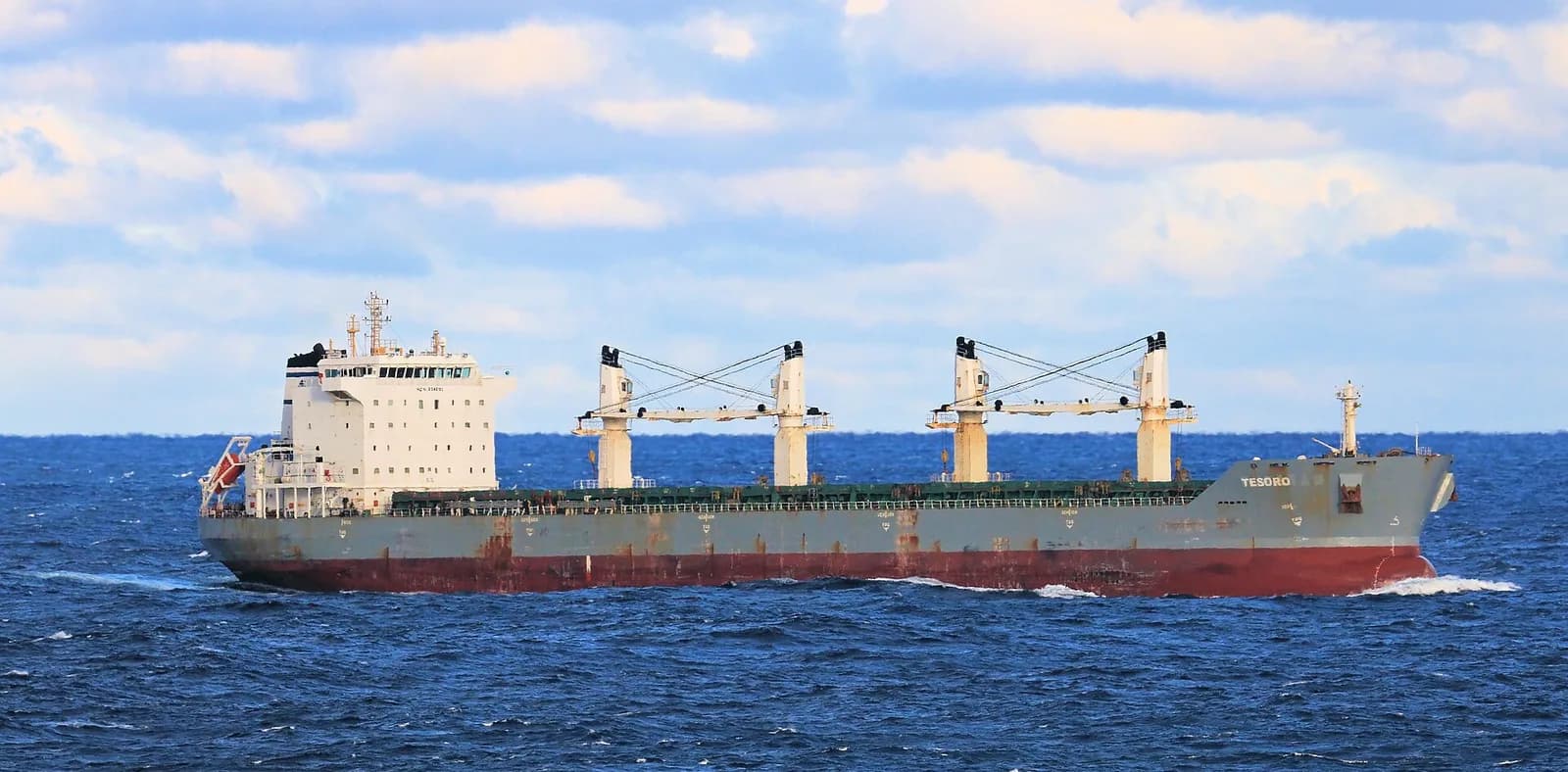
A bulk carrier sailing with a cargo of cassava chips experienced a catastrophic gas leak that claimed the lives of 13 crew members, including the Master.
Fumigation and gas release
Before departure, shore‑based workers placed aluminium phosphide tablets on the cargo in each hold and sealed the hatches. The crew received a written handover but were not warned about the toxic risk. Roughly 36 hours after leaving port, wind from astern and a speed slightly above wind speed forced gas to escape through the hatch covers and accumulate on the forward deck.
Because the accommodation air‑conditioning was set to recirculate, negative pressure drew contaminated air into living spaces through partially closed weathertight doors. The wheelhouse, with the highest air‑change rate, was the first area where crew fell ill, reporting chest tightness, nausea, vomiting, breathlessness and fatigue.
Symptoms, response and loss of life
Initial illness was misdiagnosed as food poisoning or Covid‑19, reinforced by negative antigen tests. As vomiting and weakness spread, the Chief Engineer reported to the Marine Superintendent that '17 crew members, including the Master, were experiencing persistent vomiting and limb weakness.' The vessel was stopped and anchored while awaiting rescue. By the time SAR arrived, the Master had died and a total of thirteen crew members had succumbed to toxic pulmonary oedema confirmed as phosphine poisoning.
Investigation findings and industry impact
The inquiry revealed that the crew were unfamiliar with the IMO Recommendations on the Safe Use of Pesticides on Board Ships, the ship lacked phosphine detection equipment, and no gas concentration monitoring was performed after departure.
Owners and charterers must now reassess fumigation procedures, ensure crew training on hazardous chemicals and equip vessels with appropriate detection systems to avoid similar tragedies. Such incidents typically lead to higher war‑risk premiums and tighter insurance scrutiny.
Cover image: ImagePerson, CC BY 4.0, via Wikimedia Commons.

As Editor in Chief of The Maritime, I lead content development, interviews, and digital storytelling across our multimedia maritime platform. With over 10 years of experience in the maritime industry, I create and publish in-depth stories and video features that highlight key players, emerging trends, and operational realities across global shipping. Before launching The Maritime, I worked as a Vessel Operator at Imza Marine A.S., gaining hands-on commercial shipping and voyage operations experience. I also served as Marketing Communications Specialist at Gimas Ship Supply & Services, where I managed corporate communication, digital strategy, and industry outreach for shipowners and maritime clients. I hold a Master’s degree in Maritime Transportation Management from Istanbul Technical University and a Master’s degree in Publishing from Marmara University. My work is driven by the belief that the maritime world deserves strong, informed, and accessible media representation. I am committed to sharing the stories of maritime professionals and contributing to the sector’s visibility, knowledge exchange, and future development.