The Black Sea grain trade, the single most important corridor for feeding North Africa, the Middle East and much of South and Southeast Asia, has effectively gone dark. Coordinated strikes on Russian and Ukrainian port infrastructure over the past month have taken more than 97% of the basin’s grain export capacity out of the market, according to calculations based on official cargo declarations and figures shared by market sources. The pause is not a formal blockade, as it was in 2022. It is something more corrosive: an insurance-driven shutdown, where owners and P&I clubs simply will not accept the risk at any premium a charterer is willing to pay.
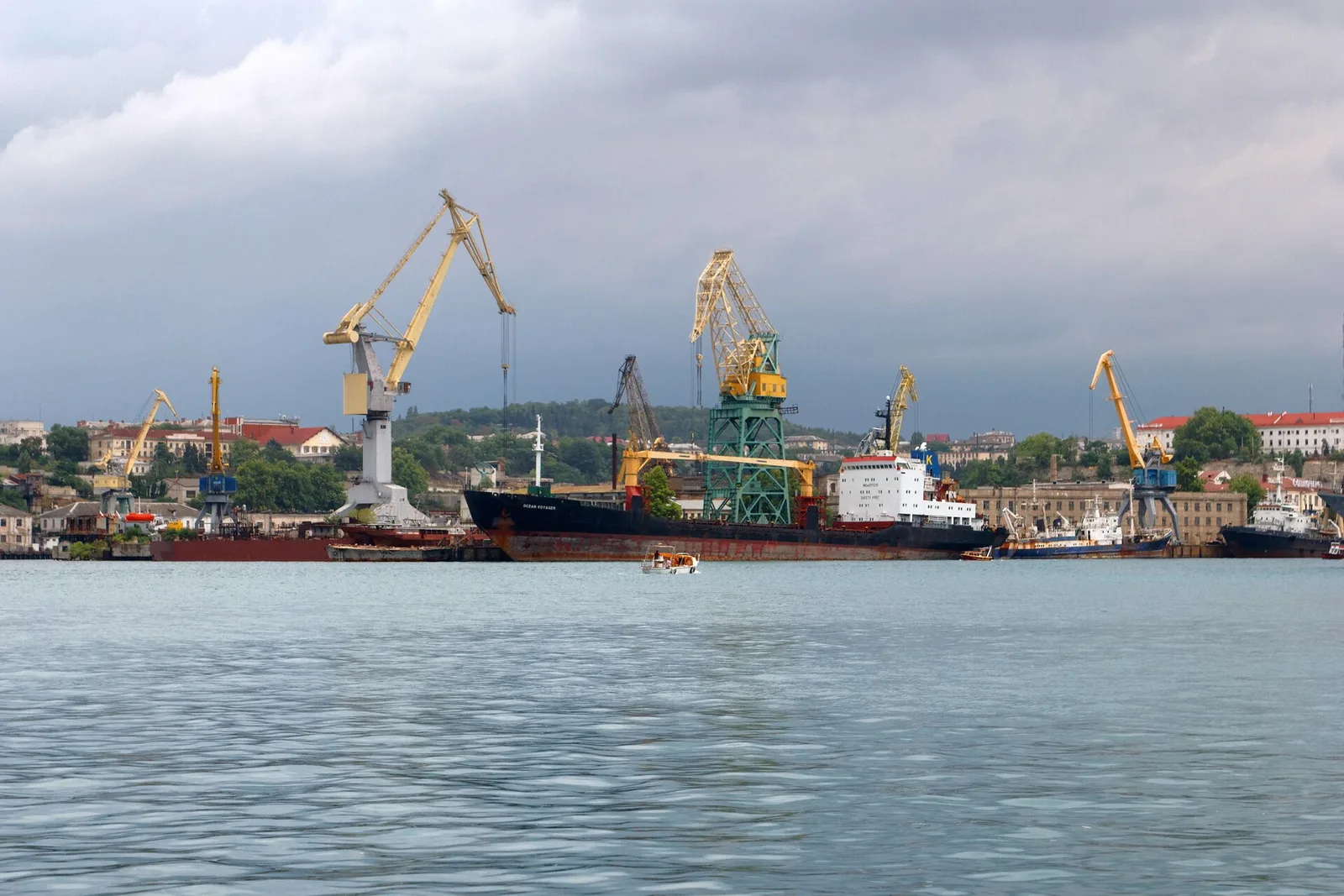
Combined shipments from the two countries averaged about 7.2 million tonnes per month last season. That flow has now dwindled to a trickle. Ukrainian terminals at Odesa, Chornomorsk and Yuzhny are silent. On the Russian side, the only grain berth officially still working is a small facility at Tuapse with a nameplate of roughly 160,000 tonnes a month, less than one Panamax cargo every ten days. Novorossiysk, the flagship deepwater grain outlet, has been intermittent at best.
What the world loses when the Black Sea closes
To understand why a regional shutdown moves prices on four continents, look at the share of the trade at stake. Russia and Ukraine together account for roughly 28% of world wheat exports and about 15% of world corn exports in a normal marketing year. Ukraine alone is the world’s biggest exporter of sunflower oil, most of which moves out of the same berths that handle grain. When those berths stop loading, the deficit is not a rounding error. It is a structural gap that no other origin can fill on the same timeline or at the same landed cost.
The buyers most exposed sit in a familiar arc. Egypt, historically the world’s largest single wheat importer, has leaned on Black Sea supply for the bulk of its state tender volumes. Turkey’s milling industry, which re-exports flour across the Middle East and Africa, runs almost entirely on Russian and Ukrainian wheat. Bangladesh and Indonesia have progressively swapped North American origin for cheaper Black Sea protein grades over the past decade. Algeria, Tunisia, Morocco and Nigeria all sit in the second tier of exposure.
These are not markets that can quietly absorb a 30% price move. Bread is political. In several of the exposed countries the state directly subsidises flour, which means a sustained landed-cost shock lands on the finance ministry before it lands on the consumer.
The freight math: longer voyages, higher rates
The immediate physical response is a re-routing of demand toward the United States Gulf, the Pacific Northwest, Argentina and Australia. That switch is not a like-for-like substitution. It is a fundamental change in the length of the average grain voyage, and length is the variable that governs dry-bulk earnings.
A Panamax loading wheat at Constanta or Odesa for Alexandria is a voyage of a few days. The same Panamax loading at Newcastle in New South Wales for Alexandria is roughly 45 days at economical speed. A US Gulf load for Bangladesh is a Cape-routed voyage of about 55 days. Every substituted tonne therefore multiplies ton-mile demand by a factor of five to ten. This is exactly the dynamic that supported dry-bulk earnings through late 2022 and early 2023, and the forward curves are already re-pricing it.
The dry-bulk indices tracking mid-sized geared and gearless tonnage have firmed sharply over the past ten sessions. Sub-Panamax and Ultramax types stand to gain the most, because they are the workhorses of the intra-Mediterranean, West Africa and East Coast South America grain trades that pick up the diverted volume. Larger Kamsarmax and Panamax units clean up on the transatlantic and transpacific replacement lanes.
“We are quoting Kamsarmax rounds out of the US Gulf at levels we haven’t seen since the first winter of the war,” a London-based dry-bulk broker told our desk. “Owners are pushing back on any Black Sea call, even at a fat premium. Nobody wants a hull sitting off Odesa waiting for a slot that may or may not exist.”
The insurance layer is the real gate
The last cycle of Black Sea disruption was a naval blockade. This one is different. The berths are physically there, the augers still work, the silos are full. What has closed the trade is the war-risk market. Hull war premiums for laden calls into Ukrainian ports have widened to multiples of the base annual rate, priced not as a percentage but as a per-voyage additional in the high single digits of the hull value in the worst affected segments. On a modern Panamax insured for around $30 million, an incremental premium of even 1% is $300,000 added to the voyage bill before a single tonne is loaded.
Underwriters are also tightening the exclusions. Several Joint War Committee reviews over the past six weeks have widened the listed area to cover approaches previously considered marginal, and reinsurers have signalled they will not renew capacity at last year’s terms. Where cover is still offered, it comes with tight per-vessel aggregation limits, which effectively caps how many hulls a single fixture recap can carry.
“This is not a market where you can just pay more and go,” one P&I club underwriter said on background. “Capacity itself has left the room. When two or three lead syndicates decline a risk, the follow market has nothing to follow.”
The knock-on for owners is that any fixture into the region now requires layered war cover, additional K&R and loss-of-hire riders, and often a personal indemnity chain that runs back to the beneficial owner. Not many will sign that letter for a single voyage.
Where the substitute tonnes actually come from
The comforting story that global grain stocks can absorb the shock deserves a sceptical read. Aggregate world wheat stocks look adequate on paper, but a large share sits in China, which is not an exporter. The exportable surplus outside China is materially tighter, and much of it is committed on forward contracts already.
The United States enters the northern hemisphere winter with a workable but not generous wheat balance. Argentina has just come off a mixed crop and is prioritising its regional customers. Australia has volume but its harvest is a Southern Hemisphere calendar and its logistics chain is already booked into Chinese and Southeast Asian sales. The European Union has a decent French crop but its exportable pool cannot cover a full Black Sea outage without pulling prices sharply higher.
None of this is invisible to the trade. Global wheat futures have added roughly 6.5% this month and now sit about 30% above the same week a year ago. Corn is up in sympathy. Vegetable oils, which are structurally linked through the sunflower oil deficit, are running ahead of the grains complex.
Second-order effects worth watching
A prolonged Black Sea shutdown does not stay in the dry-bulk lane. Watch three adjacent markets.
- Fertiliser. Russia is a major exporter of urea, potash and ammonia, and much of that volume moves through the same Azov and Black Sea terminals. Any collateral damage to fertiliser export capacity feeds directly back into next season’s planting decisions in the buyers we listed above, which extends the price shock by twelve months.
- Product tankers. Vegetable oil trades on chemical and coated product tankers. The sunflower oil gap will be plugged by palm oil out of Southeast Asia and soybean oil out of the Americas, each of which adds ton-mile demand for the mid-range clean fleet.
- Container feeder networks in the Eastern Mediterranean. A durable rerouting of grain flows changes the calling pattern for feeder boxships that share the same berth windows in Alexandria, Mersin and Piraeus. Congestion at those hubs is the early warning sign.
How this ends, or doesn’t
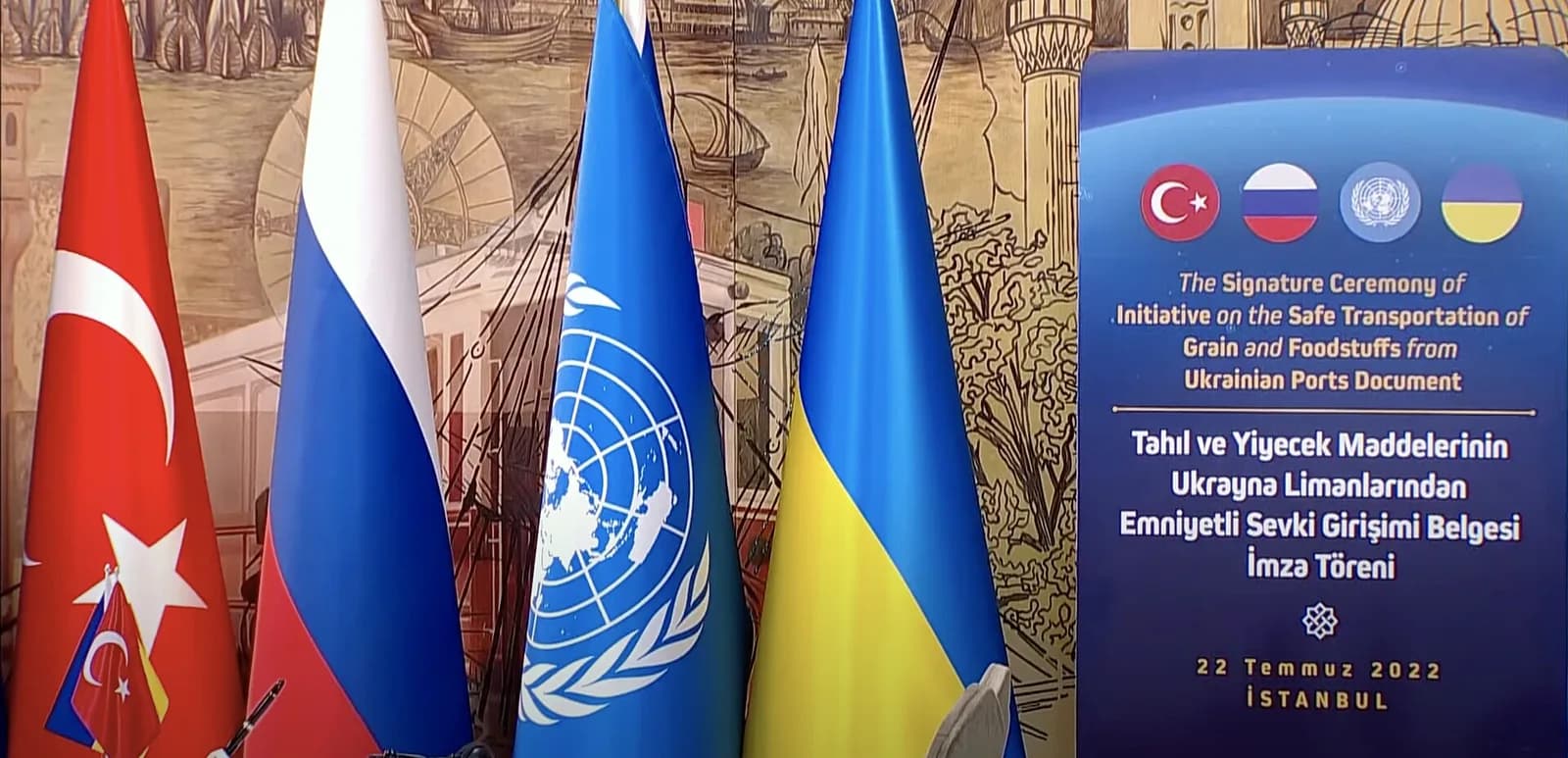
The last time the corridor closed, it took a bilateral agreement brokered by a third party, backed by physical inspection regimes, to reopen it. That framework no longer exists in any operational form. The current shutdown is the market pricing the absence of any such framework, plus the memory of what happens to a hull that ignores the warning.
Captains do not U-turn a 300-metre laden Panamax on a whim, but owners have quietly done exactly that with sub-fixtures in the past fortnight, cancelling on force majeure clauses that lawyers will be arguing over for years. When your master reports a nearby explosion on the VHF, the commercial team stops caring about the demurrage clock.
“Every operator I know has redrawn their trading area maps this month,” a commodity strategist at a European trading house said. “We are treating the northern Black Sea as a no-go until further notice. Our origination desks are on the phone to the Americas and to Australia every day.”
What to watch
Three signals will tell the market whether this becomes a defining event or a bad quarter. First, whether the Egyptian state buyer accepts a materially higher landed price in its next tender, and whether it takes any Russian origin at all. Second, whether the war-risk market restores capacity for approaches to Constanta and the Bosphorus queue, which would at least allow some Romanian and Bulgarian grain to move as a partial substitute. Third, whether ton-mile demand for the mid-sized dry-bulk fleet holds its bid into the fourth quarter, which would confirm that charterers are booking the long voyages rather than waiting the crisis out.
The bottom line for the shipping market is simple. Grain will still move. It will just move further, in different bottoms, at higher premiums, and on longer voyages. Every one of those adjectives adds cost to the loaf of bread at the other end of the chain, and rate to the owner who is willing to carry it.

As Editor in Chief of The Maritime, I lead content development, interviews, and digital storytelling across our multimedia maritime platform. With over 10 years of experience in the maritime industry, I create and publish in-depth stories and video features that highlight key players, emerging trends, and operational realities across global shipping. Before launching The Maritime, I worked as a Vessel Operator at Imza Marine A.S., gaining hands-on commercial shipping and voyage operations experience. I also served as Marketing Communications Specialist at Gimas Ship Supply & Services, where I managed corporate communication, digital strategy, and industry outreach for shipowners and maritime clients. I hold a Master’s degree in Maritime Transportation Management from Istanbul Technical University and a Master’s degree in Publishing from Marmara University. My work is driven by the belief that the maritime world deserves strong, informed, and accessible media representation. I am committed to sharing the stories of maritime professionals and contributing to the sector’s visibility, knowledge exchange, and future development.