Technical Specifications
Overview
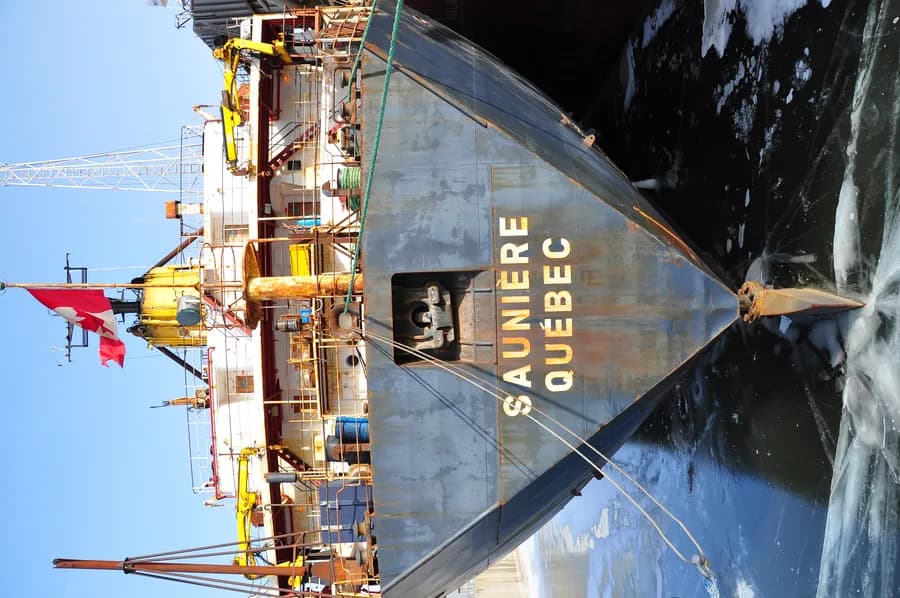
Sauniere was a self-unloading bulk carrier operated by Algoma Central. Laid down as Bulknes, before launching the vessel's name was changed to Brooknes. The ship was constructed and completed in 1970. The ship was initially owned by the Swedish company Kristian Jebsens Rederi A/S. In 1974, Algoma Central purchased the vessel, registered the ship in West Germany and renamed it Algosea. Algoma Central sent the ship to Swan Hunter in England to be lengthened. Emerging in 1976, Algosea sailed for Canada for conversion to a self-unloading bulk carrier at Herb Fraser and Associates in Port Colborne, Ontario. Algosea, which transported road salt between ports in the Gulf of St. Lawrence, Saint Lawrence Seaway and Great Lakes suffered three collisions and two groundings during its career. The Algosea was renamed Sauniere in 1982 and continued in service until 2009 when the bulk carrier was sold for scrap and broken up in Turkey in 2010.
Compliance
On 23 January 2009, a crack was observed in the fore peak of the bulk carrirer "SAUNIERE".
The Master of M.V. Sauniere reported hard landing on South seawall of Canso Causeway resulting in a 10 to 12 foot dent above the waterline in way of # 1 port side tank.
On 21 September 2006, while approaching the Mines Seleine dock, the M/V "SAUNIERE" lost its starboard anchor and 8 shackles.
On 15 September 2006, while leaving the port of Grande Entree (Magdalen Islands), the vessel Sauniere grounded near buoy CB-8. Subsequently refloated without damage. No pollution reported.
On 9 January 2006, the vessel Sauniere reported an 8 inch crack in ballast tank number 1.
On 11 June 2005, the pilot onboard the downbound bulker "SAUNIERE" reported a close quarters situation with the sail boat "ELENDIL I", ¼ nm upstream Laviolette bridge, Trois-Rivières (Qc).
On 8 February 2004, the upbound vessel Sauniere reported a small crack in the forepeak.
Vessel took on water due to a damaged ballast pump casing. A butterfly valve had broken and entered the ballast pump causing the hole and also damaging the impeller.
Recorded marine occurrences naming this vessel.
Composite Risk
Multiple adverse factors, or a hard ship-specific signal, lift this hull above the fleet norm.
A coverage-weighted blend of the single component we could read for this hull; the weights renormalise over only the components present, so a thin read is never inflated and a hull is never credited a “safe 0” for a signal it has no row for. This headline is flagged low-confidence (a thin or structural-only read) and should not be treated as a verdict. Higher means riskier. Derived in-house from government-open port-State-control, flag, sanctions and our own vessel data; weight it by the coverage above.
Commercial
Price it in the Route Planner between any two commercial ports: ballast and laden legs, two fuels at live bunker prices, port and canal costs, the weather on the way, and the TCE set against the market.

Visual Archive