Technical Specifications
Live Tracking
Intelligence
Compliance
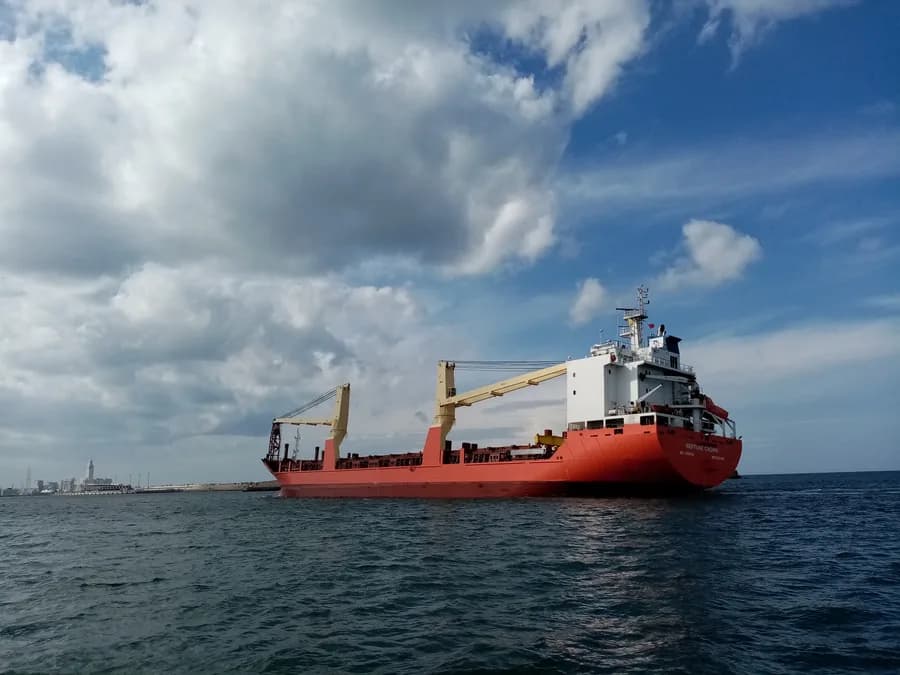
On 01 August 2008, the vessel "BELUGA FEDERATION" struck the wharf while berthing at section 52, Port of Montreal.
Recorded marine occurrences naming this vessel.
Build Series

Sister hulls share a yard, segment, build year (±1) and deadweight (±3%): the cleanest comparables for valuation. Derived in-house from our fleet register; coverage is limited to hulls carrying a recorded builder, so a series may be incomplete.
Operational Status
Stopped, anchored or moored on its latest broadcast: parked, not necessarily withdrawn.
Read from the single most-recent AIS broadcast we hold for this hull. We keep no position history, so this is a point-in-time posture, not a dwell inference. Derived in-house from our own AIS feed; weight it by the broadcast age above.
Composite Risk
Strong, corroborated adverse evidence: a detention, sanctions exposure or an AIS-gap / behavioural signal.
A coverage-weighted blend of the 3 components we could read for this hull; the weights renormalise over only the components present, so a thin read is never inflated and a hull is never credited a “safe 0” for a signal it has no row for. Higher means riskier. Derived in-house from government-open port-State-control, flag, sanctions and our own vessel data; weight it by the coverage above.
This vessel is directly sanctioned.
Screened against official OFAC, EU, UN and UK designations (In-house derivation over the OpenSanctions publishable subset, GLEIF LEI (CC0) and our own vessel/owner master. No new external source fetched.). An automated exposure signal for review, not a legal determination.
Estimated
Other · summer draught 6 m · 26.2 t per cm immersion
Estimate only: modelled from deadweight (deadweight regression) using a first-principles hydrostatic model, not measured hydrostatic tables. The design draught it is anchored to is unreliable across the fleet.
Commercial
Price it in the Route Planner between any two commercial ports: ballast and laden legs, two fuels at live bunker prices, port and canal costs, the weather on the way, and the TCE set against the market.
Typical General cargo speed and burn. Replace them with the ship's own figures in the planner.
Explore More