Technical Specifications
Overview
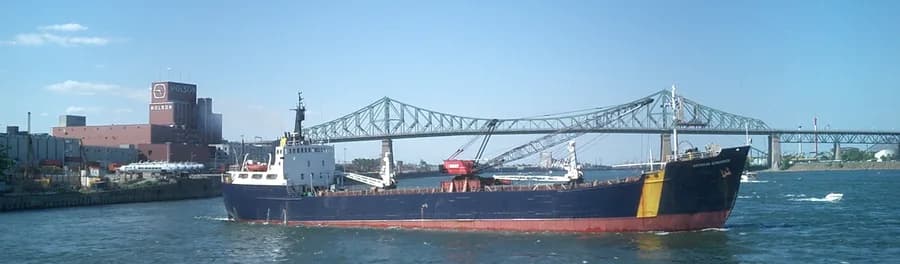
The Mathilda Desgagnes was the name of a cargo vessel built to supply bases in the Canadian Arctic for Canada Steamship Lines. She was built in 1959 as the MV Eskimo, a name she sailed under for 20 years. She was refitted in 1979, and sailed under the name Mathilda Desgagnes, continuing to serve the Canadian Arctic, until 2006. In 2007 she was sold to Transcomar Shipping, of Port-au-Prince, and was renamed MV Gisela. Her registration was changed from Canada to Panama.
Compliance
On 5 August 2005, the general cargo vessel Mathilda Desgagnes grounded near Port Meunier (Anticosti Island). Vessel refloated with tug assistance the next day.
Vessel "MATHILDA DESGAGNES" experienced a small fire in the windlass starter panel located in the forecastle. It was quickly extinguished shortly thereafter. No injury reported.
On 3 July 2004, the Mathilda Desgagnés reported a close quarters situation with the pleasure craft Le Perfecto off Port St-François.
ARM CAUGHT BY ROPE DURING LOADING PROCEDURES Note: formerly OccNo : 1300-5-91
ICE DAMMAGE OCCURED FOLLOWING DISCHARGE OF CARGO Note: formerly OccNo : 1300-5-91
VSL CONTACTED THE BOTTOM WHILE SWINGING AT ANCHOR Note: formerly OccNo : 1300-5-90
VSL SUSTAINED ICE DAMAGE WHILE ON A PASSAGE TO BAIE COMEAU Note: formerly OccNo : 9708-5-90
VSL STRUCK THE DOCK WHILE MANOEUVERING TO GO ALONGSIDE STERN FIRST Note: formerly OccNo : 9708-5-89
Recorded marine occurrences naming this vessel.
Composite Risk
Multiple adverse factors, or a hard ship-specific signal, lift this hull above the fleet norm.
A coverage-weighted blend of the single component we could read for this hull; the weights renormalise over only the components present, so a thin read is never inflated and a hull is never credited a “safe 0” for a signal it has no row for. This headline is flagged low-confidence (a thin or structural-only read) and should not be treated as a verdict. Higher means riskier. Derived in-house from government-open port-State-control, flag, sanctions and our own vessel data; weight it by the coverage above.
Commercial
Price it in the Route Planner between any two commercial ports: ballast and laden legs, two fuels at live bunker prices, port and canal costs, the weather on the way, and the TCE set against the market.

Visual Archive