Technical Specifications
Overview
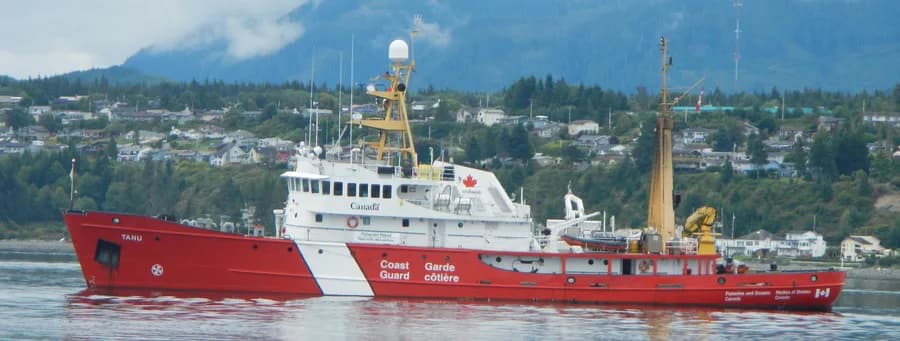
CCGS Tanu is a fisheries patrol vessel in service with the Canadian Coast Guard. The ship was constructed in 1968 by Yarrows at their yard in Esquimalt, British Columbia and entered service the same year. Home ported at Patricia Bay, British Columbia, the ship is primarily used to carry out fisheries patrols and search and rescue missions along Canada's Pacific coast.
Compliance
On 23 July 2026, the Canadian Coast Guard Ship "TANU" reported a total failure of its bridge electronics power supply system while proceeding in Higgins Passage, BC. The vessel was anchored and the crew investigated the issue before proceeding to Port Hardy, BC for repairs.
On 26 October 2023, the Canadian Coast Guard Ship "TANU" reported having sustained a total failure of one of its generators while anchored in Prince Rupert, BC. The vessel proceeded to a wharf in Patricia Bay, BC for repairs.
On 18 October 2023, the Canadian Coast Guard Ship "TANU" reported having observed damages to one of its generators, rendering the vessel unseaworthy, in Port Hardy, BC. The vessel remained secured and the crew conducted repairs.
On 27 August 2023, the Canadian Coast Guard Ship "TANU" reported having sustained a total failure of one of its generators in Goletas Channel, BC. The vessel was anchored in Shushartie Bay, BC and the crew conducted repairs.
On 10 August 2023, the Canadian Coast Guard Ship "TANU" reported having sustained a total failure of one of its generators in the vicinity of Queen Charlotte Sound, BC. The vessel proceeded to Port Hardy, BC to assess the issue.
Recorded marine occurrences naming this vessel.
Composite Risk
Multiple adverse factors, or a hard ship-specific signal, lift this hull above the fleet norm.
A coverage-weighted blend of the single component we could read for this hull; the weights renormalise over only the components present, so a thin read is never inflated and a hull is never credited a “safe 0” for a signal it has no row for. This headline is flagged low-confidence (a thin or structural-only read) and should not be treated as a verdict. Higher means riskier. Derived in-house from government-open port-State-control, flag, sanctions and our own vessel data; weight it by the coverage above.
Commercial
Price it in the Route Planner between any two commercial ports: ballast and laden legs, two fuels at live bunker prices, port and canal costs, the weather on the way, and the TCE set against the market.

Visual Archive