Technical Specifications
Overview
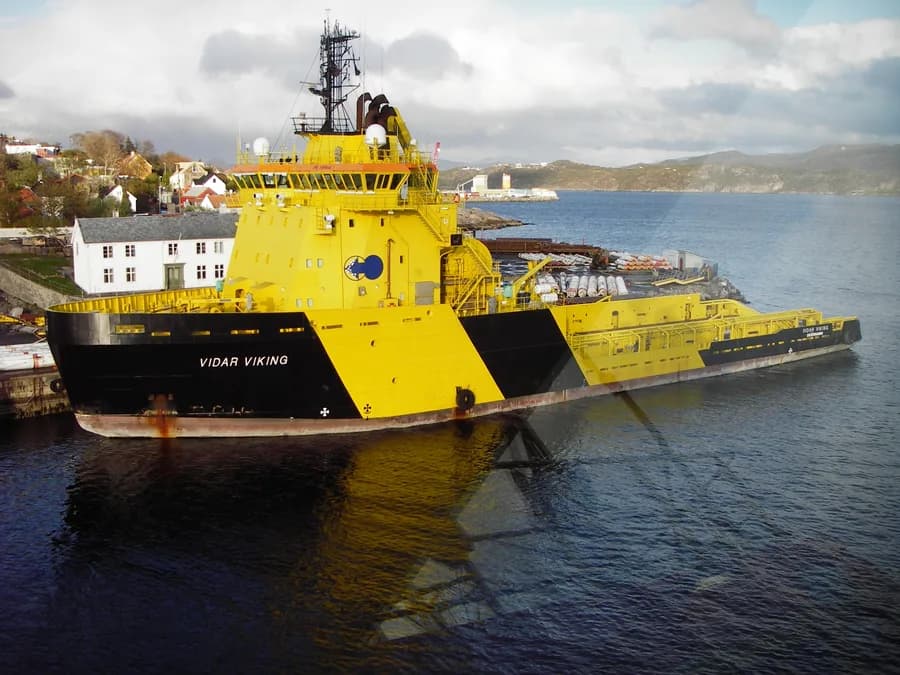
CCGS Captain Molly Kool is a Canadian Coast Guard converted medium class icebreaker. She was originally built as an icebreaking anchor handling tug Vidar Viking for Trans Viking Icebreaking & Offshore in 2001. The vessel was acquired by the Canadian Coast Guard in August 2018 and was commissioned in May of the next year after refit. She is named after the Canadian sailor, Molly Kool. CCGS Captain Molly Kool has two sister vessels, CCGS Jean Goodwill and CCGS Vincent Massey, both of which are converted offshore vessels.
Compliance
On 17 May 2026, the Canadian Coast Guard Ship "CAPTAIN MOLLY KOOL" reported taking on water in the engine room after the rupture of a sea water strainer in the vicinity of Tor Bay, NL. The crew controlled the ingress of water, and the vessel proceeded to St. John's, NL for repairs.
On 12 September 2022, the Canadian Coast Guard Ship "CAPTAIN MOLLY KOOL" reported flooding and listing to port by 5 degrees due to unintentional flooding in the drydock in St. John's, NL.
On 14 February 2022, the Canadian Coast Guard icebreaker "CAPTAIN MOLLY KOOL" reported that two crew members had sustained injuries, 8 nautical miles S of Charlottetown, PE. The crew members were transferred to the hospital once the vessel reached Charlottetown, PE.
On 25 October 2021, the Canadian Coast Guard Ship "CAPTAIN MOLLY KOOL" reported having sustained a fire in its workshop while berthed in Botwood, NL. The crew, assisted by the local fire department, extinguished the fire. No injuries were reported.
Recorded marine occurrences naming this vessel.
Composite Risk
Multiple adverse factors, or a hard ship-specific signal, lift this hull above the fleet norm.
A coverage-weighted blend of the single component we could read for this hull; the weights renormalise over only the components present, so a thin read is never inflated and a hull is never credited a “safe 0” for a signal it has no row for. This headline is flagged low-confidence (a thin or structural-only read) and should not be treated as a verdict. Higher means riskier. Derived in-house from government-open port-State-control, flag, sanctions and our own vessel data; weight it by the coverage above.
Commercial
Price it in the Route Planner between any two commercial ports: ballast and laden legs, two fuels at live bunker prices, port and canal costs, the weather on the way, and the TCE set against the market.

Visual Archive