Shift in Routing Driven by Security Concerns
Commercial vessels are increasingly avoiding the U.S.-coordinated southern route through Omani waters in the Strait of Hormuz due to a concentration of projectile attacks, opting instead for the Iranian-controlled northern corridor. UK Maritime Trade Operations (UKMTO) reported that 16 of 18 projectile-strike incidents since July 6 occurred in the southern corridor, prompting operators to adjust transit plans.
"Despite a brief recovery in late June, vessel traffic through the Strait of Hormuz remains significantly reduced," UKMTO stated, noting that transit data shows a clear preference for the northern route following attacks, security concerns, and heightened enforcement activity.
Risk and Control Dynamics
The northern route, overseen by Iran's Persian Gulf Strait Authority (PGSA), requires vessels to operate under Tehran's jurisdiction, while the southern corridor offers a U.S.-coordinated alternative. Iran has previously instructed ships with active AIS to divert toward the northern route, and recent attacks appear to reinforce this push.
UKMTO data for the week ending August 14 showed 19 outbound vessels using the northern route compared to eight on the southern route, with similar disparities inbound. The traditional IMO Traffic Separation Scheme remains suspended, with no timeline for reinstatement.
Tankers dominate the limited traffic, accounting for the majority of the 151 total transits recorded over seven days-a fraction of the pre-conflict average of over 130 daily crossings.
Recent attacks on two ADNOC-affiliated tankers during outbound transits underscore the risks. Both vessels suffered minor damage, with crews reported safe. The UAE blamed Iran for the strikes, calling them "acts of piracy" by Iran's Revolutionary Guard Corps.
While the attacks have not directly targeted ADNOC's expanded shuttle operation for Iraqi crude, they highlight vulnerabilities in a system reliant on short voyages and occasional AIS darkness to mitigate risks.
Overall traffic remains severely depressed, with AIS-detected transits running 90% below pre-conflict levels. The pattern of attacks and subsequent reroutings reflects a calculated risk avoidance strategy, as operators weigh the dangers of the southern corridor against the regulatory and political complexities of the northern route.
For shipowners and charterers, the choice between routes involves balancing exposure to physical threats with compliance demands in Iranian-controlled waters. The shift underscores a broader market reality: war-risk premiums and rerouting costs are likely to persist as long as the current security environment endures.
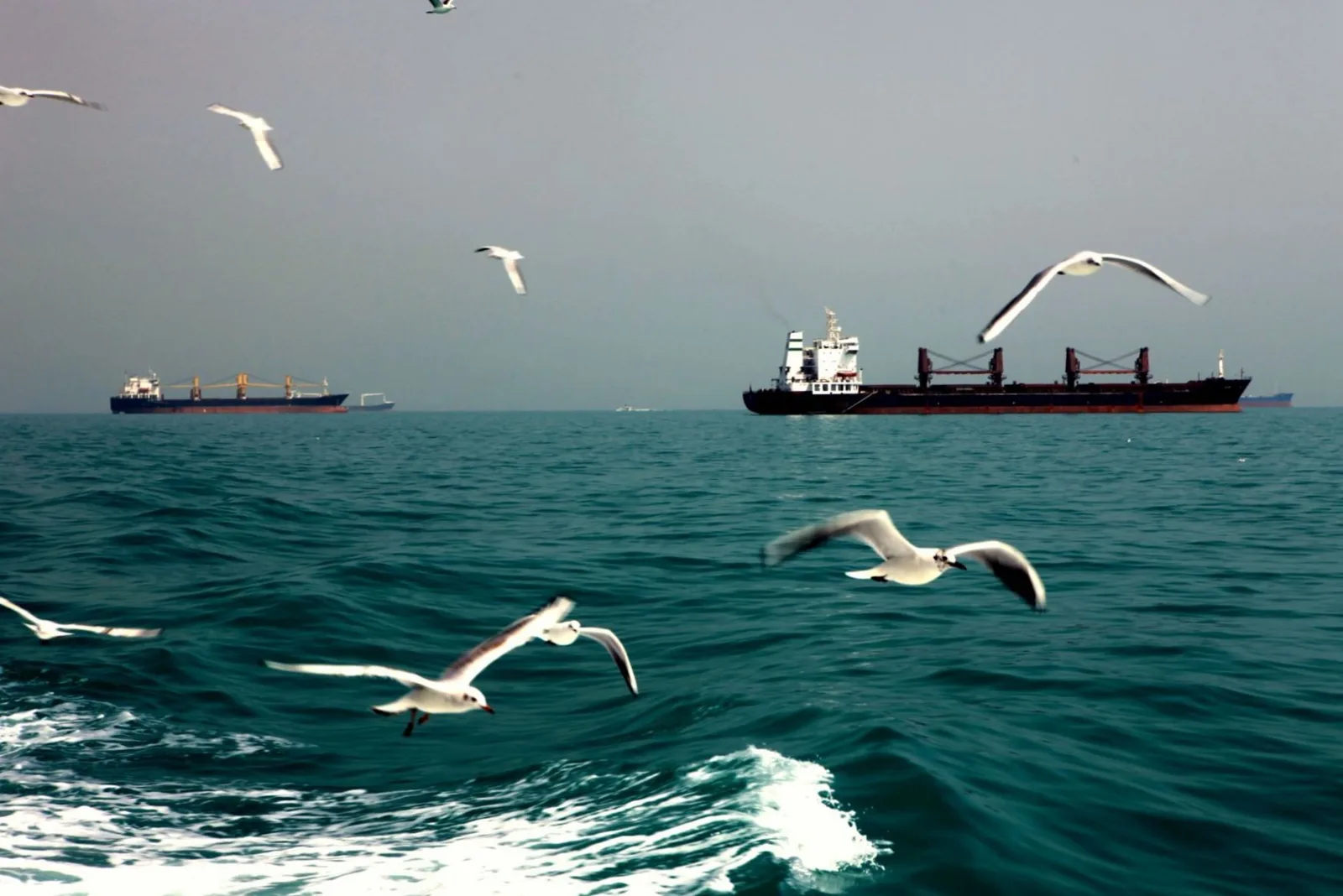
Cover image: Okruz, CC BY-SA 4.0, via Wikimedia Commons.

As Editor in Chief of The Maritime, I lead content development, interviews, and digital storytelling across our multimedia maritime platform. With over 10 years of experience in the maritime industry, I create and publish in-depth stories and video features that highlight key players, emerging trends, and operational realities across global shipping. Before launching The Maritime, I worked as a Vessel Operator at Imza Marine A.S., gaining hands-on commercial shipping and voyage operations experience. I also served as Marketing Communications Specialist at Gimas Ship Supply & Services, where I managed corporate communication, digital strategy, and industry outreach for shipowners and maritime clients. I hold a Master’s degree in Maritime Transportation Management from Istanbul Technical University and a Master’s degree in Publishing from Marmara University. My work is driven by the belief that the maritime world deserves strong, informed, and accessible media representation. I am committed to sharing the stories of maritime professionals and contributing to the sector’s visibility, knowledge exchange, and future development.