Technical Specifications
Overview
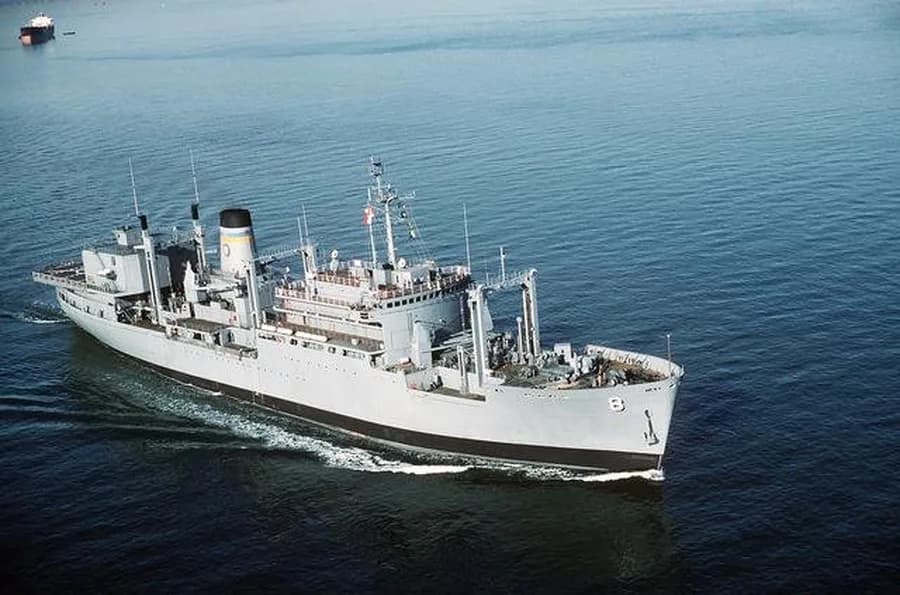
USNS Sirius (T-AFS 8) was a Sirius-class combat stores ship of the United States Navy, named for Sirius (α Canis Majoris), the brightest star visible from Earth other than the Sun. Sirius was built by Swan Hunter & Wigham Richardson for the Royal Navy. Laid down in 1965, she was launched in 1966 from Wallsend as RFA Lyness with the pennant A339 serving in the British Royal Fleet Auxiliary. On 15 November 1980, the ship was acquired by charter by the United States Military Sealift Command. She was transferred to the U.S. Navy's Military Sealift Command in 1981. Sirius was deactivated and struck from the Naval Vessel Register in 2005 and given to the U.S. Department of Transportation's Maritime Administration (MARAD), then assigned to Texas Maritime Academy under an agreement that it can be activated by MARAD at any time. During the fall of 2005, the Sirius served in New Orleans for Katrina relief, from 10 September until 29 November and at Lake Charles, LA for Rita relief until 2 March. Because of its extended relief effort the Sirius was unable to undergo a refit in 2006 to adapt its new role as a training vessel and comply with U.S. Coast Guard safety standards. Because the Sirius had not undergone a refit, it could not be formally commissioned as the USTS Texas Clipper III nor could it be used for summer training cruises.
Composite Risk
Multiple adverse factors, or a hard ship-specific signal, lift this hull above the fleet norm.
A coverage-weighted blend of the single component we could read for this hull; the weights renormalise over only the components present, so a thin read is never inflated and a hull is never credited a “safe 0” for a signal it has no row for. This headline is flagged low-confidence (a thin or structural-only read) and should not be treated as a verdict. Higher means riskier. Derived in-house from government-open port-State-control, flag, sanctions and our own vessel data; weight it by the coverage above.
Commercial
Price it in the Route Planner between any two commercial ports: ballast and laden legs, two fuels at live bunker prices, port and canal costs, the weather on the way, and the TCE set against the market.

Visual Archive