Technical Specifications
Overview
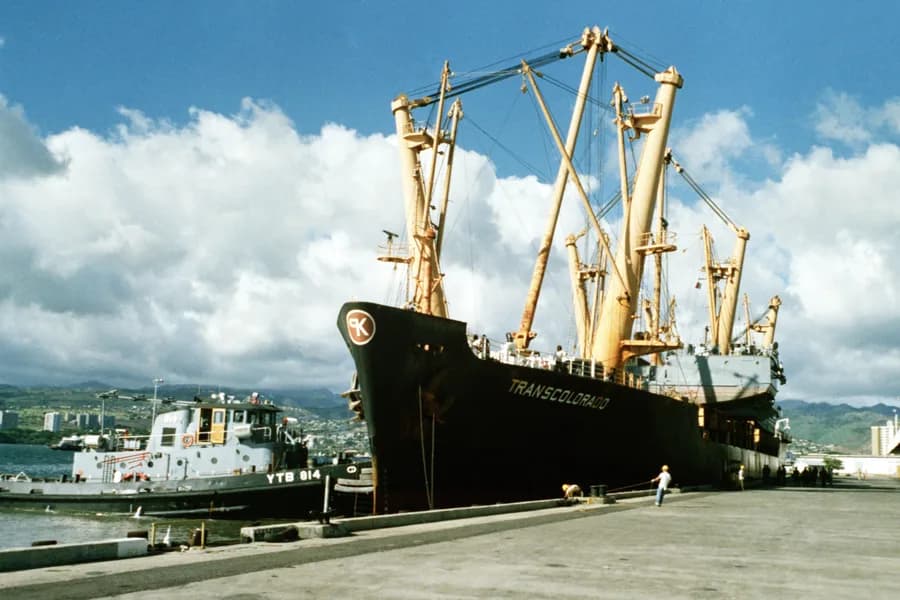
USNS Marine Adder (T-AP–193) was a troop ship for the United States Navy in the 1950s. She was built in 1945 for the United States Maritime Commission as SS Marine Adder, a Type C4-S-A3 troop ship, by the Kaiser Company during World War II. In 1950, the ship was transferred to the Military Sea Transport Service of the U.S. Navy as a United States Naval Ship staffed by a civilian crew. After ending her naval service in 1957, she entered the National Defense Reserve Fleet, but was sold for commercial use in 1967. She was used in part to carry supplies to support the Vietnam War efforts. During the Summer of 1972 while in Da Nang Port, South Vietnam, a limpet mine was attached to the vessel by a swimmer, blowing a hole in the hull upon detonation. In order to save the ship, the Skipper ran it aground in the Da Nang harbor. The US Navy standby salvage ship USS Grasp (ARS 24) with its crew of divers installed a box patch over the hole and pumped the water from the bilges, before moving the ship to a pier. US Army tanks hung from ship booms to heel the ship so that a metal patch could be welded in place to return the ship to duty. SS Transcolorado, she was chartered by the Military Sealift Command as a civilian cargo ship designated T-AK-2005.
Composite Risk
Multiple adverse factors, or a hard ship-specific signal, lift this hull above the fleet norm.
A coverage-weighted blend of the single component we could read for this hull; the weights renormalise over only the components present, so a thin read is never inflated and a hull is never credited a “safe 0” for a signal it has no row for. This headline is flagged low-confidence (a thin or structural-only read) and should not be treated as a verdict. Higher means riskier. Derived in-house from government-open port-State-control, flag, sanctions and our own vessel data; weight it by the coverage above.
Commercial
Price it in the Route Planner between any two commercial ports: ballast and laden legs, two fuels at live bunker prices, port and canal costs, the weather on the way, and the TCE set against the market.

Visual Archive