Technical Specifications
Overview
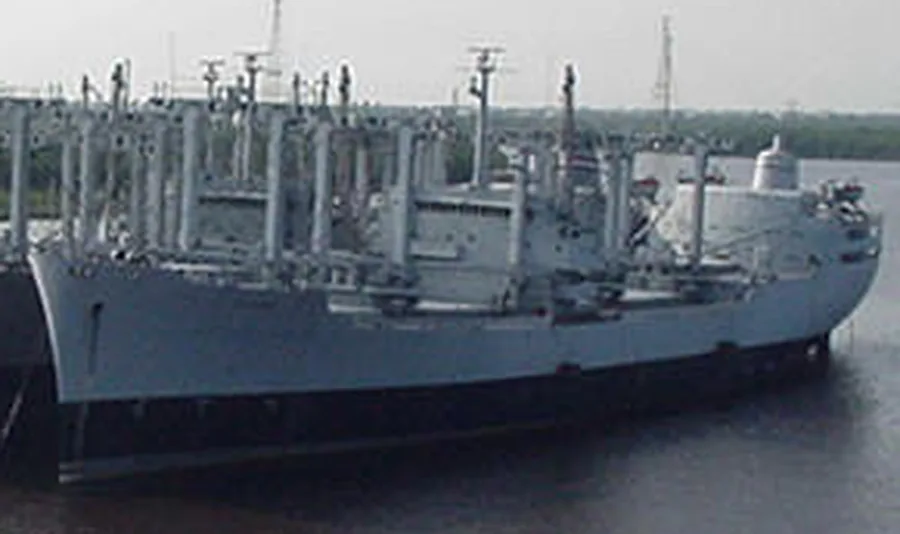
USNS Courier (MARAD hull AK-5019) was a cargo ship of the National Defense Reserve Fleet. The cargo ship was built by Sun Shipbuilding and Drydock Company, Chester, Pennsylvania, at the request of the US Maritime Administration (MARAD hull 124) in 1962. The ship was 470 ft in length and has a breath of 73 and weighs 11420 tons, empty. The ship was originally administered by American Export Lines under the civilian name SS Export Courier and eventually became part of the James River Reserve Fleet. The company ran into financial trouble in 1977. Before 1981, Farrell Lines, which took over parts of the dissolved American Export Lines, transferred administration of the Courier to the Military Sealift Command, which renamed the ship USNS Courier. The ship was officially accepted as part of the Maritime Administration in February 1983. From 1981 it was stationed with the Beaumont Reserve Fleet or docked at Port Neches, Beaumont Texas. Service records indicate repairs after Operation Desert Storm. In 2001 the ship was transferred to the National Defense Reserve Fleet and remained in this status until July 2008 when it was sold to Southern Scrap Metal Corporation of New Orleans, Louisiana and subsequently transferred to New Orleans' Industrial Canal on 13 August, a little more than two weeks before Hurricane Gustav reached Louisiana's southeastern coast.
Composite Risk
Multiple adverse factors, or a hard ship-specific signal, lift this hull above the fleet norm.
A coverage-weighted blend of the single component we could read for this hull; the weights renormalise over only the components present, so a thin read is never inflated and a hull is never credited a “safe 0” for a signal it has no row for. This headline is flagged low-confidence (a thin or structural-only read) and should not be treated as a verdict. Higher means riskier. Derived in-house from government-open port-State-control, flag, sanctions and our own vessel data; weight it by the coverage above.
Commercial
Price it in the Route Planner between any two commercial ports: ballast and laden legs, two fuels at live bunker prices, port and canal costs, the weather on the way, and the TCE set against the market.

Visual Archive