Technical Specifications
Overview
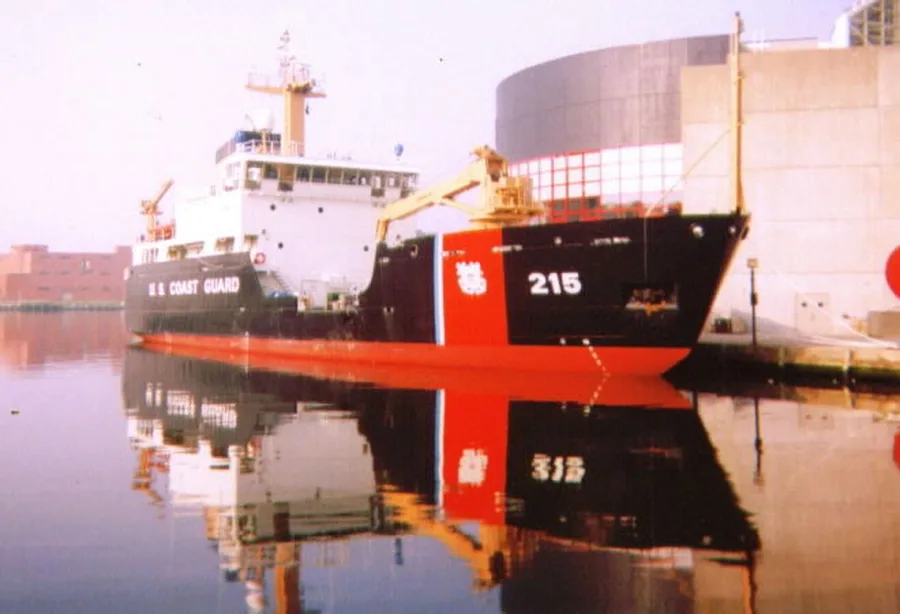
USCGC Sequoia (WLB-215) is a United States Coast Guard 225-foot seagoing buoy tender, homeported in Port Huron, Michigan. The primary mission of the cutter is to maintain aids to navigation. As with all Coast Guard cutters, she functions as a multi-mission asset, responsible for marine environmental protection, search and rescue, law enforcement, and Homeland Security missions. Sequoia is one of sixteen Juniper-class buoy tenders built and commissioned from 1996–2004. She was launched on August 23, 2003 on the Menominee River by Marinette Marine Corporation (MMC) in Marinette, Wisconsin. She replaced the USCGC Sassafras (WLB-401) as the only buoy tender in the Marianas. Delivered on April 21, 2004, Sequoia was commissioned in Santa Rita, Guam on October 15, 2004 after completing the 13,000-mile voyage from Wisconsin to Apra Harbor. The sponsor was Dorothy England, the wife of Secretary of the Navy Gordon R. England, and the first commanding officer was Lt. Cmdr. Matthew T. Meilstrup. While stationed in Guam, USCGC Sequoia regularly conducted fisheries enforcement missions through the Western Pacific, in support of Western and Central Pacific Fisheries Commission treaties and regulations, as well as supporting bilateral agreements between the Pacific Island nations of the Marshall Islands and the Federated States of Micronesia.
Composite Risk
Multiple adverse factors, or a hard ship-specific signal, lift this hull above the fleet norm.
A coverage-weighted blend of the single component we could read for this hull; the weights renormalise over only the components present, so a thin read is never inflated and a hull is never credited a “safe 0” for a signal it has no row for. This headline is flagged low-confidence (a thin or structural-only read) and should not be treated as a verdict. Higher means riskier. Derived in-house from government-open port-State-control, flag, sanctions and our own vessel data; weight it by the coverage above.
Commercial
Price it in the Route Planner between any two commercial ports: ballast and laden legs, two fuels at live bunker prices, port and canal costs, the weather on the way, and the TCE set against the market.

Visual Archive