Technical Specifications
Live Tracking
Intelligence
Verified reported figure. Band is peer-relative, not official IMO CII.
Compliance
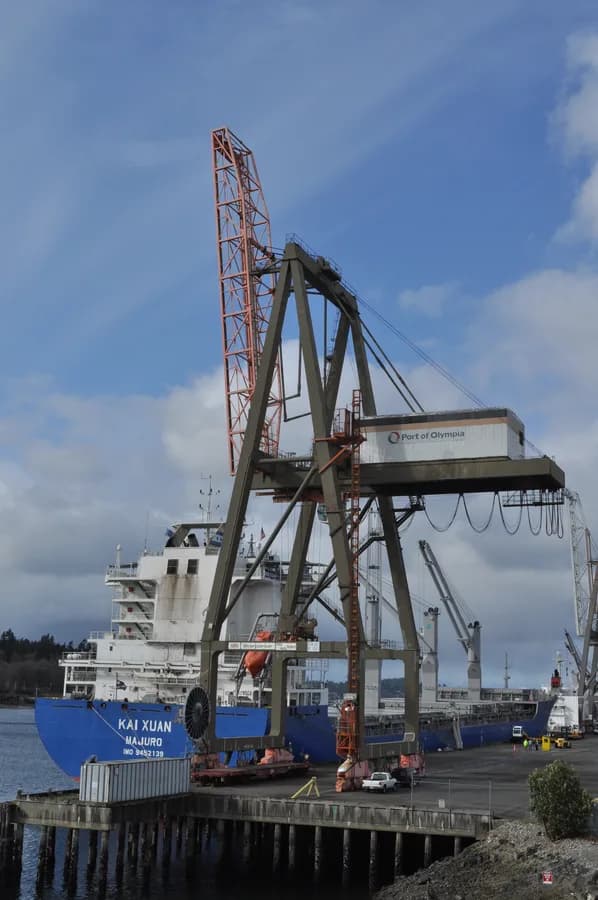
On 03 September 2016, the bulk carrier "KAI XUAN ", with 20 people on board, reported a total failure of the main engine due to a fuel pump issue in Trincomali Channel, BC. The vessel dropped anchor to effect repairs. No damage reported.
On 18 December 2015, the bulk carrier "KAI XUAN", with 19 people on board and under the conduct of a pilot, reported a bottom contact while approaching Berth 2, Squamish Bulk terminal, Squamish, BC. The assisting tug "SST ORLEANS", with 2 people on board, also reported making bottom contact and momentarily lost its port engine. After re-staring the port engine, the tug continued assisting the bulk carrier to the dock. Divers conducted underwater survey for both vessels and reported no damage to the underwater sections. Minor damage to the tug's superstructure reported.
Recorded marine occurrences naming this vessel.
Operational Status
The latest broadcast is too stale or lacks the speed / status to classify.
Read from the single most-recent AIS broadcast we hold for this hull — we keep no position history, so this is a point-in-time posture, not a dwell inference. Derived in-house from our own AIS feed; weight it by the broadcast age above.
Composite Risk
Multiple adverse factors, or a hard ship-specific signal, lift this hull above the fleet norm.
A coverage-weighted blend of the 3 components we could read for this hull — the weights renormalise over only the components present, so a thin read is never inflated and a hull is never credited a “safe 0” for a signal it has no row for. Higher means riskier. Derived in-house from government-open port-State-control, flag, sanctions and our own vessel data; weight it by the coverage above.
Estimated
Other · summer draught 9 m · 69.1 t per cm immersion
Estimate only — modelled from deadweight (deadweight regression) using a first-principles hydrostatic model, not measured hydrostatic tables. The design draught it is anchored to is unreliable across the fleet.
Transparency
Behavioural flags raised against this vessel — each shown with the raw evidence behind it. Derived in-house from data we are entitled to publish; informational, not a determination of wrongdoing.
Stopped transmitting relative to the live feed front
Method: gap measured vs the live feed's own max timestamp, not wall-clock. Source: TheMaritime aisstream.io ingest (ais_positions).
Signals are a current-state view: a flag clears once the vessel stops tripping its detector. These are screening indicators, not a substitute for your own due diligence.
Commercial

Visual Archive
Explore More