Technical Specifications
Overview
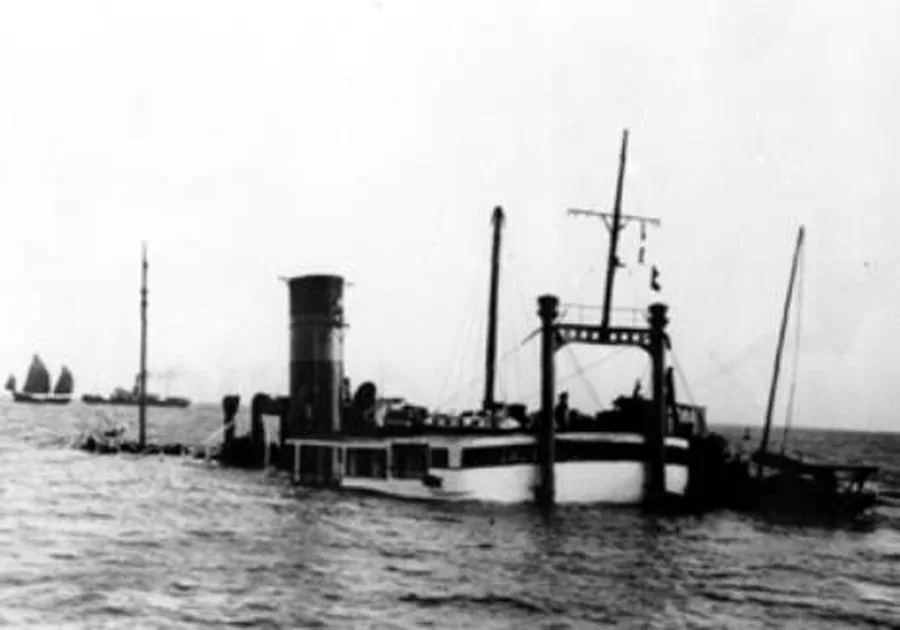
SS Kiangya or Jiangya (traditional Chinese: 江亞輪; simplified Chinese: 江亚轮; pinyin: Jiāngyà Lún) was a Chinese passenger steamship that was destroyed in an explosion near the mouth of the Huangpu River 50 miles (80 km) north of Shanghai on 3 or 4 December 1948. Her wreck was cleared from the channel in 1956 and her hull refurbished, re-entering service. She was renamed the SS Dongfang Hong 8 (traditional Chinese: 東方紅8; simplified Chinese: 东方红8; pinyin: Dōngfāng Hóng Bā; lit. 'The East is Red #8') during the Cultural Revolution and retired during modernisations in 1983. The Kiangya was one of eight ships operated by the Shanghai Merchants Group and the sister ship of the SS Kiangking (Chinese: 江静轮; pinyin: Jiāngjìng Lún). She had a displacement of 2,100 tons. At the time of her explosion during the Chinese Civil War, she was bound for Ningbo from Shanghai's Shiliupu Dock. She was packed with refugees fleeing the advancing Communists. She probably hit a mine, possibly laid by the Imperial Japanese Navy during the Second World War. The exact death toll is unknown. Although her official capacity was 1,186 passengers, the manifest listed 2,150 and she was almost certainly carrying many additional stowaways. Rescuers were unaware of the disaster for some hours.
Composite Risk
Multiple adverse factors, or a hard ship-specific signal, lift this hull above the fleet norm.
A coverage-weighted blend of the single component we could read for this hull; the weights renormalise over only the components present, so a thin read is never inflated and a hull is never credited a “safe 0” for a signal it has no row for. This headline is flagged low-confidence (a thin or structural-only read) and should not be treated as a verdict. Higher means riskier. Derived in-house from government-open port-State-control, flag, sanctions and our own vessel data; weight it by the coverage above.
Commercial
Price it in the Route Planner between any two commercial ports: ballast and laden legs, two fuels at live bunker prices, port and canal costs, the weather on the way, and the TCE set against the market.

Visual Archive