Technical Specifications
Overview
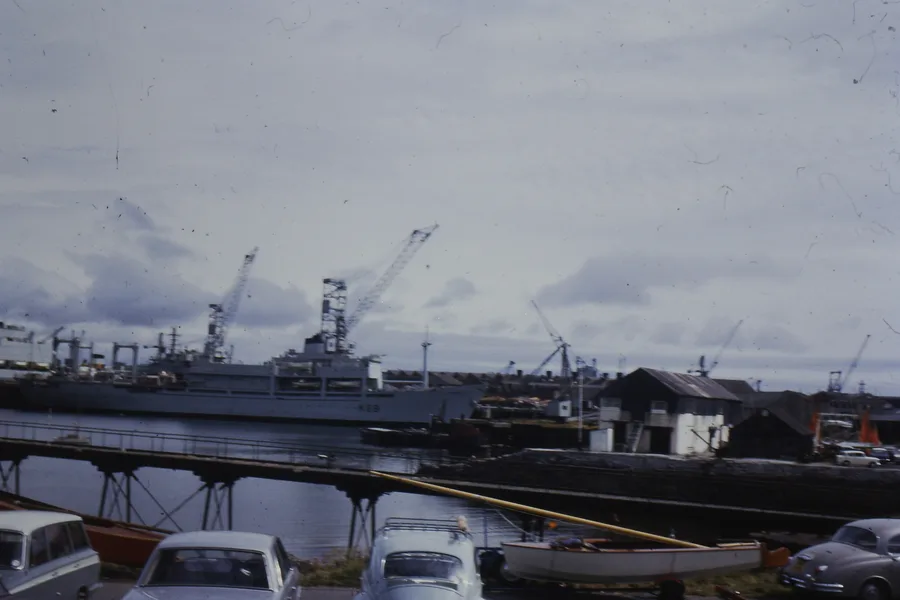
RFA Engadine (K08) was a helicopter support ship of the Royal Fleet Auxiliary. The need for Engadine was seen in the mid-1960s as more and more helicopters were deployed from Royal Navy aircraft carriers and surface combatants. The ship was ordered in August 1964, from Henry Robb of Leith, and commissioned in December 1967, replacing HMS Lofoten. She was the third British ship named HMS Engadine the previous two being a seaplane carrier and an aircraft transport ship. Engadine comes from the Engadin valley in south-east Switzerland, which is represented by the alphorns and edelweiss on her badge. In 1968 she was designated as one of the PYTHON locations for the dispersal and continuity of government in the event of nuclear war. Engadine's homeport throughout her career was Portland, Dorset. During the 1976 crisis in Lebanon she was deployed as part of contingency planning to evacuate British citizens. At the Silver Jubilee fleet review in 1977 she followed the royal yacht HMY Britannia. In the Falklands War she was a helicopter support and refuelling ship in San Carlos Water. By the mid-1980s Engadine was becoming obsolescent so the container ship MV Contender Bezant was bought for conversion, becoming RFA Argus. Engadine was decommissioned in 1989 and sold to new owners in Greece.
Composite Risk
Multiple adverse factors, or a hard ship-specific signal, lift this hull above the fleet norm.
A coverage-weighted blend of the single component we could read for this hull; the weights renormalise over only the components present, so a thin read is never inflated and a hull is never credited a “safe 0” for a signal it has no row for. This headline is flagged low-confidence (a thin or structural-only read) and should not be treated as a verdict. Higher means riskier. Derived in-house from government-open port-State-control, flag, sanctions and our own vessel data; weight it by the coverage above.
Commercial
Price it in the Route Planner between any two commercial ports: ballast and laden legs, two fuels at live bunker prices, port and canal costs, the weather on the way, and the TCE set against the market.

Visual Archive