Technical Specifications
Overview
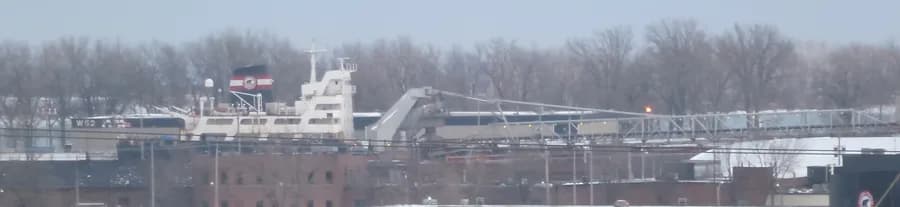
Algoma Navigator was a Canadian bulk carrier operated by Algoma Central. Like other bulk carriers, her potential cargoes included: coal/coke, aggregates, slag, iron ore/oxides, salt, fertilizers, grain products, gypsum, quartzite, or sand. The vessel was constructed by John Readhead & Sons in the United Kingdom in 1967 for the Cambay Steamship Company and launched as Demeterton. The vessel was enlarged in 1967 and sold in 1975 to the Upper Lakes Group which renamed the ship St. Lawrence Navigator. In 1979, the vessel was renamed Canadian Navigator after a rebuild. In 2011, the ship was sold to Algoma and became Algoma Navigator. In 2016, the bulk carrier was renamed Navi before being sold for scrap and broken up in 2016.
Compliance
On 26 September 2014, the bulk carrier "ALGOMA NAVIGATOR" made bottom contact while transiting the Welland Canal near St.Catharines, ON. The vessel was secured alongside. Damage reported.
On 14 August 2014, the MV "ALGOMA NAVIGATOR", reported having lost the port anchor and 5 shackles of chain and off Two Harbours, MN, USA
On 19 May 2014, the MV "BLUEBILL" struck the MV "ALGOMA NAVIGATOR" moored just below lock No. 8 of the Welland Canal, ON. Minor damages reported to both vessels. No injuries or pollution reported.
Recorded marine occurrences naming this vessel.
Composite Risk
Multiple adverse factors, or a hard ship-specific signal, lift this hull above the fleet norm.
A coverage-weighted blend of the single component we could read for this hull; the weights renormalise over only the components present, so a thin read is never inflated and a hull is never credited a “safe 0” for a signal it has no row for. This headline is flagged low-confidence (a thin or structural-only read) and should not be treated as a verdict. Higher means riskier. Derived in-house from government-open port-State-control, flag, sanctions and our own vessel data; weight it by the coverage above.
Commercial
Price it in the Route Planner between any two commercial ports: ballast and laden legs, two fuels at live bunker prices, port and canal costs, the weather on the way, and the TCE set against the market.

Visual Archive