Technical Specifications
Overview
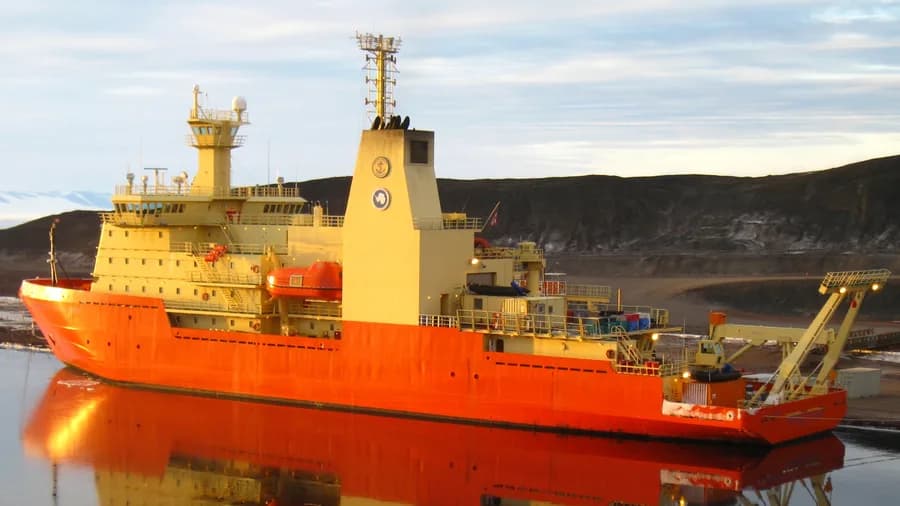
Nathaniel B. Palmer is an icebreaking research vessel (RVIB) owned by Offshore Service Vessels LLC, operated by Edison Chouest Offshore, Inc. From its launch in 1992 until 2025 it was chartered by the United States National Science Foundation (NSF). Nathaniel B. Palmer and tasked with extended scientific missions in the Antarctic. Nathaniel B. Palmer was purpose-built for and delivered to the NSF by Edison Chouest Offshore's North American Shipbuilding facility in 1992. Nathaniel B. Palmer was able to support up to two helicopters, accommodated up to 45 science and technical personnel, had a crew of 22 and was capable of missions lasting up to 65 days. The vessel was named after merchant mariner and ship builder Nathaniel Brown Palmer, credited by some historians as the first American to see Antarctica. The vessel was capable of accessing some of the most ice-heavy areas of the Antarctic, that smaller icebreakers were not capable of. Along with ice-breaking, the ship could perform mooring operations, seafloor dredging, and water sampling. It could also deploy autonomous unmanned aerial and underwater systems. In February 2020, researchers aboard the vessel with the international Thwaites Glacier Offshore Research (THOR) project discovered Sif Island, located in Pine Island Bay of the Amundsen Sea, in Antarctica.
Composite Risk
Multiple adverse factors, or a hard ship-specific signal, lift this hull above the fleet norm.
A coverage-weighted blend of the single component we could read for this hull; the weights renormalise over only the components present, so a thin read is never inflated and a hull is never credited a “safe 0” for a signal it has no row for. This headline is flagged low-confidence (a thin or structural-only read) and should not be treated as a verdict. Higher means riskier. Derived in-house from government-open port-State-control, flag, sanctions and our own vessel data; weight it by the coverage above.
Commercial
Price it in the Route Planner between any two commercial ports: ballast and laden legs, two fuels at live bunker prices, port and canal costs, the weather on the way, and the TCE set against the market.
Fleet Management

Visual Archive