Technical Specifications
Overview
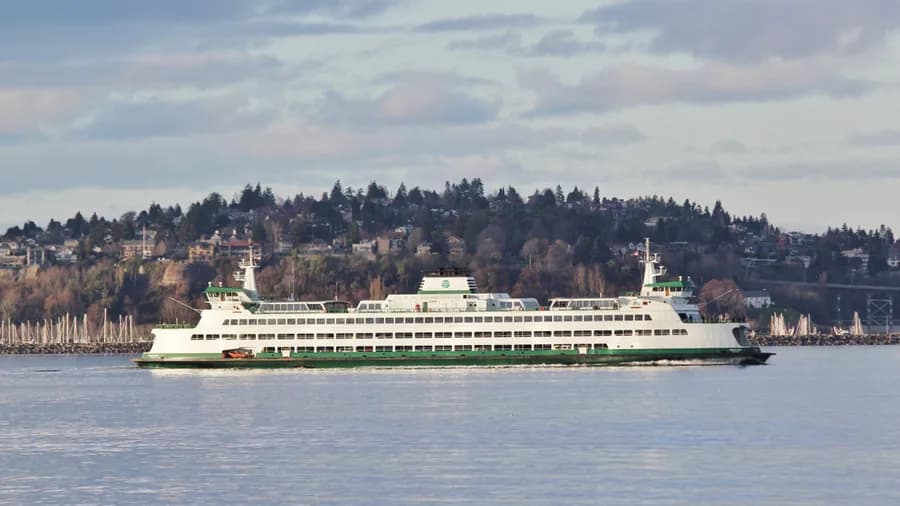
MV Wenatchee is a Jumbo Mark-II-class ferry operated by Washington State Ferries. Launched in 1998, she was the second in her class in the fleet following the MV Tacoma. Since delivery, the Wenatchee has almost exclusively been assigned to the busy Seattle–Bainbridge Island route alongside the Tacoma. The Wenatchee and her older sister ship, the Tacoma, suffered from excessive vibration during their early period of operation, until she was repaired during routine maintenance in 1999. The issue was addressed in the final Jumbo Mark-II ferry, the MV Puyallup, before she launched. The Jumbo Mark-II fleet is planned to be converted to diesel-electric hybrid beginning in 2023. The conversion was part of a state-mandated reduction in greenhouse gas emissions and was funded by part of a settlement from the Volkswagen emissions scandal. The Wenatchee is the first of the fleet to undergo conversion, which began in September 2023 and was scheduled to take one year to complete. Due to differences between the blueprints and the boat's condition, as well as other issues, the conversion's completion was delayed to mid-2025. In April 2021, during sea trials following engine overhauls, the vessel suffered an engine fire and lost power, which led to an ongoing investigation by the United States Coast Guard and the National Transportation Safety Board.
Composite Risk
Multiple adverse factors, or a hard ship-specific signal, lift this hull above the fleet norm.
A coverage-weighted blend of the single component we could read for this hull; the weights renormalise over only the components present, so a thin read is never inflated and a hull is never credited a “safe 0” for a signal it has no row for. This headline is flagged low-confidence (a thin or structural-only read) and should not be treated as a verdict. Higher means riskier. Derived in-house from government-open port-State-control, flag, sanctions and our own vessel data; weight it by the coverage above.
Commercial
Price it in the Route Planner between any two commercial ports: ballast and laden legs, two fuels at live bunker prices, port and canal costs, the weather on the way, and the TCE set against the market.

Visual Archive