Technical Specifications
Overview
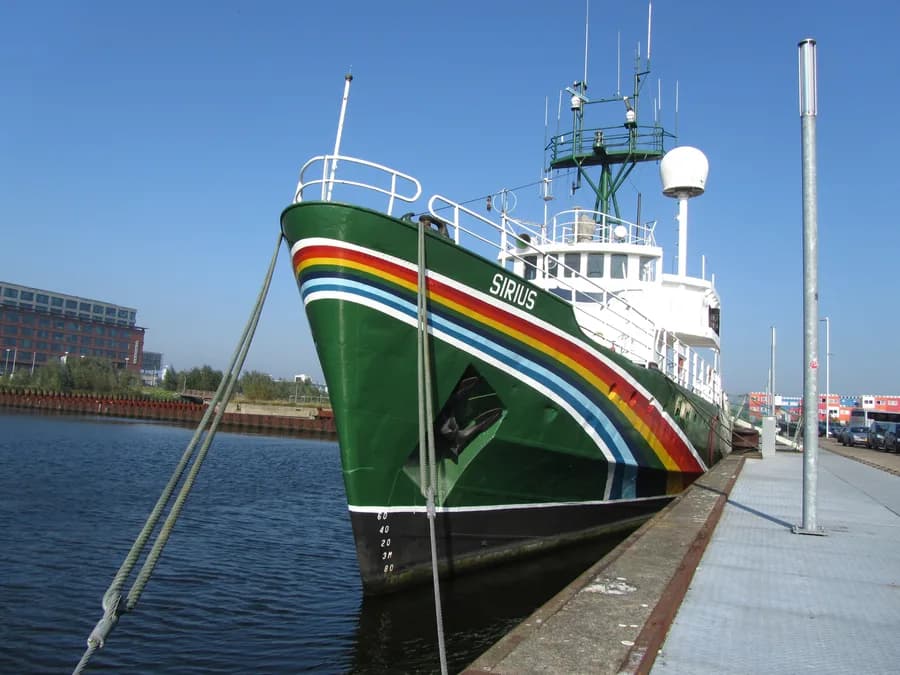
MV Sirius was a Greenpeace ship named after the star Sirius. The Sirius was built with modern specifications at the Boele shipyard in the Netherlands in 1950 as one of seven pilot vessels. The ship, originally owned by the Royal Dutch Navy, was sold to Greenpeace during 1981 while in dry dock. The ship was refitted, repaired, and repainted. It took ten weeks to paint her. The ship's colour scheme was soon changed to a green hull and rainbow colours and a white dove of peace with an olive branch was painted on the bow. Sirius was refitted with more modern navigation systems, communication equipment, lifeboats, and rafts. The pantries were turned into outdoor engine rooms and the mess room became a storage room. Sirius served as the flagship of Greenpeace Netherlands through 1998, after which she was retired. Until 2018 she was docked at Amsterdam, where she serves in an educational capacity, offering shipboard tours and environmental education. At around midnight on September 30–31, 1988, while on passage from Cabrera to Barcelona, Sirius was forced to seek shelter in Majorca during a Force 9 severe gale. After turning the vessel, the crew sighted distress flares eight miles (13 km) from Dragonera Island. Sirius set course for the flares, and a small sailing yacht was found to be sinking. One of her four British crew was missing overboard, but two young men were rescued.
Composite Risk
Multiple adverse factors, or a hard ship-specific signal, lift this hull above the fleet norm.
A coverage-weighted blend of the single component we could read for this hull; the weights renormalise over only the components present, so a thin read is never inflated and a hull is never credited a “safe 0” for a signal it has no row for. This headline is flagged low-confidence (a thin or structural-only read) and should not be treated as a verdict. Higher means riskier. Derived in-house from government-open port-State-control, flag, sanctions and our own vessel data; weight it by the coverage above.
Commercial
Price it in the Route Planner between any two commercial ports: ballast and laden legs, two fuels at live bunker prices, port and canal costs, the weather on the way, and the TCE set against the market.

Visual Archive