Technical Specifications
Overview
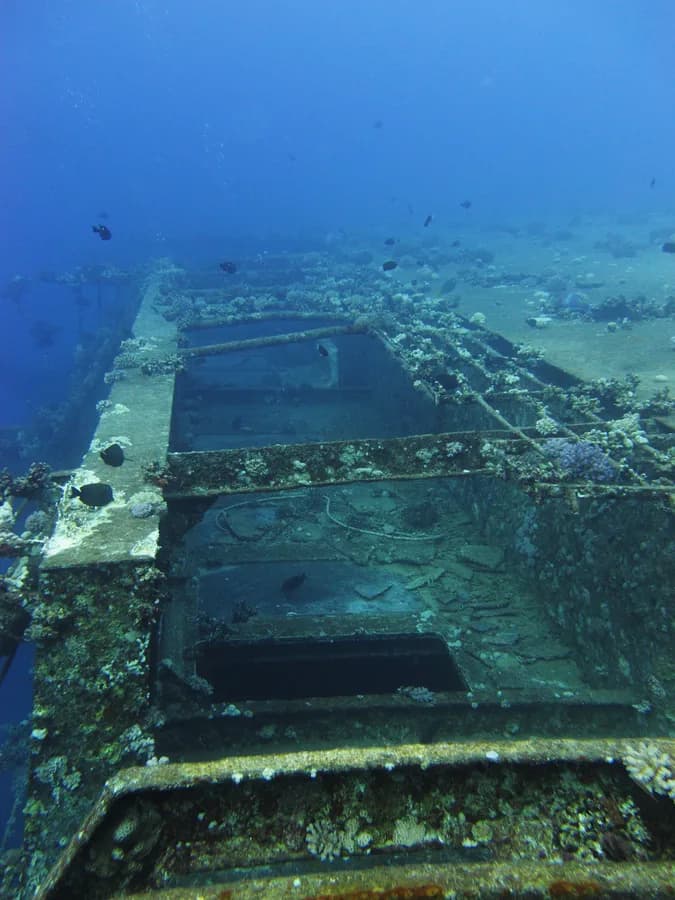
MV Salem Express was an Egyptian-French passenger ship that sank in the Red Sea. It is notable due to the heavy loss of life which occurred when she sank shortly after striking a reef at around 11:13pm on December 14, 1991. The majority of passengers were Moroccan-French. Most were returning from pilgrimage to Mecca. The official death toll was 470, though some evidence suggests that the ship was overcrowded and the true death toll may have been much greater, likely more than 1,600. Salem Express was a roll-on/roll-off passenger ferry which operated for 25 years, with many different owners, names and regular routes at that time. The ship was originally named Fred Scamaroni, after a World War II French resistance member who was captured and tortured, killing himself in his cell without revealing his mission. Construction began in June 1963. In November 1964 she was launched and towed to Port-de-Bouc for completion, being finally delivered in June 1965 to the Compagnie Générale Transatlantique, Marseille, France. A fire in her engine room delayed her maiden voyage on June 26, 1966. In June 1966 she began operating on her first route between Marseille and Ajaccio. In January 1967, she collided with the Ajaccio quay; and in April 1970 a fire broke out on the way to Bastia.
Composite Risk
Multiple adverse factors, or a hard ship-specific signal, lift this hull above the fleet norm.
A coverage-weighted blend of the single component we could read for this hull; the weights renormalise over only the components present, so a thin read is never inflated and a hull is never credited a “safe 0” for a signal it has no row for. This headline is flagged low-confidence (a thin or structural-only read) and should not be treated as a verdict. Higher means riskier. Derived in-house from government-open port-State-control, flag, sanctions and our own vessel data; weight it by the coverage above.
Commercial
Price it in the Route Planner between any two commercial ports: ballast and laden legs, two fuels at live bunker prices, port and canal costs, the weather on the way, and the TCE set against the market.

Visual Archive