Technical Specifications
Overview
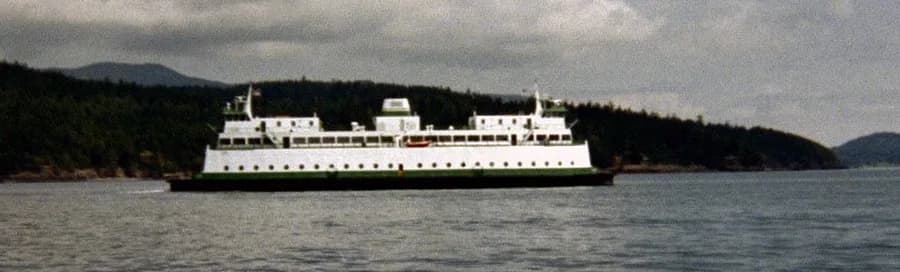
MV Nisqually was a Steel Electric-class ferry formerly operated by Washington State Ferries. Originally built as MV Mendocino in San Francisco for Northwestern Pacific Railroad, she started out serving Southern Pacific Railways on their Golden Gate Ferries line on San Francisco Bay. She was purchased by the Puget Sound Navigation Company in 1940, and moved to Puget Sound where she was renamed Nisqually, later being acquired by Washington State Ferries who took over operations in 1951. In July 1963 Nisqually was working on the Edmonds-Kingston route. The ferry was heading to Edmonds when a tanker struck Nisqually. No one was hurt, but the ferry suffered major damage. If the hull was not sponsoned out 8 feet (2.4 m) in 1958, the ferry would have sunk. On November 20, 2007, the entire Steel Electric class was withdrawn from service due to hull corrosion issues. Nisqually was not in service at the time. Washington State Ferries sold Nisqually and her sister ferries to Eco Planet Recycling, Inc. of Chula Vista, California for scrap. All four ferries were sold for $200,000. Nisqually and Quinault were towed out of Eagle Harbor on August 7, 2009, arriving in Ensenada, Mexico on August 16. Presumably, Nisqually was cut up sometime between February and April 2011.
Composite Risk
Multiple adverse factors, or a hard ship-specific signal, lift this hull above the fleet norm.
A coverage-weighted blend of the single component we could read for this hull; the weights renormalise over only the components present, so a thin read is never inflated and a hull is never credited a “safe 0” for a signal it has no row for. This headline is flagged low-confidence (a thin or structural-only read) and should not be treated as a verdict. Higher means riskier. Derived in-house from government-open port-State-control, flag, sanctions and our own vessel data; weight it by the coverage above.
Commercial
Price it in the Route Planner between any two commercial ports: ballast and laden legs, two fuels at live bunker prices, port and canal costs, the weather on the way, and the TCE set against the market.

Visual Archive