Technical Specifications
Overview
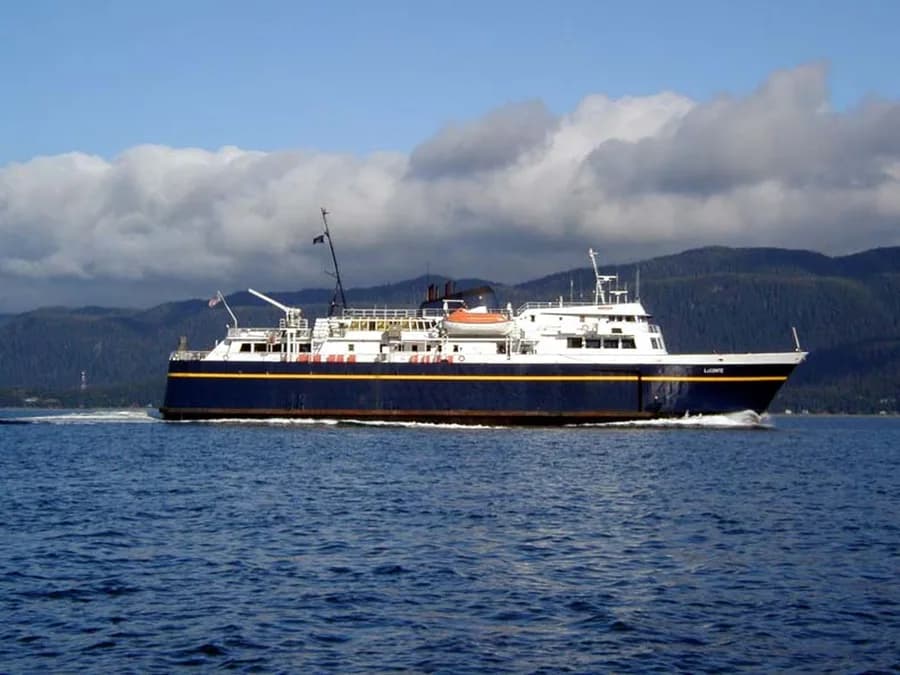
MV LeConte ( lə-KON-tay) is a feeder vessel for the Alaska Marine Highway System, built in Sturgeon Bay, Wisconsin in 1973 and commissioned in 1974 by Alaska's ferry system. LeConte is the older sister ship to M/V Aurora, and both serve as feeder vessels that pick up passengers in small communities such as Hoonah and take them to larger regional communities (this process is colloquially known as the "milk run"). The LeConte primarily serves the northern portion of the Alaskan Panhandle in between Sitka and Juneau, but also occasionally ventures into Southeast Alaska as well. In a highly controversial and political change, however, the LeConte was turned into a day boat operated exclusively out of Juneau. This change cut service to the community of Pelican and to the hub of Sitka — home of the Southeast Alaska Regional Health Center, a hospital that solely serves the Native Alaskan community, the primary demographic of the Leconte's ports of call. In the summer of 2005, the LeConte made a number of stops in Bartlett Cove, which is one of the gateways of Glacier Bay National Park. The LeConte's amenities include a hot-food cafeteria, movie and forward observation lounges, and solarium. There are no cabins on the LeConte both because of its small size and the lack of demand due to its feeder route running times.
Composite Risk
Multiple adverse factors, or a hard ship-specific signal, lift this hull above the fleet norm.
A coverage-weighted blend of the single component we could read for this hull; the weights renormalise over only the components present, so a thin read is never inflated and a hull is never credited a “safe 0” for a signal it has no row for. This headline is flagged low-confidence (a thin or structural-only read) and should not be treated as a verdict. Higher means riskier. Derived in-house from government-open port-State-control, flag, sanctions and our own vessel data; weight it by the coverage above.
Commercial
Price it in the Route Planner between any two commercial ports: ballast and laden legs, two fuels at live bunker prices, port and canal costs, the weather on the way, and the TCE set against the market.

Visual Archive