Technical Specifications
Overview
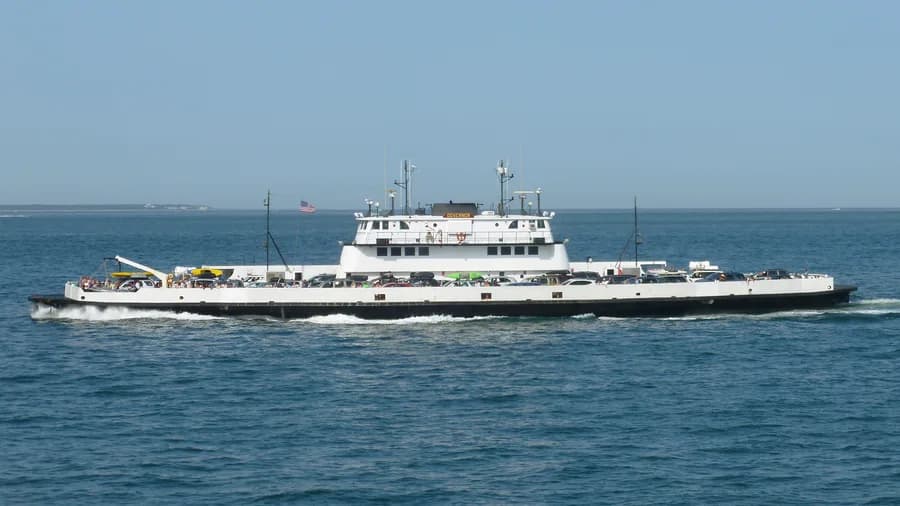
MV Governor is a passenger ferry that operates in Massachusetts. She was formerly the MV Crown City between 1954 and 1970, and the MV Kulshan between 1970 and 1982. Currently operated by the Steamship Authority, she was built in 1954 to operate the ferry service from San Diego to Coronado, California. After the San Diego-Coronado Bridge was built, spanning her original route, she was sold to Washington State Ferries where she was christened the MV Kulshan and served in Puget Sound waters from 1970 to 1982. Along with the distinction of being the most despised ferry in the WSF fleet, the Kulshan was featured as the ferry ridden by Lisa Blount and Debra Winger in the 1982 film, An Officer and a Gentleman. After her stint with the Washington State Ferries system, the Kulshan was declared surplus to requirements and sold to the United States Coast Guard to provide service for their large Atlantic Area headquarters base on Governors Island in New York Harbor, an island community and workplace for 5000 people. The ferry was towed south and through the Panama Canal in making its way to the east coast. Once in New York City, the ferry was renamed Governor and as part of a fleet of two other ferries, the Samuel L. Coursen and the Minue, shuttled passengers and vehicles from the Battery Maritime Building in Lower Manhattan to Governors Island.
Composite Risk
Multiple adverse factors, or a hard ship-specific signal, lift this hull above the fleet norm.
A coverage-weighted blend of the single component we could read for this hull; the weights renormalise over only the components present, so a thin read is never inflated and a hull is never credited a “safe 0” for a signal it has no row for. This headline is flagged low-confidence (a thin or structural-only read) and should not be treated as a verdict. Higher means riskier. Derived in-house from government-open port-State-control, flag, sanctions and our own vessel data; weight it by the coverage above.
Commercial
Price it in the Route Planner between any two commercial ports: ballast and laden legs, two fuels at live bunker prices, port and canal costs, the weather on the way, and the TCE set against the market.

Visual Archive