Technical Specifications
Overview
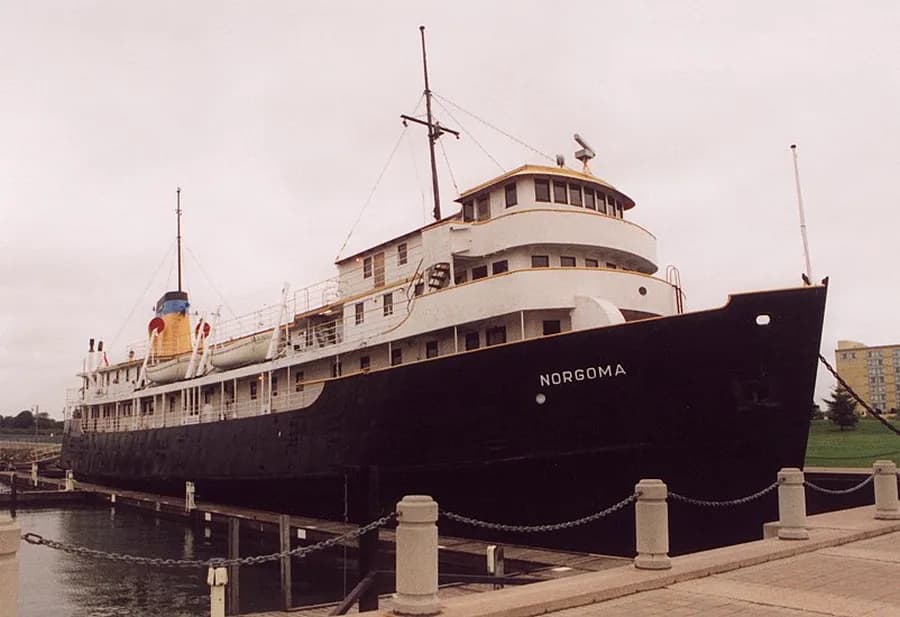
MS Norgoma was a Canadian package freighter and passenger ferry, that could also transport automobiles on a limited basis. Originally constructed as a steam-powered ship in 1950, SS Norgoma primarily sailed the route from her home port of Owen Sound to Sault Ste. Marie, providing a five-day round trip, once a week, serving isolated communities along the north shore of Lake Huron. After conversion to a motor ship, Norgoma was transferred to the popular Manitoulin Island ferry route between Tobermory and South Baymouth along with her sister ship SS Norisle, replacing the smaller ferry, MS Normac, on that route. Norgoma, owned by Owen Sound Transportation Company Limited, was built at the Collingwood shipyards in 1950. She replaced the SS Manitoulin, which was retired in 1949. Norgoma travelled mainly on the North Channel route until 1963. Improvements to Ontario's highways, such as the Trans-Canada Highway (Georgian Bay Route) completed in 1962, brought about stiff competition for the company. In that year a 60-kilometre road was constructed to Killarney, the first port of call for the steamer. At the same, increased traffic on the Manitoulin Island – Tobermory route (Highway 68) demanded a greater automobile capacity than her sister ships SS Norisle and MS Normac could handle.
Composite Risk
Multiple adverse factors, or a hard ship-specific signal, lift this hull above the fleet norm.
A coverage-weighted blend of the single component we could read for this hull; the weights renormalise over only the components present, so a thin read is never inflated and a hull is never credited a “safe 0” for a signal it has no row for. This headline is flagged low-confidence (a thin or structural-only read) and should not be treated as a verdict. Higher means riskier. Derived in-house from government-open port-State-control, flag, sanctions and our own vessel data; weight it by the coverage above.
Commercial
Price it in the Route Planner between any two commercial ports: ballast and laden legs, two fuels at live bunker prices, port and canal costs, the weather on the way, and the TCE set against the market.

Visual Archive