Technical Specifications
Overview
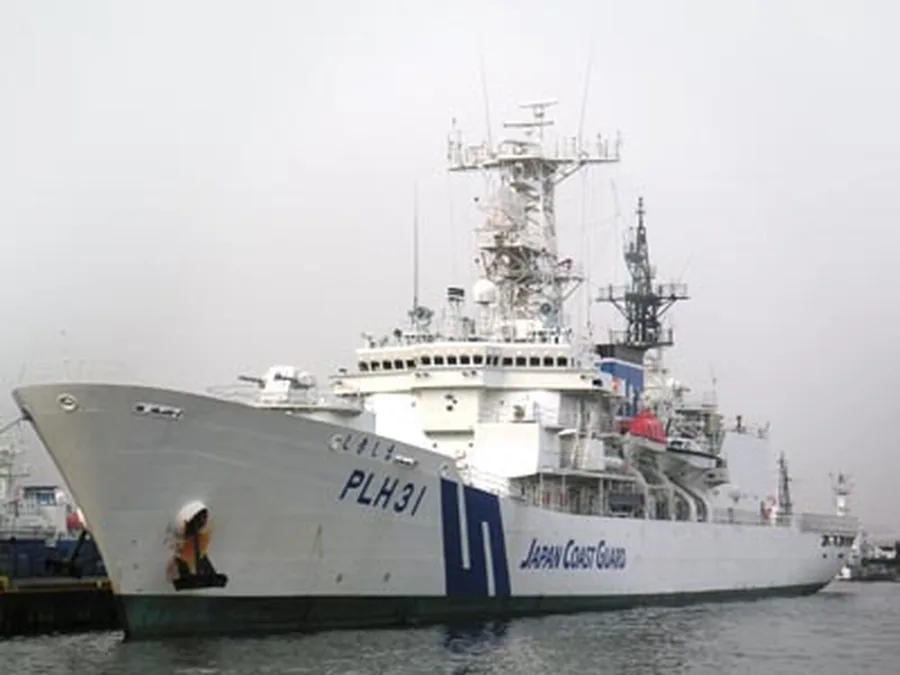
Shikishima was the lead ship of her class of long-range patrol ships built for the Japan Coast Guard (JCG). She was built by Ishikawajima-Harima Heavy Industries, Tokyo. Planned to guard plutonium transport ships, the Shikishima class was the largest and heaviest-armed patrol vessel of the JCG. With her cruising capacity, she is capable of making voyages from Japan to Europe without making any calls. She was the only JCG ship equipped with anti-air radar and Oerlikon 35 mm twin cannons, so she has increased anti-air firepower. Usually, PL (Patrol vessels, Large) have only a navigation radar and a single-mounted 35 mm or 40 mm autocannon. And the JM61 20 mm Vulcan on the single-mounted remote weapon system later became a model for the 20 mm RFS (Remote Firing System), which is on modern PMs and PSs such as the Tsurugi-class PS. The OPS-14 2D air search radar is the Japanese counterpart of the American AN/SPS-49. She was frequently sent on long cruises to Southeast Asia to foster international cooperation against piracy in the Strait of Malacca. She was also assigned to the policing mission of Senkaku Islands because of her cruising capacity. More ships of this design were constructed. The Shikishima was decommissioned on April 15 2024, the ship's name and hull number was succeeded by a Reimei-class patrol vessel commissioned in March of 2025.
Composite Risk
Multiple adverse factors, or a hard ship-specific signal, lift this hull above the fleet norm.
A coverage-weighted blend of the single component we could read for this hull; the weights renormalise over only the components present, so a thin read is never inflated and a hull is never credited a “safe 0” for a signal it has no row for. This headline is flagged low-confidence (a thin or structural-only read) and should not be treated as a verdict. Higher means riskier. Derived in-house from government-open port-State-control, flag, sanctions and our own vessel data; weight it by the coverage above.
Commercial
Price it in the Route Planner between any two commercial ports: ballast and laden legs, two fuels at live bunker prices, port and canal costs, the weather on the way, and the TCE set against the market.

Visual Archive