Technical Specifications
Overview
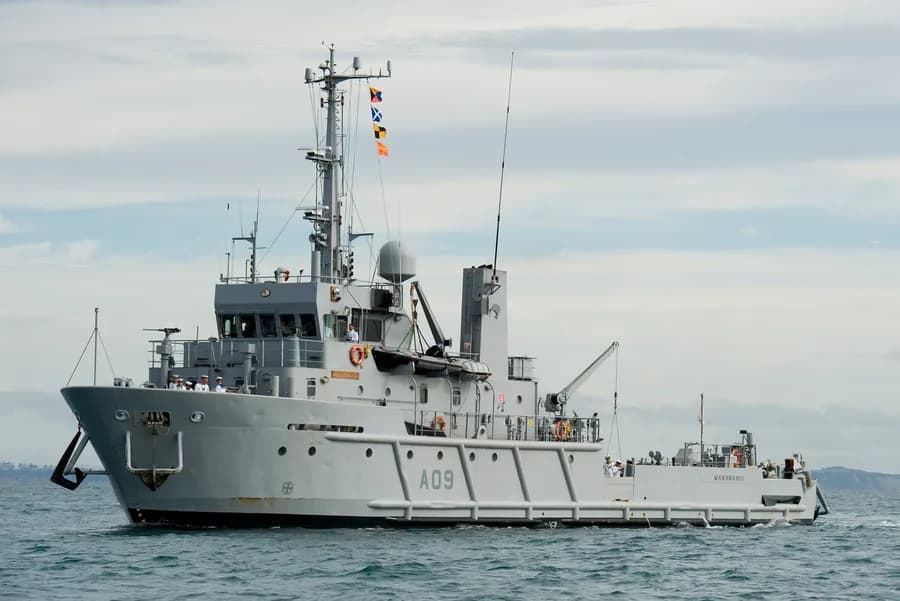
Ocean Recovery, previously HMNZS Manawanui (A09) was commissioned in 1988 as a diving support vessel for the Royal New Zealand Navy. Originally she was built as a diving support vessel, the Star Perseus, for North Sea oil rig operations. Manawanui is the third ship with this name to serve in the New Zealand Navy. Manawanui is a Māori word meaning "to be brave or steadfast". Manawanui has a capability to hold station over a fixed position. She has a triple lock recompression chamber, a crane with 13 tonne lifting capacity, wet diving bell and a small engineering workshop. She also has limited deck cargo carrying capacity. The divers of the New Zealand Navy who work onboard Manawanui are trained for deep diving with mixed gases, underwater demolition and unexploded ordnance disposal. An ROV operated from the Manawanui returned photos of the wreck of the MV Princess Ashika, which sank near Ha'apai, Tonga on 5 August 2009. The vessel was decommissioned at Devonport Naval Base on February 23, 2018. In July 2018 the ship was sold to the Major Projects Group, an Australian demotions company, and has been renamed as the MV Ocean Recovery. The ship will be used by the Major Projects Foundation (which was founded by the company) as a research and education vessel, with a focus on investigating and preventing oil spills from sunken ships in the Pacific.
Composite Risk
Multiple adverse factors, or a hard ship-specific signal, lift this hull above the fleet norm.
A coverage-weighted blend of the single component we could read for this hull; the weights renormalise over only the components present, so a thin read is never inflated and a hull is never credited a “safe 0” for a signal it has no row for. This headline is flagged low-confidence (a thin or structural-only read) and should not be treated as a verdict. Higher means riskier. Derived in-house from government-open port-State-control, flag, sanctions and our own vessel data; weight it by the coverage above.
Commercial
Price it in the Route Planner between any two commercial ports: ballast and laden legs, two fuels at live bunker prices, port and canal costs, the weather on the way, and the TCE set against the market.

Visual Archive