Technical Specifications
Overview
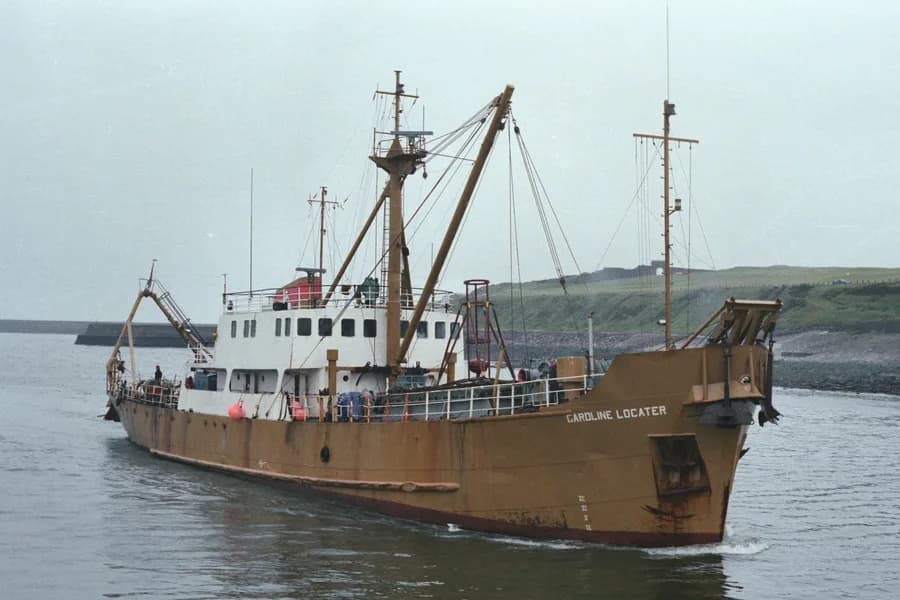
HMS Blackburn was the lead ship of the Blackburn-class aircraft transports built for the Royal Navy in World War II. She was launched on 25 March 1944 at Blyth Shipbuilding & Dry Docks Company in Blyth, Northumberland, England. With a length of 172 feet (52 metres) and a beam of 30 feet (9 metres), she displaced 990 tons. Her propulsion consisted of two 8-cylinder diesel engines. The ship's purpose was to transport aircraft and spare parts along the coasts of the British Isles. In 1950 she became a RNVR training ship. In July 1968 the ship was sold to Pounds Shipowners and Shipbreakers Ltd in Portsmouth, but was subsequently sold again to Gardline Shipping in Great Yarmouth, a company founded in 1969 to provide offshore services to the oil and gas industry in the North Sea. Gardline Shipping had the ship converted into a deep sea research vessel and renamed her Gardline Locater (IMO number 7048063, 747 GRT). In July 1985 the ship played a key role in the recovery of the cockpit voice recorder (CVR) and the flight data recorder (FDR) of Air India Flight 182 that disintegrated in mid air after a bomb explosion on 23 June 1985 with 329 people on board off the southwest coast of Ireland. Gardline Locater, equipped with sophisticated sonar, and the French cable-laying vessel Léon Thévenin, with her robot submarine Scarab 1, were dispatched to locate the CVR and FDR boxes.
Composite Risk
Multiple adverse factors, or a hard ship-specific signal, lift this hull above the fleet norm.
A coverage-weighted blend of the single component we could read for this hull; the weights renormalise over only the components present, so a thin read is never inflated and a hull is never credited a “safe 0” for a signal it has no row for. This headline is flagged low-confidence (a thin or structural-only read) and should not be treated as a verdict. Higher means riskier. Derived in-house from government-open port-State-control, flag, sanctions and our own vessel data; weight it by the coverage above.
Commercial
Price it in the Route Planner between any two commercial ports: ballast and laden legs, two fuels at live bunker prices, port and canal costs, the weather on the way, and the TCE set against the market.

Visual Archive