Technical Specifications
Overview
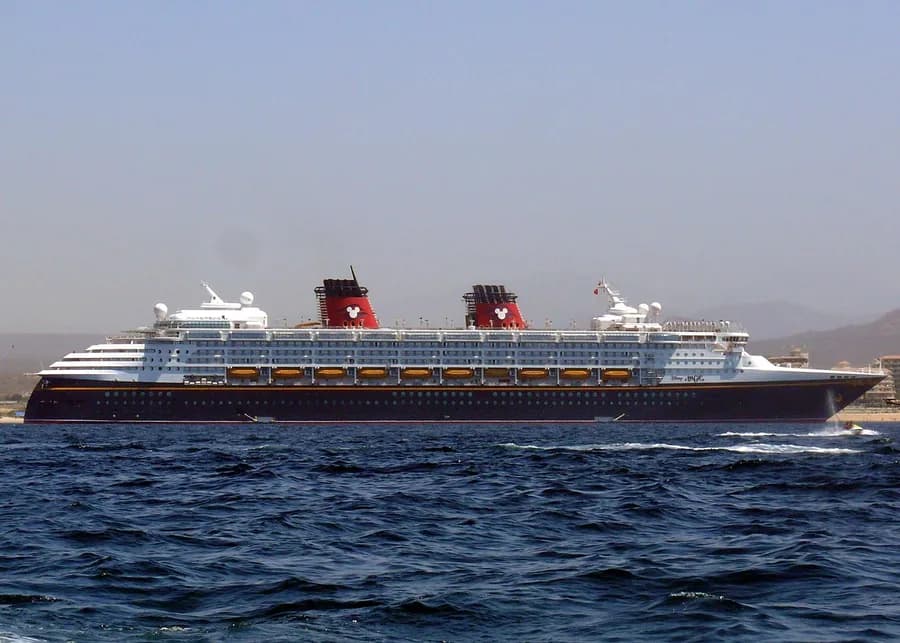
Disney Magic is a cruise ship owned and operated by Disney Cruise Line, a subsidiary of the Walt Disney Company. She is the first ship in the Disney Cruise Line fleet and the lead vessel of the Magic class. The ship was followed by her sister ship, Disney Wonder (1999). The Magic class was ordered on April 27, 1995, and built by Fincantieri at its shipyard in Marghera, Italy. Construction of the vessel began with the keel laying on October 31, 1996, and the ship was launched on May 13, 1997. She was completed on June 30, 1998, christened on July 28, 1998, and entered service with her maiden voyage on July 30, 1998. The ship reportedly cost approximately US$400 million (equivalent to $790 million in 2025). Disney Magic contains 11 public decks, can accommodate 2,700 passengers in 875 staterooms, and has a crew of approximately 950. The ship features an Art Deco design incorporating stylistic references to ocean liners of the early 20th-century, including a long, low profile and a black hull with red accents, which also reflect the colors associated with Mickey Mouse. The vessel carries yellow lifeboats that match the color of Mickey's shoes rather than the standard safety orange, a choice that required a waiver under international maritime regulations.
Composite Risk
Multiple adverse factors, or a hard ship-specific signal, lift this hull above the fleet norm.
A coverage-weighted blend of the single component we could read for this hull; the weights renormalise over only the components present, so a thin read is never inflated and a hull is never credited a “safe 0” for a signal it has no row for. This headline is flagged low-confidence (a thin or structural-only read) and should not be treated as a verdict. Higher means riskier. Derived in-house from government-open port-State-control, flag, sanctions and our own vessel data; weight it by the coverage above.
Commercial
Price it in the Route Planner between any two commercial ports: ballast and laden legs, two fuels at live bunker prices, port and canal costs, the weather on the way, and the TCE set against the market.
Fleet Management

Visual Archive