Technical Specifications
Compliance
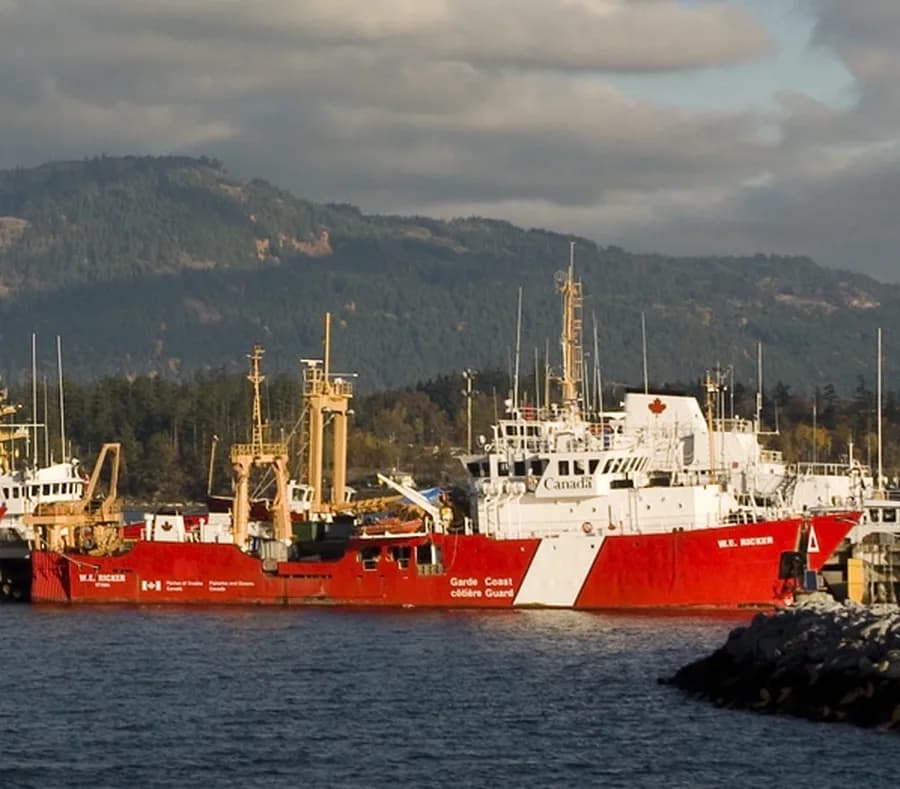
On 24 September 2016, the Canadian Coast Guard service vessel "W.E. RICKER" reported a total loss of electrical power in Barkley Sound, BC. The vessel was towed to Maine Bay, BC. No injuries or pollution reported.
On 16 September 2016, the Canadian Coast Guard research vessel "W.E. RICKER" reported a fire in the engine room while transiting Satellite Channel, BC. The crew extinguished the fire using a portable fire extinguisher.
On 02 February 2016, the Canadian Coast Guard vessel "W.E. RICKER" reported that its emergency generator starting battery exploded while a crew member was starting the emergency generator at Sydney, BC. The affected battery unit was replaced.
On 12 July 2015, the Canadian Coast Guard fisheries research vessel "W.E. RICKER" reported a failure of the main trawl winch 18 nautical miles SW of Tofino, BC. The crew secured the gear and carried out repairs after the vessel docked at Port Alberni, BC. Approximately 4 liters of hydraulic oil spilled overboard.
On 03 September 2013, the CCGS "W.E. RICKER", while docking at Port Hardy public dock, B.C., made contact with the dock knuckle causing minor damage. No injuries or pollution reported.
On 22 June 2011 a crew member on board CCGS "W.E. RICKER" sustained a hand injury in Trincomali Channel, BC requiring medivac ashore.
On 30 October 2009 the CCGS "W.E. RICKER" reported smoke in the wheelhouse. Fire teams located the source as electrical. Wheelhouse vented and vessel proceeded to Nanaimo B.C.
On 10 March 2008 at 0852 PDT, the CCGS "W.E. RICKER" was under tow by tugs "CHARLES H. CATES VI" and "CHARLES H. CATES VIII" from Allied Shipyards for sea trials when it struck the Northwest Protection pier of the Second Narrows Rail Bridge.
Recorded marine occurrences naming this vessel.
Composite Risk
Multiple adverse factors, or a hard ship-specific signal, lift this hull above the fleet norm.
A coverage-weighted blend of the single component we could read for this hull; the weights renormalise over only the components present, so a thin read is never inflated and a hull is never credited a “safe 0” for a signal it has no row for. This headline is flagged low-confidence (a thin or structural-only read) and should not be treated as a verdict. Higher means riskier. Derived in-house from government-open port-State-control, flag, sanctions and our own vessel data; weight it by the coverage above.
Commercial
Price it in the Route Planner between any two commercial ports: ballast and laden legs, two fuels at live bunker prices, port and canal costs, the weather on the way, and the TCE set against the market.

Visual Archive