Technical Specifications
Overview
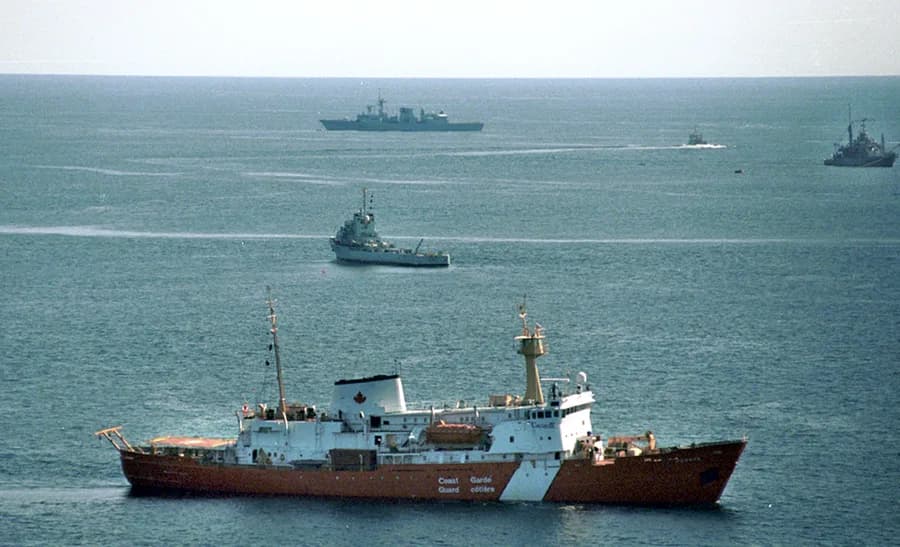
CCGS Hudson was an offshore oceanographic and hydrographic survey vessel operated by the Canadian Coast Guard. The ship entered service in 1963 with the Canadian Oceanographic Service, stationed at the Bedford Institute of Oceanography, called CSS Hudson. The ship made several significant scientific voyages, among them the first circumnavigation of the Americas in 1970. The ship was transferred to the Canadian Coast Guard in 1996 and decommissioned in 2022, and was later replaced by CCGS Naalak Nappaaluk.
Compliance
On 21 May 2021, the Canadian Coast Guard Ship "HUDSON" reported experiencing a problem with one of its generators, 25 nautical miles SSE of Halifax, NS. The crew carried out repairs which allowed the vessel to resume its voyage.
On 25 March 2021, the Canadian Coast Guard ship "HUDSON" reported having sustained a fire in its exhaust stack. The vessel crew were able to extinguish the fire and no injuries were reported.
On 01 February 2019, the fast rescue boat of the Canadian Coast Guard ship "HUDSON" briefly touched bottom and sustained damage to its propeller near the Halifax Coast Guard station, NS while on a SAR tasking. No injuries or pollution were reported.
On 16 December 2016, the Canadian Coast Guard ship "HUDSON" discovered a water ingress in the ship's bilge, due to a hole in the hull, near Trois-Rivières, QC. The hole was plugged and the ship was later surveyed and repaired.
On 20 November 2016, the Canadian Coast Guard ship "HUDSON", with 43 people on board, reported an automatic release of CO2 as a result of an electrical fire in the starboard propulsion motor 321 nautical miles SE of Cape Race, NL. The engine room was ventilated and investigated before the vessel proceeded to St. John's, NL without assistance. No injuries or pollution reported.
On 07 April 2014, the RV "HUDSON", with 49 POB, sustained a fire in the engine room while 37 nm east of Sable Island, NS. The fire was extinguished shortly after with extinguishers. No damage, injuries or polution reported.
On 04 June 2011, the CCGS "HUDSON" reported a CO2 release in the engine room due to overheating motors and dropped the starboard anchor in Bedford Basin, N.S. A valve on the cooling system was found closed.
The CCGS "HUDSON" reported a small electrical fire in a junction box after it was sprayed with water. Junction box was electrically isolated and the fire extinguished without further incident.
Recorded marine occurrences naming this vessel.
Composite Risk
Multiple adverse factors, or a hard ship-specific signal, lift this hull above the fleet norm.
A coverage-weighted blend of the single component we could read for this hull; the weights renormalise over only the components present, so a thin read is never inflated and a hull is never credited a “safe 0” for a signal it has no row for. This headline is flagged low-confidence (a thin or structural-only read) and should not be treated as a verdict. Higher means riskier. Derived in-house from government-open port-State-control, flag, sanctions and our own vessel data; weight it by the coverage above.
Commercial
Price it in the Route Planner between any two commercial ports: ballast and laden legs, two fuels at live bunker prices, port and canal costs, the weather on the way, and the TCE set against the market.

Visual Archive