Technical Specifications
Compliance
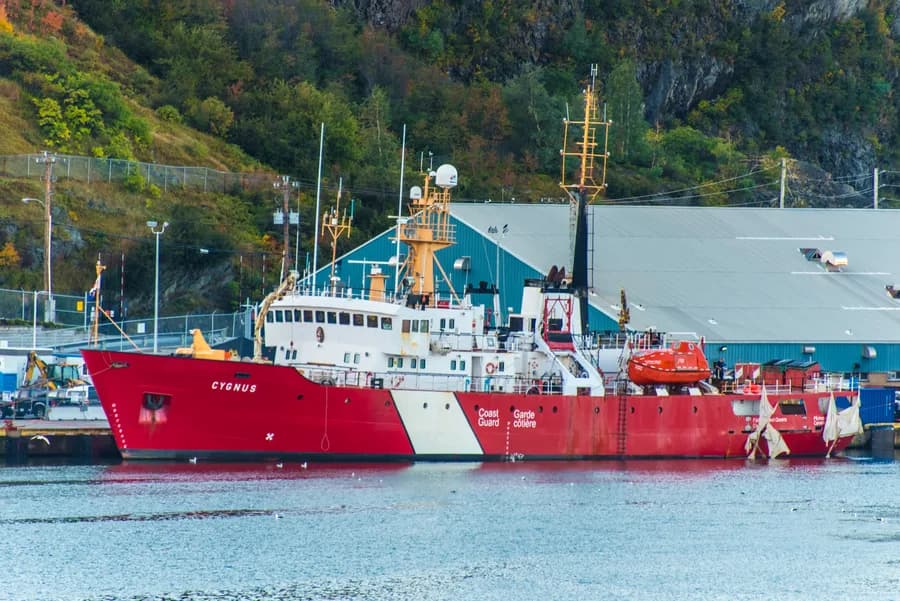
On 25 August 2025, the Canadian Coast Guard Ship "CYGNUS", with 21 people on board, reported a damaged shaft tunnel cooling system causing an ingress of water while in the vicinity of the Flemish Pass, North Atlantic. The crew performed temporary repairs and the vessel proceeded to St. John's, NL.
On 30 June 2024, the Canadian Coast Guard Ship "CYGNUS", with 19 people on board, reported having sustained a total failure of its engine transmission off the east coast of Newfoundland. The crew addressed the issue and the vessel resumed its voyage.
On 06 June 2024, the Canadian Coast Guard Ship "CYGNUS" reported its lifeboat, with 3 people on board, sustained an engine fire during a drill in St. John Harbour, NB. The crew extinguished the fire and the lifeboat was towed alongside the "CYGNUS" using the vessel's workboat.
On 07 September 2018, the Canadian Coast Guard ship "CYGNUS" collided with the Canadian Coast Guard ship "CAPE ROGER" while departing from their mooring in St. John's, NL. At the time of the occurrence, the vessels were moored side-by-side, with the "CYGNUS" on the seaward side.
On 08 February 2018, the service ship "CYGNUS", with 21 people on board, reported taking on water. The source was a leaking seawater valve that the crew isolated stopping the ingress of water. The vessel returned to St. John's, with minor damages. There was no injuries or pollution reported.
On 12 February 2016, the service ship "CYGNUS", with 21 people on board, reported taking on water 315 nautical miles E of St. John's, NL. The ship's crew pumped the water from the affected space and carried out repairs. There were no injuries or pollution reported.
A Fishery Officer from the CCGS "CYGNUS" fell into the water while attempting to board a foreign F/V. The Fishery Officer was subsequently recovered by the FRC from the "CYGNUS".
While coming alongside BIO wharf, CCGS CYGNUS touched the wharf on the port after quarter.
Recorded marine occurrences naming this vessel.
Composite Risk
Multiple adverse factors, or a hard ship-specific signal, lift this hull above the fleet norm.
A coverage-weighted blend of the single component we could read for this hull; the weights renormalise over only the components present, so a thin read is never inflated and a hull is never credited a “safe 0” for a signal it has no row for. This headline is flagged low-confidence (a thin or structural-only read) and should not be treated as a verdict. Higher means riskier. Derived in-house from government-open port-State-control, flag, sanctions and our own vessel data; weight it by the coverage above.
Commercial
Price it in the Route Planner between any two commercial ports: ballast and laden legs, two fuels at live bunker prices, port and canal costs, the weather on the way, and the TCE set against the market.

Visual Archive