Technical Specifications
Compliance
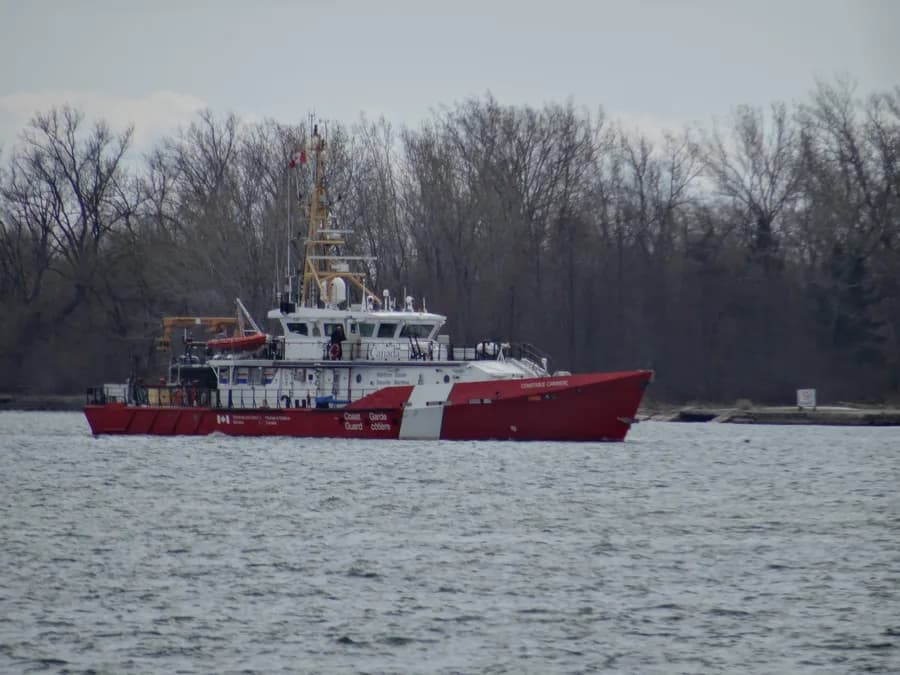
On 27 May 2026, the Canadian Coast Guard Ship "CONSTABLE CARRIERE" reported a rag fire in the engine room during hot work while secured in Bassin Louise, QC. The fire was extinguished by a crew member, who sustained a minor injury and was sent to a hospital.
On 23 September 2023, the Canadian Coast Guard Ship "CONSTABLE CARRIERE", with 12 people on board, reported having sustained damage to its bulwark while manoeuvring alongside a wharf in Halifax Harbour, NS.
On 08 August 2022, the Canadian Coast Guard Ship "CONSTABLE CARRIERE" reported the failure of its starboard main engine off Canso, NS. The vessel proceeded under reduced power to Port Hawkesbury, NS for assessment and repairs.
On 17 August 2017, the Canadian Coast Guard service ship "CONSTABLE CARRIERE" reported as disabled due to a main engine failure. The vessel anchored and then returned to Parry Sound Coast Guard Base for repairs.
On 17 May 2017, on Lake St-Clair, MI, the Canadian Coast Guard ship "CONSTABLE CARRIERE" sustained a malfunction of its starboard main engine. The vessel returned to Amherstburg on one engine to have repairs effected.
On 04 August 2015, the work boat "CONSTABLE CARRIERE" made bottom contact 6 nautical miles WNW of Killarney, ON. One propeller blade was bent the vessel was able to continue operations.
Recorded marine occurrences naming this vessel.
Composite Risk
Some elevated factors (typically age or a lower-graded flag), but no acute ship-specific flag.
A coverage-weighted blend of the single component we could read for this hull; the weights renormalise over only the components present, so a thin read is never inflated and a hull is never credited a “safe 0” for a signal it has no row for. This headline is flagged low-confidence (a thin or structural-only read) and should not be treated as a verdict. Higher means riskier. Derived in-house from government-open port-State-control, flag, sanctions and our own vessel data; weight it by the coverage above.
Commercial
Price it in the Route Planner between any two commercial ports: ballast and laden legs, two fuels at live bunker prices, port and canal costs, the weather on the way, and the TCE set against the market.
Fleet Management

Visual Archive