Technical Specifications
Overview
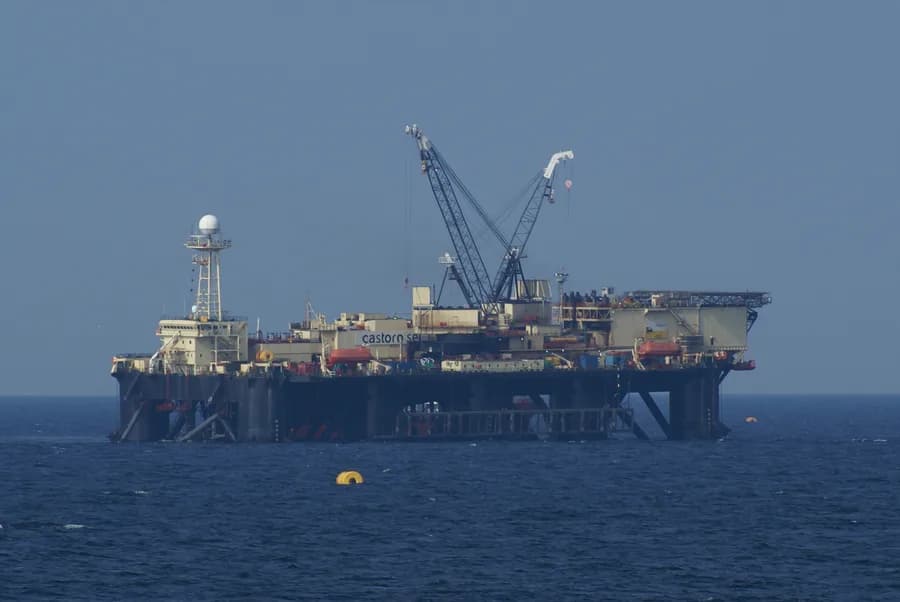
The Castoro Sei (Italian for Beaver Six) was a column-stabilized semi-submersible pipelay vessel. She had an overall length of 152 metres (499 ft), a width of 70.5 metres (231 ft) and an operating draught of 7.8 to 15.5 metres (26 to 51 ft). The Castoro Sei was equipped with 2 rotating gantry cranes of 134 tonnes capacity, three 130 tonnes pipe tensioners and a 400 tonnes abandon and recovery winch for pipelaying. She provided accommodation for 354 people. The firing line comprises the fixed pipelay ramp, enclosed in the central housing, running along the longitudinal centreline of the vessel. It is connected to an internal and external ramp, both of which have adjustable inclination to facilitate pipelay in varying water depths. A ramp extension unit is available for use in deep water or for severe seabed conditions. The Castoro Sei was built in 1978 by Fincantieri at Trieste yard, and was owned and operated by Saipem. Her port of registry was Nassau, in the Bahamas. It has been used for laying a number of pipelines in the Black Sea, North Sea and Mediterranean Sea, including Blue Stream, Greenstream, Medgaz, Trans-Mediterranean, Europipe II, and BBL pipelines. The vessel also laid most of the Nord Stream 1 pipeline in the Baltic Sea.
Composite Risk
Multiple adverse factors, or a hard ship-specific signal, lift this hull above the fleet norm.
A coverage-weighted blend of the single component we could read for this hull; the weights renormalise over only the components present, so a thin read is never inflated and a hull is never credited a “safe 0” for a signal it has no row for. This headline is flagged low-confidence (a thin or structural-only read) and should not be treated as a verdict. Higher means riskier. Derived in-house from government-open port-State-control, flag, sanctions and our own vessel data; weight it by the coverage above.
Commercial
Price it in the Route Planner between any two commercial ports: ballast and laden legs, two fuels at live bunker prices, port and canal costs, the weather on the way, and the TCE set against the market.
Fleet Management

Visual Archive