Technical Specifications
Overview
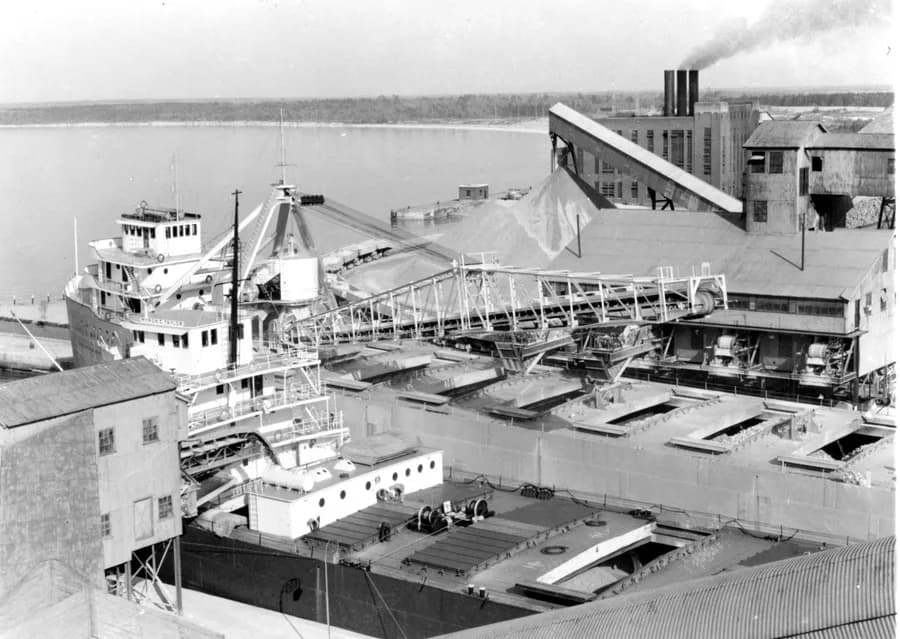
Calumet was the second lake freighter of that name. The vessel was built in Detroit, Michigan, in 1929, by the Great Lakes Engineering Works. For her first 71 years she was operated by two subsidiaries of US Steel, the Pittsburgh Steamship Company, and the Bradley Transportation Company. She was christened Myron C. Taylor after one of the directors of US Steel, Myron Charles Taylor. She was originally powered by a triple expansion steam engine. During her eighty years in service she was upgraded with a self-unloading boom and conveyor belts, a bow thruster, and her steam engine was replaced with a more powerful diesel. According to George Wharton, of the Boatnerd website, she was the largest vessel in the US Steel's fleets, when built, but by 1981, she had become one of the smallest. In 1956 US Steel shifted her to the fleet of the Bradley Transportation Company, due to an increased need to transport limestone, one of the materials needed in the manufacture of steel. At that time the vessel was retrofitted with a large self-unloading boom and the accompanying change in her holds and the addition of conveyor belts below her holds. Her original steam engine produced 1,618 kilowatts (2,170 bhp), and over the winter of 1967/1968 her steam engine was replaced with a diesel producing 3,114 kilowatts (4,176 bhp). Her bow thruster was retrofitted in 1988.
Composite Risk
Multiple adverse factors, or a hard ship-specific signal, lift this hull above the fleet norm.
A coverage-weighted blend of the single component we could read for this hull; the weights renormalise over only the components present, so a thin read is never inflated and a hull is never credited a “safe 0” for a signal it has no row for. This headline is flagged low-confidence (a thin or structural-only read) and should not be treated as a verdict. Higher means riskier. Derived in-house from government-open port-State-control, flag, sanctions and our own vessel data; weight it by the coverage above.
Commercial
Price it in the Route Planner between any two commercial ports: ballast and laden legs, two fuels at live bunker prices, port and canal costs, the weather on the way, and the TCE set against the market.

Visual Archive