Maersk announced on January 15 that its MECL service, linking the Middle East and India with the US East Coast, is returning to a trans-Suez routing, the first structural service return by a major container line since the mass diversions around the Cape of Good Hope began more than two years ago. The first westbound vessel departed Jebel Ali during the week of the announcement, and an eastbound ship had left Savannah earlier the same week.
The move matters well beyond one service string. Maersk has been the most conspicuous holdout among the large carriers, and its return converts the Red Sea recovery from a series of cautious trial runs into a scheduled network decision. With MSC and CMA CGM already probing the route, the three largest carriers, together controlling roughly 48 percent of global capacity, are now all steering back toward the canal.
From trial sailings to a timetable
The announcement follows two trial sailings, by Maersk Sebarok and Maersk Denver, that tested the corridor without committing a network. The structural phase, according to industry reports, opens with the 8,650 TEU Danish-flagged Cornelia Maersk departing Salalah on January 26, while Maersk Detroit is slated to make the company's first eastbound Suez transit on February 3. Maersk has also begun waiving its Red Sea disruption surcharges, a signal that the carrier itself expects the routing to hold. The company has kept a contingency to flip services back to the Cape if security conditions deteriorate.
The numbers behind the turn
Hard data supports the shift. Drewry counted 26 container ships transiting the Suez Canal in the week ended January 11, a five-week high and a jump from 10 the week before, though still far below the roughly 80 weekly transits of the pre-crisis norm. MSC and CMA CGM recently put five ships through the canal between them, and CMA CGM restarted its eastbound FAL1 service from Dunkerque on December 9. The corridor carried around 2 trillion dollars of commerce in 2023, which is why every incremental transit is watched so closely. The gap between 26 weekly transits and the old norm of 80 is the measure of how much normalization remains; read the other way, it is a pipeline of capacity that has yet to flow back into the market.
The rate math turns heavy
The commercial consequence is capacity. The Cape diversions absorbed roughly 7 percent of the global container fleet in added steaming distance, and a full return to Suez would release an estimated 6 to 8 percent of effective capacity back into a market that has leaned on that absorption to hold rates up. The diversion premium that flattered carrier earnings through 2024 and 2025 would unwind into supply.
Peter Sand, chief analyst at Xeneta, told Bloomberg "this is a turning point", noting that Maersk has been the most risk-averse of the major carriers and estimating that a full industry return would take three to five months. Analyst Lars Jensen sees a broader normalization as possible after Chinese New Year, while Jorgen Lian of DNB Carnegie remains more guarded on how quickly networks will actually move. Xeneta has laid out five considerations for shippers weighing what a large-scale 2026 return means for contracts and transit times.
What to watch
The next four weeks will show whether this is a bellwether or an outlier. If Cornelia Maersk sails from Salalah on January 26 as planned and Maersk Detroit follows eastbound on February 3, other carriers will find it commercially awkward to keep paying Cape fuel bills against a competitor quoting shorter transits. Chinese New Year offers a natural window for network switches, and Jensen's timing may prove the operative one. The risks run in both directions: a security incident in the corridor would send everyone back around the Cape and vindicate the contingency planning, while a smooth February would accelerate the capacity release and put freight rates under pressure faster than most carrier guidance assumes. Either way, the era in which the Red Sea question could be deferred is ending; Maersk has forced the industry to price it.
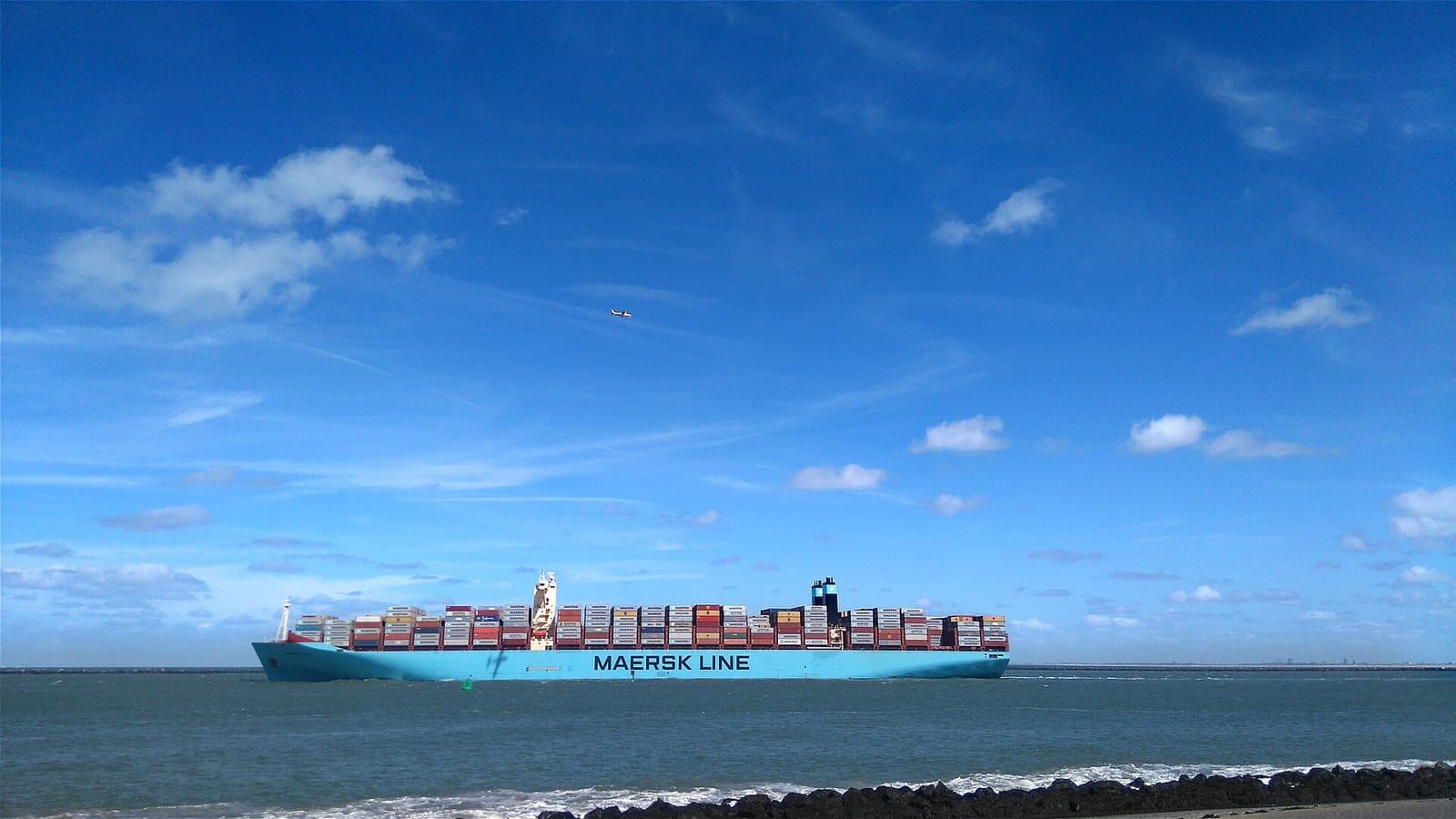
Cover image: Wouter Engler, CC BY-SA 4.0, via Wikimedia Commons.

As Editor in Chief of The Maritime, I lead content development, interviews, and digital storytelling across our multimedia maritime platform. With over 10 years of experience in the maritime industry, I create and publish in-depth stories and video features that highlight key players, emerging trends, and operational realities across global shipping. Before launching The Maritime, I worked as a Vessel Operator at Imza Marine A.S., gaining hands-on commercial shipping and voyage operations experience. I also served as Marketing Communications Specialist at Gimas Ship Supply & Services, where I managed corporate communication, digital strategy, and industry outreach for shipowners and maritime clients. I hold a Master’s degree in Maritime Transportation Management from Istanbul Technical University and a Master’s degree in Publishing from Marmara University. My work is driven by the belief that the maritime world deserves strong, informed, and accessible media representation. I am committed to sharing the stories of maritime professionals and contributing to the sector’s visibility, knowledge exchange, and future development.