Iran's Revolutionary Guard Corps formally declared the Strait of Hormuz closed on March 27 to any vessel sailing to or from ports in the United States, Israel or allied countries, warning of harsh measures against ships that test the ban. State media said three cargo ships were turned back the same day. The declaration capped a week in which Tehran converted a war-zone shutdown into something more durable: an administrative regime that decides, ship by ship, who may use the waterway at the center of the war.
For owners and charterers, the closure order itself matters less than the machinery behind it. Over five days Iran rolled out a permission-to-transit system, a national allowlist and ad hoc fees reported as high as $2 million a voyage. Flag, beneficial ownership and trading history have become route-determining risk variables, and a strait that carried commerce on the principle of free transit now runs on paperwork issued in Tehran.
A feeder turned back at the approaches
The first hard evidence of the new regime came on March 23. The 6,850 dwt feeder containership SELEN (IMO 9208459), flagged in St Kitts and Nevis, built in 2000 and operated by Dubai-based Exceed Oceanic Trading, departed Sharjah for Karachi and made a sharp course reversal at the Hormuz approaches at 21:41 local time, according to AIS data reviewed by industry analysts. Rear Admiral Alireza Tangsiri, commander of the IRGC Navy, said on X that the ship had failed to follow the required legal procedures and had no permission to transit, the first explicit official confirmation that a permission system was in force. "All vessels must now coordinate passage with Iran's maritime authorities," Tangsiri said.
The permits come with a price. Ad hoc transit fees of up to $2 million per voyage have been reported, and India's government rejected the practice outright, arguing that no country has the authority to charge ships for passage through the strait.
An allowlist takes shape
On March 26, Foreign Minister Araghchi said vessels from five nations, China, Russia, India, Iraq and Pakistan, would be permitted through. Malaysia and Thailand were added after their governments held talks with President Pezeshkian and Iran's ambassador. The next day, the IRGC formalized the other side of the ledger, declaring the strait closed to any vessel trading to or from American, Israeli or allied ports, and state media reported the three turn-backs within hours.
There was one carve-out. Iran agreed on March 27 to a United Nations request to let humanitarian cargoes and fertilizer shipments pass ahead of the spring planting season. President Trump, for his part, suggested the waterway should carry his own name.
Iran Turns Back Three Ships, Declares Strait of Hormuz Closed. In a dramatic escalation in the ongoing Middle East crisis...
@seaandcoast1 March 27, 2026
The market prices exclusion
The traffic numbers show what a two-tier strait looks like in practice. Before the crisis the strait handled more than 153 transits a day; by the week of March 23, movements by non-Iranian ships had fallen to single digits, according to tracking figures reported through the crisis. War-risk premiums have been quoted around 2.5 percent of hull value per seven-day period, ships stranded inside the Gulf have been quoted as much as 10 percent for a single transit, and protection and indemnity war cover has been cancelled since March 5. Maersk, MSC, CMA CGM and Hapag-Lloyd have suspended Gulf services since early March, and the American air campaign that opened on March 19 with an ultimatum to reopen the strait is now in its second week. The strait's weight in oil and gas flows, set out in a chart series from CSIS and in a Congressional Research Service backgrounder, explains why even single-digit transit counts are being watched cargo by cargo.
Ordinary marine risk has not paused for the war. Also on March 27, the bulk carrier Mayuree Naree went aground on Qeshm Island inside the strait's approaches.
What to watch
The question for the coming weeks is whether the permit system hardens into standing machinery. A published tariff, a wider allowlist or a formal clearance office would signal that Tehran sees transit control as a lasting instrument of statecraft rather than a wartime expedient. Owners should assume that flag histories and ownership chains will be scrubbed at the strait for as long as the regime lasts, and that a ship's paperwork may now matter as much as its routing. If fees climb from the reported $2 million toward whatever a desperate market will bear, the strait becomes the most expensive toll gate afloat, and every turned-back ship adds pressure on Washington to answer the closure declaration with more than airpower.
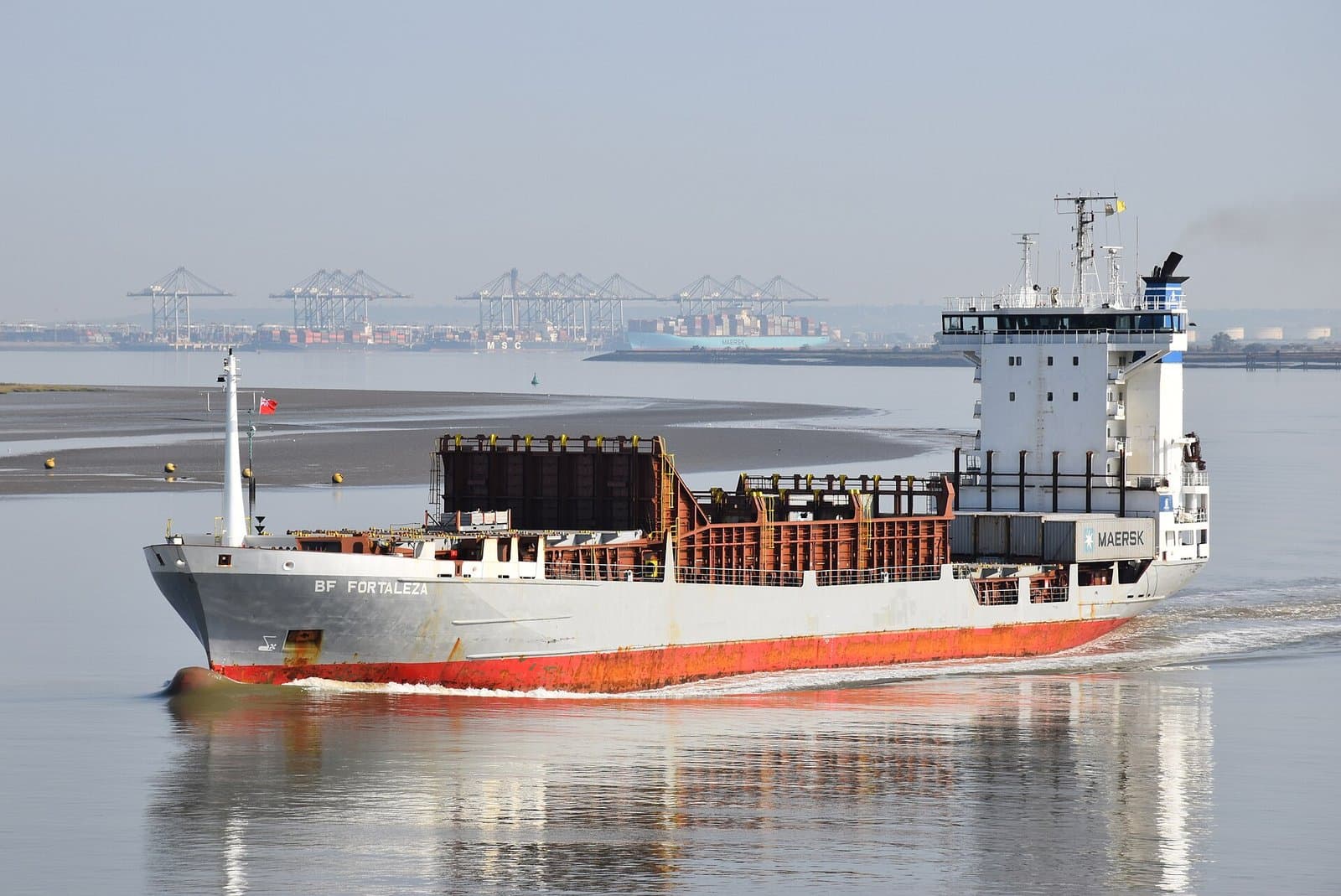
Cover image: Niels Johannes, CC BY-SA 4.0, via Wikimedia Commons.

As Editor in Chief of The Maritime, I lead content development, interviews, and digital storytelling across our multimedia maritime platform. With over 10 years of experience in the maritime industry, I create and publish in-depth stories and video features that highlight key players, emerging trends, and operational realities across global shipping. Before launching The Maritime, I worked as a Vessel Operator at Imza Marine A.S., gaining hands-on commercial shipping and voyage operations experience. I also served as Marketing Communications Specialist at Gimas Ship Supply & Services, where I managed corporate communication, digital strategy, and industry outreach for shipowners and maritime clients. I hold a Master’s degree in Maritime Transportation Management from Istanbul Technical University and a Master’s degree in Publishing from Marmara University. My work is driven by the belief that the maritime world deserves strong, informed, and accessible media representation. I am committed to sharing the stories of maritime professionals and contributing to the sector’s visibility, knowledge exchange, and future development.