Iran's Persian Gulf Strait Authority put its Hormuz toll on an administrative footing on May 11, publishing a transit process that requires operators to email a Vessel Information Declaration of more than 40 questions to the agency before paying passage fees, according to an explainer in The Week. Tariffs have not been announced, but ships have reported paying as much as $2 million per passage, with payment accepted in yuan.
Two days later came a reminder of what proximity to the strait can cost. In the early hours of May 13 the Indian-flagged dhow Haji Ali was struck by an unidentified explosive near Limah, Oman, caught fire, lost stability and sank; the entire crew escaped by lifeboat and was rescued by the Oman Coast Guard. She is the second Indian-linked vessel lost in under a week, and her sinking shows how far the danger now reaches beyond the tankers and containerships the toll regime was built to tax.
A 40-question toll booth
The declaration asks for vessel identity, owner and operator details, crew nationalities, cargo and insurance information, all submitted by email before any fee is discussed, and the authority's guidance places responsibility for incomplete submissions entirely on the applicant. "We have established a new legal and security system in the Strait of Hormuz," army official Mohammad Akraminia said, as reported by The Week, adding that nations complying with US sanctions should expect transit difficulties. Maritime intelligence firm Windward has published an analysis of the toll mechanism and what it means for operators.
The design marks a shift from ad hoc violence to institutionalized extraction, arriving one week after the authority was founded amid the first convoy battles. A completed declaration is also, in effect, a dossier: crew nationalities, insurance details and cargo particulars are precisely the data a targeting or sanctions-enforcement operation would want, and owners must weigh what it means to hand that information to a belligerent.
The Haji Ali sinking
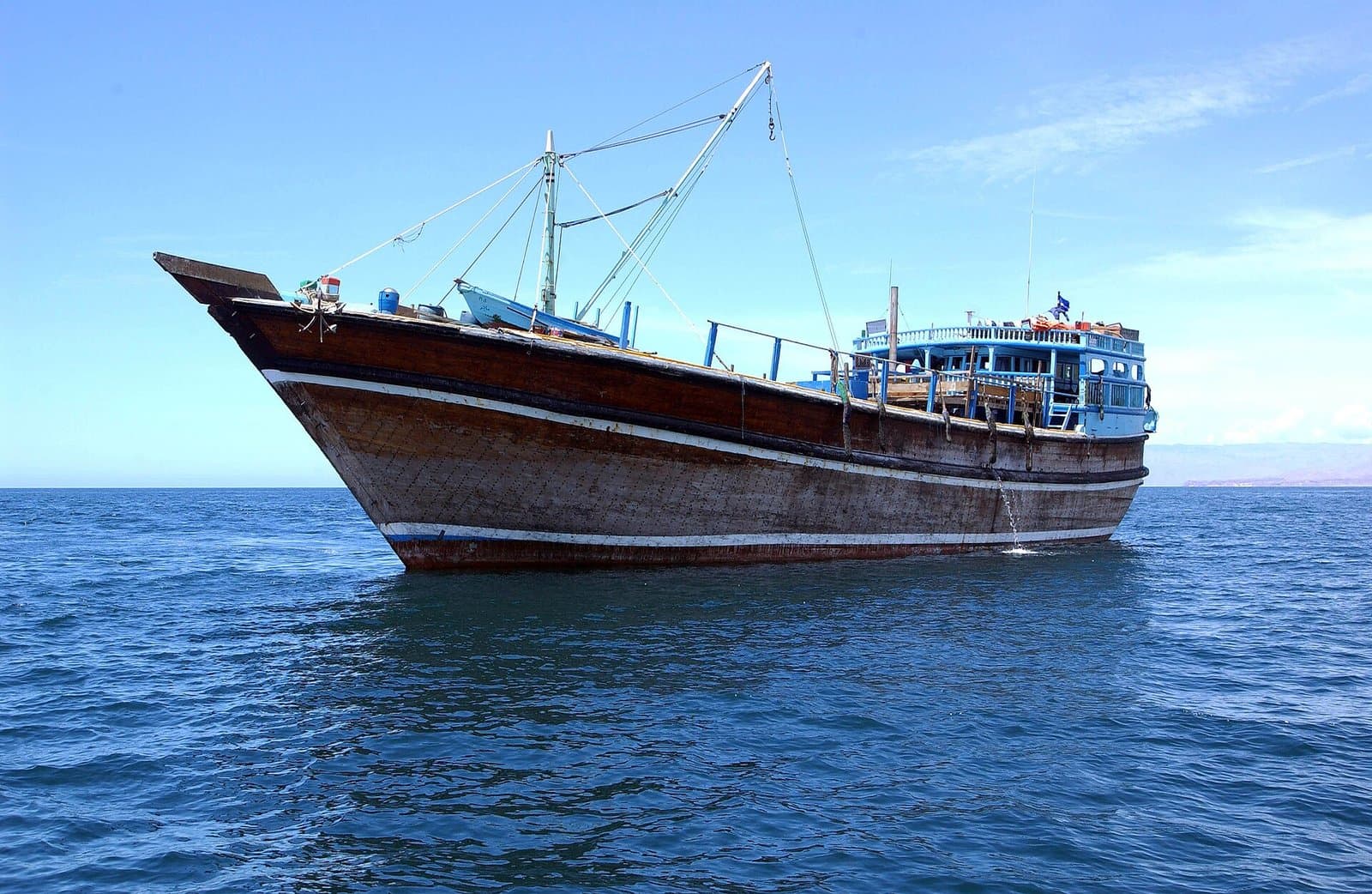
The Haji Ali was a small wooden motor sailing vessel on a livestock and general cargo run from Berbera in Somalia to Sharjah, the kind of traditional trader that moves goods across the Gulf of Oman in numbers no convoy will ever cover. The strike came at about 03:30 on May 13; the suspected weapon was a drone or missile, no attacker has been identified and no one has claimed responsibility. Industry reports put the crew at 12, while Indian media accounts carried by PBS reported 14; all were landed safely at Dibba.
India's Ministry of External Affairs and its shipping ministry condemned the attack, Bloomberg reported, calling it unacceptable and deploring the continued targeting of commercial shipping and civilian mariners. The loss follows the sinking of the Indian-linked Al Faiz Noor Sulemani-1 in US-Iranian crossfire on May 8, and it pulls the world's largest supplier of seafarers deeper into a crisis its nationals are already living through at anchor.
A boarding at anchor off Fujairah
The pattern continued into the morning of May 14, when the Hui Chuan, a fishery and research vessel reportedly serving as a floating armory for maritime security firms, was boarded about 38 nautical miles northeast of Fujairah while at anchor and redirected toward Iranian waters, an incident UKMTO said it was investigating. An armory taken from an anchorage well outside the strait extends the risk zone yet again, this time into the private security infrastructure that commercial shipping relies on across the region.
The population at risk is not shrinking. Around 1,500 ships with more than 20,000 crew remain trapped around Hormuz, according to figures reported by RFE/RL in early May.
What the market prices next
The question owners and underwriters now have to price is whether the toll regime outlasts the shooting. A bureaucracy with published procedures, an email address and a fee pipeline, however irregular, is built to persist in a way that gunboat raids are not, and every payment made strengthens the precedent. Three things bear watching. Whether flag states and insurers issue formal guidance on the declaration; whether Washington moves against the authority itself rather than only warning those who pay; and whether attacks on small regional traders like the Haji Ali begin to strangle the dhow and feeder trades that keep Gulf of Oman commerce alive beneath the headline tanker flows. For India, the calculus is hardest of all: its seafarers crew much of the trapped fleet, and its ships are now being sunk by weapons no one admits to firing.

As Editor in Chief of The Maritime, I lead content development, interviews, and digital storytelling across our multimedia maritime platform. With over 10 years of experience in the maritime industry, I create and publish in-depth stories and video features that highlight key players, emerging trends, and operational realities across global shipping. Before launching The Maritime, I worked as a Vessel Operator at Imza Marine A.S., gaining hands-on commercial shipping and voyage operations experience. I also served as Marketing Communications Specialist at Gimas Ship Supply & Services, where I managed corporate communication, digital strategy, and industry outreach for shipowners and maritime clients. I hold a Master’s degree in Maritime Transportation Management from Istanbul Technical University and a Master’s degree in Publishing from Marmara University. My work is driven by the belief that the maritime world deserves strong, informed, and accessible media representation. I am committed to sharing the stories of maritime professionals and contributing to the sector’s visibility, knowledge exchange, and future development.