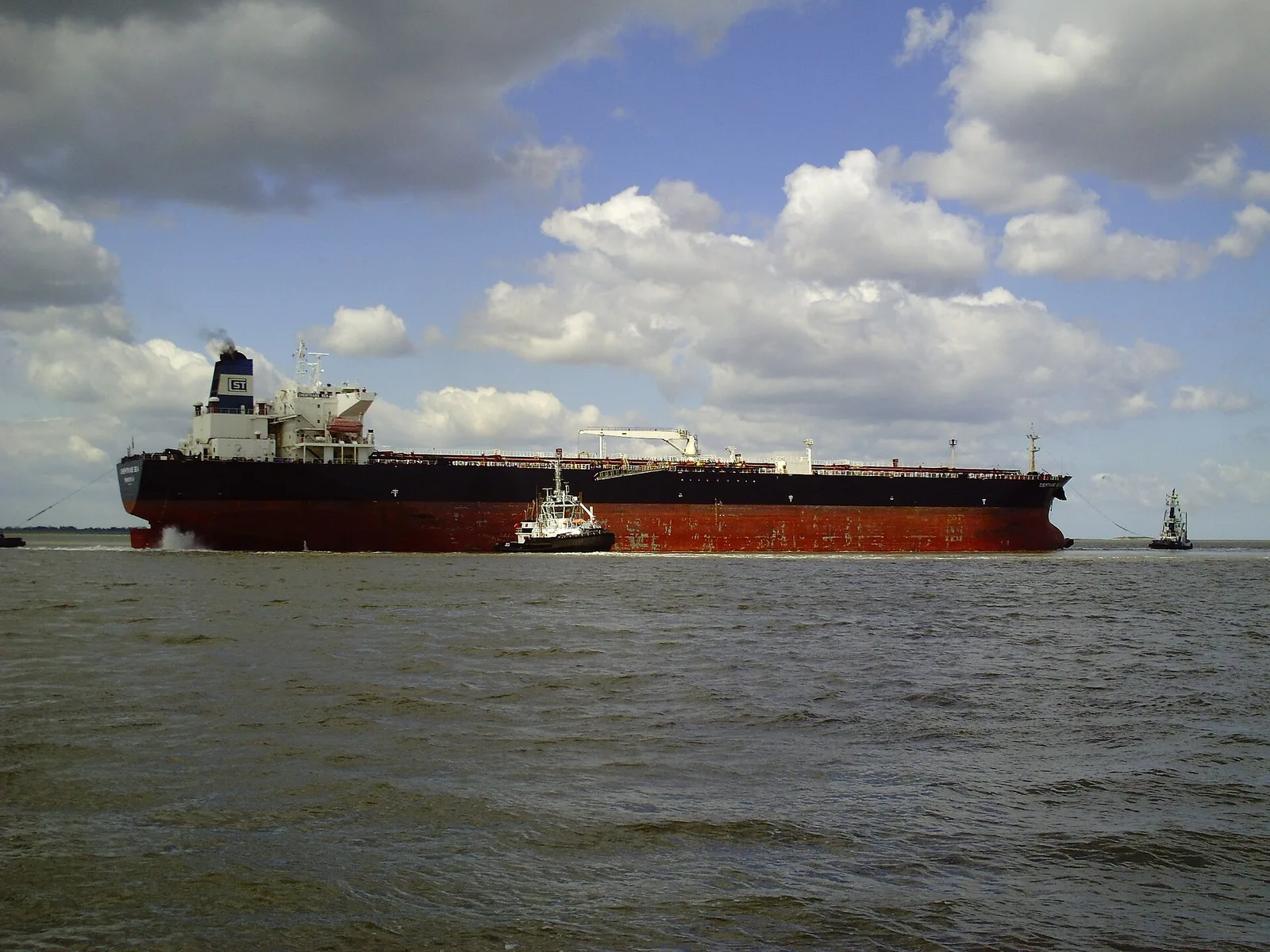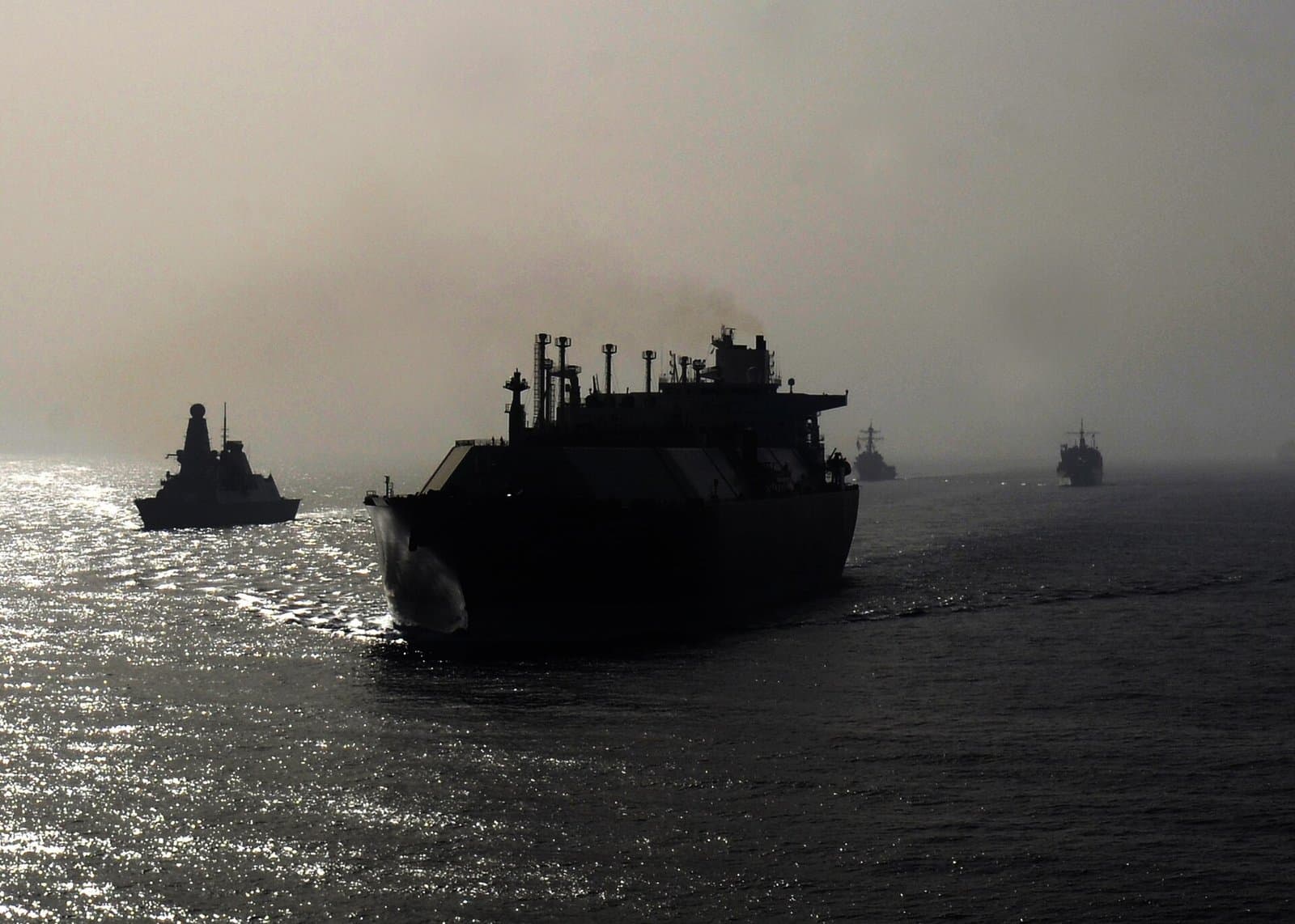
A drone strike set the fully laden Kuwaiti supertanker Al Salmi on fire at about 00:10 local time on March 31 as the ship lay at Anchorage E off Dubai, Al Jazeera reported. The 332-metre very large crude carrier, operated by Kuwait Oil Tanker Company, was struck on its starboard side while loaded with roughly two million barrels of crude, about 1.2 million barrels of Saudi oil and 800,000 barrels of Kuwaiti, and bound for Qingdao. All 24 crew members are safe.
The strike is the first Iranian attack on a laden VLCC inside a United Arab Emirates anchorage, and it extends the war's threat envelope from the transit lanes of the Strait of Hormuz to the anchorages and port approaches where Gulf cargoes are loaded and staged. It came hours after President Trump threatened Iranian energy assets, and it pulls Kuwait and the UAE, two states that had absorbed the crisis from the sidelines, directly into it.
Fire aboard, damage above the waterline
Dubai's maritime firefighting teams extinguished the blaze, and the damage is reported to be above the waterline. Kuwait Petroleum Corporation initially warned that oil could escape the hull; no spill has been confirmed. The corporation went on to describe the strike as a direct Iranian attack, and Kuwait's state news agency KUNA, cited by Reuters, reported that Iran set the tanker ablaze and damaged its hull. Sheikh Khaled Al Sabah, the tanker company's acting chief executive, called the strike an "inhumane act of aggression," The National reported on March 31.
Iran attacked the fully-loaded Al Salmi crude oil tanker at Dubai Port's anchorage, setting it ablaze and damaging its hull, Kuwait's state news agency reported...
@Reuters March 31, 2026
A night of saturation fire
The tanker burned during one of the heaviest barrages of the war so far. The UAE intercepted eight ballistic missiles, four cruise missiles and 36 drones overnight, while Saudi Arabia downed ten drones and eight ballistic missiles. Four people were injured by falling debris in Dubai's Al Badaa district. Nor was the Al Salmi an isolated case at sea: on March 30, two projectiles landed near the containership Express Rome about 22 nautical miles northeast of Ras Tanura. United Kingdom Maritime Trade Operations has logged 24 vessel incident reports since the war began, according to The National.
Anchorages join the risk map
Since Iran imposed its permit and fee regime at Hormuz in late March, hundreds of ships have been trapped inside the Gulf, many of them holding cargo at anchorages much like the one where the Al Salmi was hit. Underwriters had treated the strait transit as the moment of maximum exposure; a strike on a stationary, fully laden VLCC in Emirati waters reprices the waiting itself. A tanker at anchor cannot maneuver and sits at a published position, which is exactly what makes anchorages efficient in peacetime and exposed in war. Traffic and port data compiled by NBC News show how much tonnage is bottled up at Gulf ports and anchorages with nowhere to go.
The Al Salmi concentrates the whole conflict in a single hull: Saudi and Kuwaiti cargo, a Kuwaiti owner, Emirati waters and a Chinese discharge port. An attack on that combination is an attack on the Gulf oil system as a whole rather than on any one flag, a dynamic long framed as the strait's core strategic problem in the Congressional Research Service backgrounder on Hormuz.
The road ahead
The immediate questions are actuarial. War-risk underwriters must decide whether Gulf anchorages now carry transit-grade exposure, and owners with laden tonnage inside the Gulf must decide whether any anchorage within drone range reads as safe. The strait remains effectively closed to most commercial traffic, so the trapped fleet cannot simply leave; it can only redistribute its risk. How Kuwait City and Abu Dhabi answer, and whether the roughly two million barrels aboard the Al Salmi can be transferred or discharged without further incident, will shape the next phase. A war that has mostly punished movement has now punished waiting, and the distinction between a ship in transit and a ship at anchor, the last comfort available to Gulf operators, has gone.

As Editor in Chief of The Maritime, I lead content development, interviews, and digital storytelling across our multimedia maritime platform. With over 10 years of experience in the maritime industry, I create and publish in-depth stories and video features that highlight key players, emerging trends, and operational realities across global shipping. Before launching The Maritime, I worked as a Vessel Operator at Imza Marine A.S., gaining hands-on commercial shipping and voyage operations experience. I also served as Marketing Communications Specialist at Gimas Ship Supply & Services, where I managed corporate communication, digital strategy, and industry outreach for shipowners and maritime clients. I hold a Master’s degree in Maritime Transportation Management from Istanbul Technical University and a Master’s degree in Publishing from Marmara University. My work is driven by the belief that the maritime world deserves strong, informed, and accessible media representation. I am committed to sharing the stories of maritime professionals and contributing to the sector’s visibility, knowledge exchange, and future development.