Daily oil production in Guyana’s offshore Stabroek block has reached 900,000 barrels, after ExxonMobil’s Yellowtail development ramped its One Guyana FPSO to its 250,000 bpd nameplate capacity. The operator confirmed the new peak output in an update that places four FPSOs in simultaneous production and keeps a longer-term goal of about 1.7 million bpd from eight projects on track for the end of the decade.
ExxonMobil’s latest Guyana update and local coverage from outlets such as Stabroek News confirm that the milestone reflects strong performance from Liza Phase 1, Liza Phase 2, Payara, and Yellowtail, along with a continuous drilling and tie-in programme across the block.
Production milestone and how Guyana achieved it
Yellowtail, Guyana’s fourth offshore project, started up in August using the One Guyana FPSO, built by SBM Offshore. The vessel can process about 250,000 barrels of oil per day and store two million barrels of oil, and it reached first oil roughly four months ahead of its original schedule, pushing installed capacity above 900,000 bpd. ExxonMobil’s own release on the startup of Yellowtail details this acceleration and the jump in total capacity, while industry reporting highlights the scale and timing of One Guyana’s arrival and hook-up.
The speed of Guyana’s climb from zero production in 2019 to 900,000 bpd in 2025 rests on three pillars. First, the size and quality of the Stabroek resource base. Early assessments put recoverable resources at more than 8 billion barrels of oil equivalent, and more recent estimates from Guyanese officials and operators now reference over 11 billion barrels. Academic work reviewing Guyana’s resource development, such as Bynoe’s analysis of the Stabroek block’s environmental impact assessment regime, underlines how quickly discoveries stacked up once exploration drilling began in the mid-2010s.
Second, the project model relies on standardized, repeatable FPSO designs. Liza Destiny, Liza Unity, Prosperity and One Guyana all use large FPSOs in the 220,000 to 250,000 bpd class, with similar topsides and mooring concepts. This “copy-and-paste” approach reduces design risk and compresses construction cycles. SBM Offshore and MODEC documentation for the Guyana units show a deliberate use of modular topsides and Fast4Ward-type hulls to speed delivery.
Third, capital decisions were front-loaded. ExxonMobil and its partners Hess and CNOOC have already committed more than 60 billion US dollars across seven sanctioned projects, according to the latest operator update and industry coverage. That investment schedule allowed Uaru, Whiptail, and Hammerhead to move into construction well before Yellowtail hit plateau, keeping the development pipeline unbroken.
Why this milestone matters for shipping and ports
The unique angle here is not just the headline production number but what it does to ships, routes and ports. Guyana is now a structural source of Atlantic Basin crude flows, not an emerging curiosity. In 2024, Guyana exported about 225 crude cargoes, with tanker-tracking data showing average exports of roughly 582,000 bpd, a 54 percent year-on-year increase. Reuters reporting on those flows describes Guyana as Latin America’s fifth-largest crude exporter, with its three main grades gaining rapid acceptance among European refiners that need light sweet barrels after the loss of Russian supply.
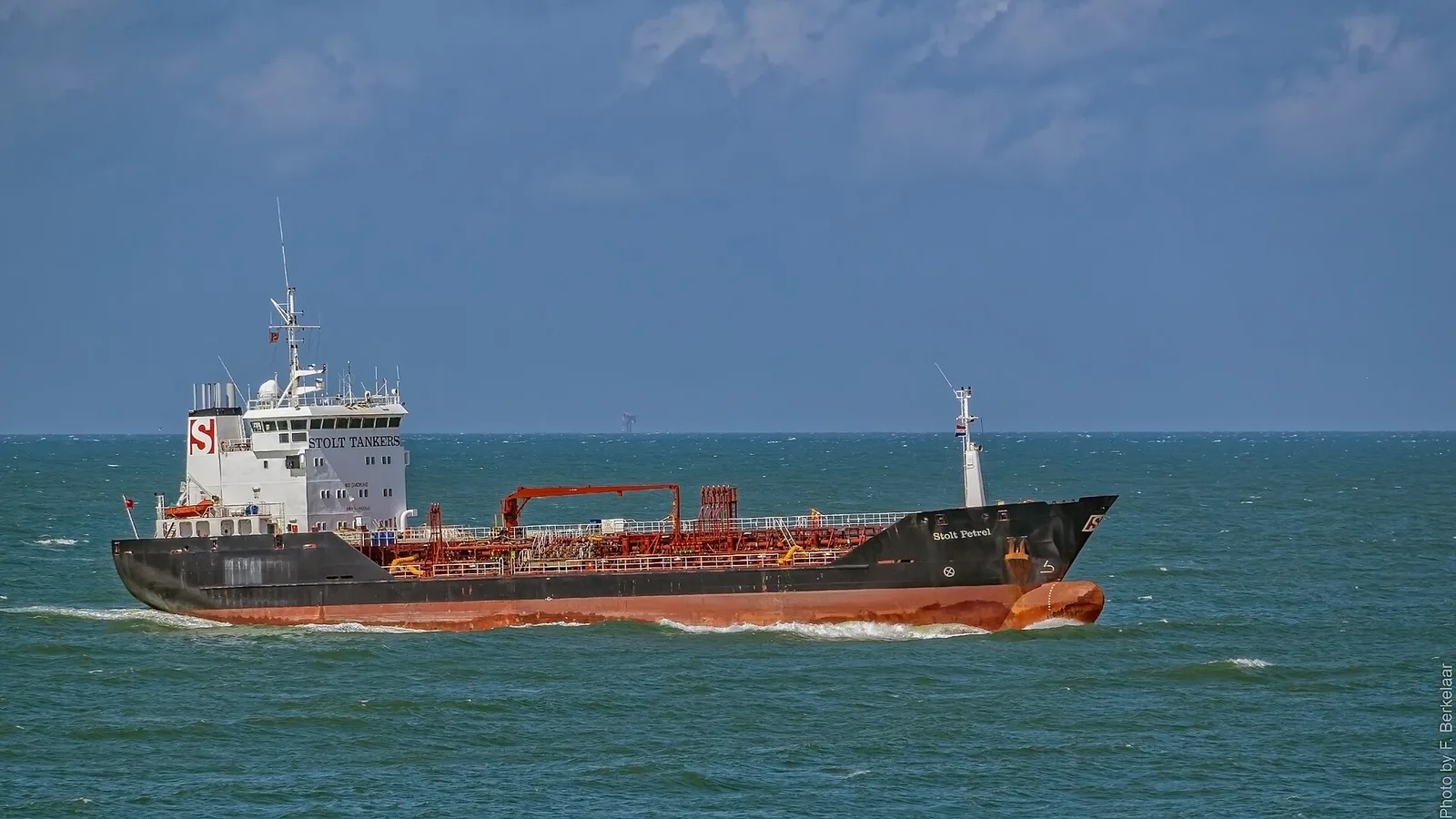
This production step-up rewires tanker deployment. Shuttle tankers and VLCCs now cycle continuously between the FPSOs offshore Guyana and discharge points in Europe, the US Gulf, and other Atlantic markets. Analysts tracking these flows, including Energy News Beat and other shipping data platforms, show Guyana increasingly competing head-to-head with US Gulf Coast and West African grades on similar routes. The onshore port picture is shifting just as sharply. Guyana’s Public Works Minister reported that weekly ship calls at Georgetown jumped from about seven to ten per week before the oil boom to roughly 52 vessel calls per week once offshore operations ramped up, driven by support craft, supply vessels and growing general cargo volumes. That change is documented in local reporting from OilNow and Guyana Times.
To support the offshore fleet and cargo growth, the Guyana Shore Base Inc. (GYSBI) facility on the Demerara River is undergoing multi-phase expansion. An environmental and social assessment commissioned by IDB Invest notes that the enlarged base is expected to cut logistics costs and handle the increased flow of supply vessels linked to the oil fields. This “rigs-to-harbor” chain of effects is the value proposition that makes this development different for a maritime audience. The story links a single upstream milestone directly to concrete shifts in tanker itineraries, OSV demand, port expansion, and shore-based economics.
The macro numbers explain why Guyana is pushing hard. The World Bank’s latest country overview estimates real GDP growth of about 43 to 44 percent in 2024, driven mainly by oil but with non-oil growth still strong. The IMF’s 2025 Article IV consultation notes that higher oil exports more than doubled Guyana’s current account surplus in 2024 to roughly a quarter of GDP, while the National Resource Fund has accumulated several billion dollars in oil revenue. Academic work warns that this pace of expansion brings classic “resource curse” risks. Leonard’s article “Oil Exploration in Guyana and its Impact” in the Ohio Northern University International Law Journal argues that without stronger institutions, oil could undermine rather than support inclusive development.
How the next wave of projects locks in maritime demand
The 900,000 bpd mark is a waypoint, not an endpoint. The fifth and sixth projects, Uaru and Whiptail, are both designed around 250,000 bpd FPSOs and are scheduled to start up in 2026 and 2027. Operator and partner releases from ExxonMobil, Hess and MODEC confirm this scale and timing. Hammerhead, the seventh development, will add about 150,000 bpd when it comes online around 2029, using a MODEC-supplied FPSO under a full EPCI contract.
A proposed eighth project, Longtail, is under regulatory review and targeted for a 2030 startup, with operator filings suggesting a capacity in the same 250,000 bpd class and significant gas output. Reuters’ coverage of the Longtail permit application spells out those numbers and confirms a target of more than 1.7 million bpd once all eight developments are online. For the maritime sector, these decisions lock in decades of work for shuttle tankers, offshore support vessels, subsea contractors, and the ports that feed and serve them. Tanker owners, OSV operators, and logistics firms will see Guyana as a stable, long-duration deepwater province with contracted FPSO and export activity stretching into the 2030s.
Challenges behind the headline number
The rapid climb to 900,000 bpd brings a set of structural risks that sit directly on top of this offshore and maritime build-out. Regulatory and environmental capacity is still catching up with the pace of development. A peer-reviewed paper on Guyana’s environmental impact assessment process for offshore petroleum, published by Bynoe and colleagues, points to gaps in baseline data, public participation and institutional oversight for projects in the Stabroek block.
Territorial risk adds another layer. In March this year, a Venezuelan naval vessel entered waters claimed by Guyana and approached an Exxon-operated production facility, according to detailed accounts from the Center for Strategic and International Studies and wire services. These tensions surround the same FPSOs, shuttle tankers, and offshore supply vessels that now define Guyana’s maritime profile. Any escalation would have immediate implications for insurance costs, routing decisions, and security postures in the shipping community.
Finally, there is the domestic governance challenge. World Bank and IMF reports both emphasize the importance of transparent use of oil revenues and robust fiscal rules. Civil society groups and academic authors, including Leonard and David in the articles already cited, point to the risk that rapid oil growth could entrench inequality or weaken non-oil sectors if institutions lag behind revenues.

As Editor in Chief of The Maritime, I lead content development, interviews, and digital storytelling across our multimedia maritime platform. With over 10 years of experience in the maritime industry, I create and publish in-depth stories and video features that highlight key players, emerging trends, and operational realities across global shipping. Before launching The Maritime, I worked as a Vessel Operator at Imza Marine A.S., gaining hands-on commercial shipping and voyage operations experience. I also served as Marketing Communications Specialist at Gimas Ship Supply & Services, where I managed corporate communication, digital strategy, and industry outreach for shipowners and maritime clients. I hold a Master’s degree in Maritime Transportation Management from Istanbul Technical University and a Master’s degree in Publishing from Marmara University. My work is driven by the belief that the maritime world deserves strong, informed, and accessible media representation. I am committed to sharing the stories of maritime professionals and contributing to the sector’s visibility, knowledge exchange, and future development.