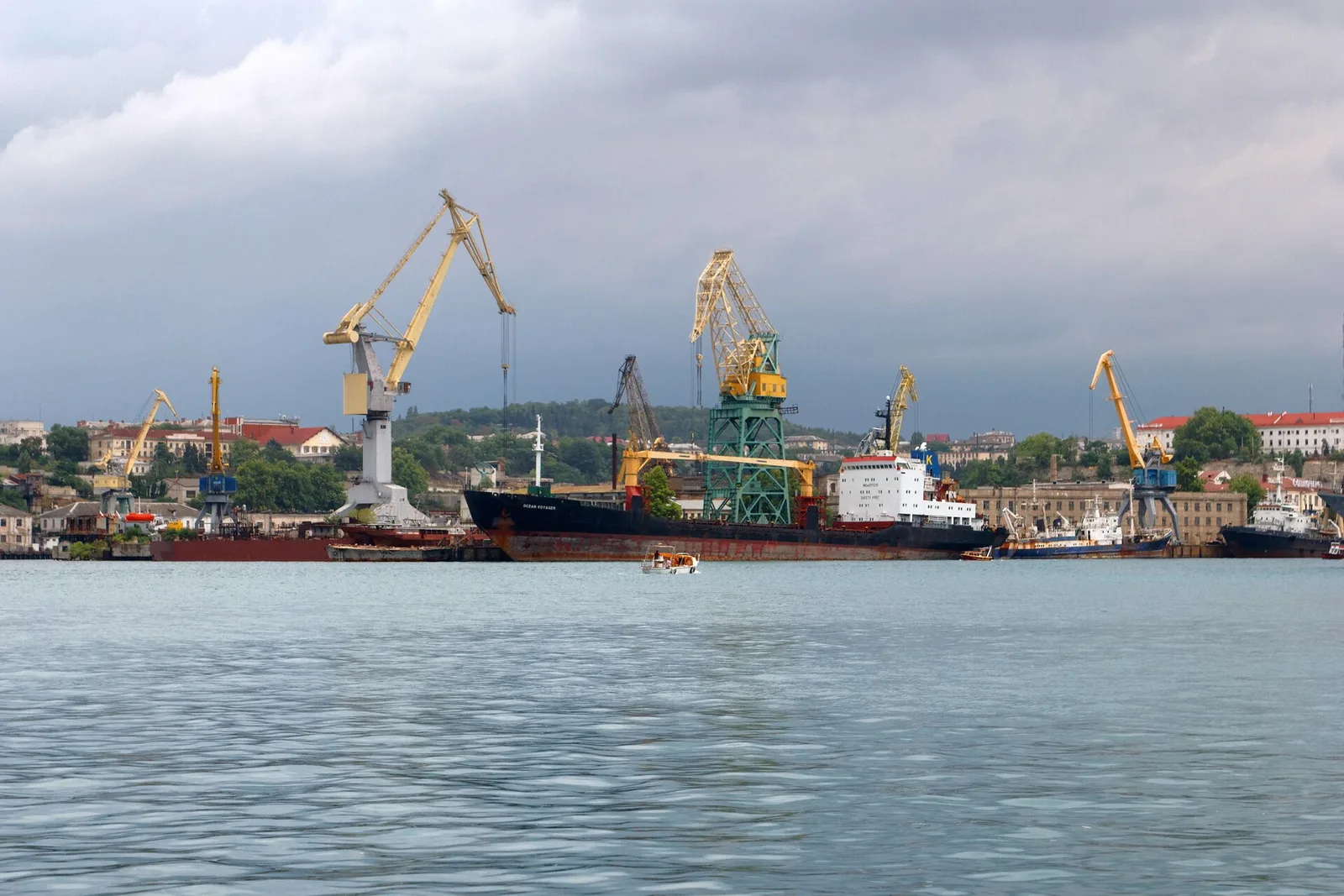
On the evening of 17 October, around 5:30 pm, a fire broke out at the Vijay Marine Shipyard in Loutolim, South Goa. Reports indicate that seven workers were engaged in welding operations on a part of the shipyard facility that had recently been painted.
Two workers were declared dead on arrival at hospital and a third succumbed to his injuries subsequently. The remaining workers were treated for serious burn injuries. Local authorities clarified that the incident was a fire rather than an explosion, though the impact was devastating.
What cause the fire?
Preliminary evidence suggests the blaze was triggered when welding commenced on a freshly painted surface, where solvent vapours or volatile compounds from the paint had not sufficiently dissipated. This created a flammable atmosphere that ignited once sparks or hot metal from the welding process made contact.
Industry-guidance notes that “hot work” (such as welding) must not be performed in, on, or adjacent to compartments where flammable or combustible solvent vapours may exist. For example, the U.S. Occupational Safety & Health Administration (OSHA) states: “Hot work must not be performed … when flammable or combustible cleaning solvents are being used.”
Further, during painting/coating operations the guidance is clear that sufficient exhaust ventilation must be provided to keep the concentration of solvent vapours below 10 % of the lower explosive limit (LEL). The combination of residual paint solvents, welding without adequate ventilation or fire-watch, and the presence of ignition sources appears to have culminated in this tragic fire.
The three workers died from severe burn injuries sustained in the fire. Two died immediately upon arrival at hospital, while the third worker later succumbed to burns and likely inhalation‐related trauma. The sudden ignition of a volatile atmosphere would have given little time for escape or intervention, especially if fire-safety measures (such as fire watch, evacuation route, or immediate suppression) were insufficient or absent. The conflation of spark/arc welding adjacent to freshly applied paint and poor vapour control led to a life‐threatening event.
How such incidents can be prevented
Prevention of similar tragedies demands strict adherence to safety protocols in shipyards and other industrial settings that involve hot work, coatings, and solvent vapours:
- Hazard assessment & hot-work permits
Before permitting welding or cutting, a formal hazard assessment must be conducted to verify that the atmosphere is safe (i.e., vapour concentration below ignition threshold). Hot-work permits must explicitly prohibit welding in areas where flammable vapours may exist. - Ventilation & vapour control
After painting or solvent cleaning, ventilation must continue until the coated areas are gas-free and solvent vapours have dropped to safe levels. OSHA shipyard guidance states that ventilation must be maintained until the space or compartment is “gas-free”. - Isolation of ignition sources
Welding, cutting, grinding and other hot-work must not commence in or near areas where vapours may collect. Any such work must only start after confirmation of safe atmosphere and presence of fire-watch. - Fire-watch & emergency preparedness
At least one dedicated fire-watch should remain during and after hot work, equipped with suitable extinguishing equipment and ready to respond to embers or ignition. Emergency response plans must be in place and known to all parties. - Training, accountability and regulatory oversight
Management must ensure workers are trained to recognise hazards, report unsafe conditions, and halt work if conditions are unsafe. Regulatory bodies must enforce safety standards and investigate non-compliance. Codified standards such as those in 29 CFR 1915 set employer responsibilities.

As Editor in Chief of The Maritime, I lead content development, interviews, and digital storytelling across our multimedia maritime platform. With over 10 years of experience in the maritime industry, I create and publish in-depth stories and video features that highlight key players, emerging trends, and operational realities across global shipping. Before launching The Maritime, I worked as a Vessel Operator at Imza Marine A.S., gaining hands-on commercial shipping and voyage operations experience. I also served as Marketing Communications Specialist at Gimas Ship Supply & Services, where I managed corporate communication, digital strategy, and industry outreach for shipowners and maritime clients. I hold a Master’s degree in Maritime Transportation Management from Istanbul Technical University and a Master’s degree in Publishing from Marmara University. My work is driven by the belief that the maritime world deserves strong, informed, and accessible media representation. I am committed to sharing the stories of maritime professionals and contributing to the sector’s visibility, knowledge exchange, and future development.