From January 21, the European Union prohibits the direct or indirect purchase, import or transfer of refined petroleum products, including diesel, jet fuel, gasoline and fuel oil, obtained in third countries from Russian-origin crude. The measure, analyzed by Baker McKenzie's sanctions practice, rests on Article 3ma of Regulation 833/2014, adopted under the bloc's 18th sanctions package, and comes with parallel bans on related technical assistance, brokering, financing and insurance.
The rule closes the loophole that has defined the post-2022 clean-product market: Russian crude refined in third countries and re-exported to Europe as compliant diesel or jet fuel. From this week that trade is illegal at the EU border, and the burden of proving a cargo clean falls on the importer, and behind the importer on the banks, insurers and charterers in the chain.
What importers must now prove
Under the Commission's guidance, importers must document the origin of the crude behind every product cargo, using certificates of origin and bills of lading, and must be able to rule out ship-to-ship transfers and GNSS or AIS manipulation in the cargo's history. Shipments from Turkey, India and China face enhanced due diligence. A refinery that processes any Russian crude must demonstrate a pause of at least 60 days before it can ship product deemed compliant into the EU.
The regime is not uniform. Annex LI partner countries, among them the United States, United Kingdom, Canada, Norway, Switzerland, Australia, Japan and New Zealand, are exempt from origin documentation, and net crude exporters benefit from a rebuttable presumption that their products were refined from domestic barrels. The paperwork gradient, light for trusted suppliers and heavy for the conduit countries, is the policy working as designed.
The conduits in the crosshairs
India and Turkey are the trade's main arteries, as RFE/RL has detailed. The EU27 imported roughly 400,000 barrels per day of these products from the two countries between June and August 2025, and products refined in the conduit countries accounted for 22 percent of the EU's external middle-distillate imports in 2025. The market saw the deadline coming: Indian diesel flows to Europe had climbed to about 260,000 barrels per day by August 2025 as buyers stockpiled ahead of the ban.
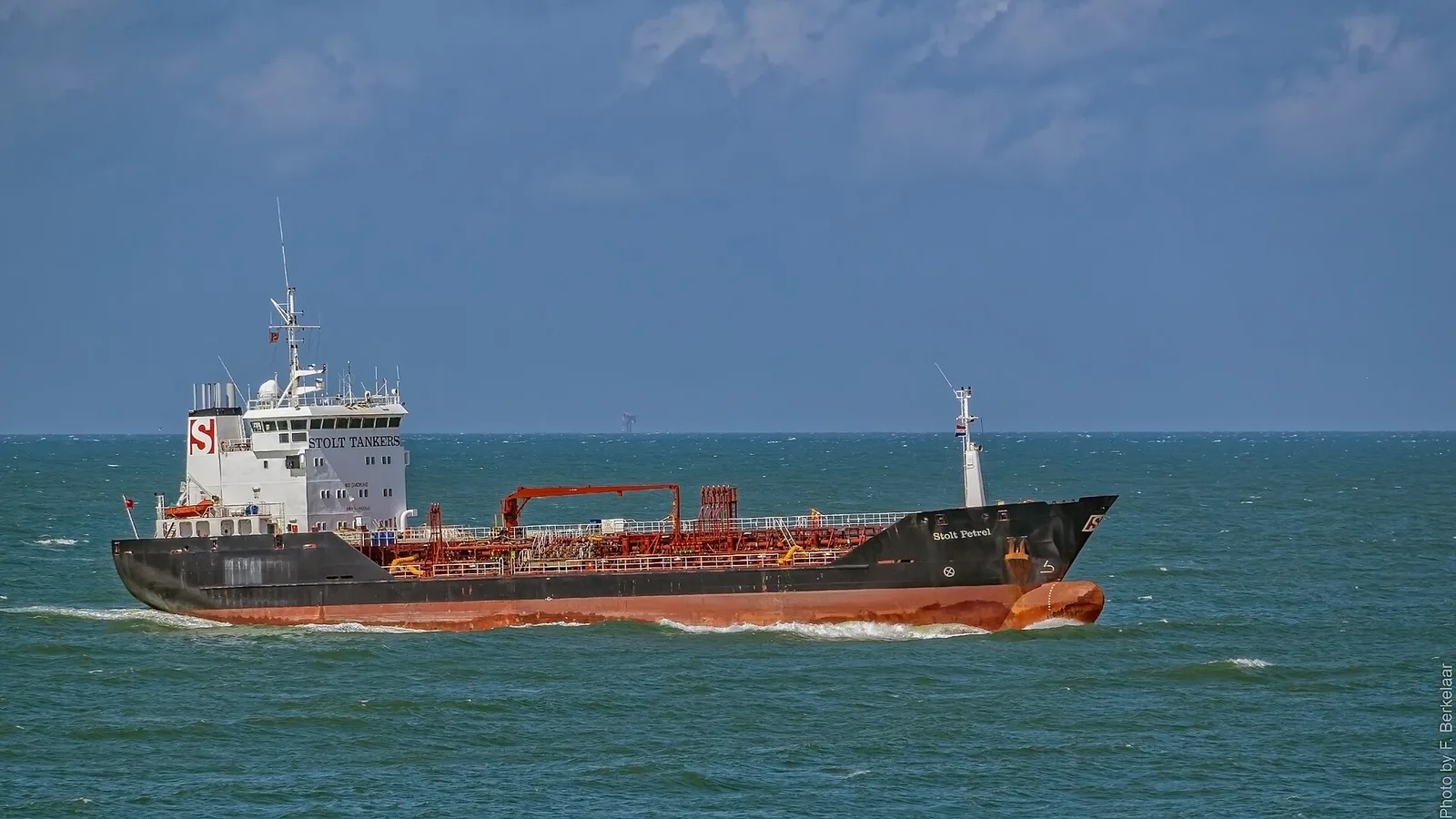
The tonnage exposed is substantial. Windward's exposure analysis of the 18th package identified 329 tankers that carried such exports from India, China and Turkey to the EU during 2025. This is a product-tanker story: the vessels involved averaged 59,163 dwt, classic MR and LR sizes, against 154,420 dwt on the crude side, so the compliance shock lands on the clean fleet and its charterers rather than on VLCC owners.
A chartering problem now
Analysts expect European buyers to pivot toward Gulf and US supply, which means longer hauls and additional tonne-mile demand for the MR and LR classes even as the Turkish and Indian arbitrage closes. More than 45 percent of the tankers in the affected trades are Greek-owned, according to analyst estimates, so the reshuffle runs straight through the mainstream owning community, not the shadow fleet. Crude-origin paperwork now belongs in the fixture recap: charterers will want warranties on feedstock origin, and owners will want clarity on who bears the risk of a cargo refused at an EU discharge port. The Kyiv School of Economics judged that the ban "effectively closes a major gap" in the sanctions architecture.
What to watch
The first test is flow data. If Turkish and Indian product exports to Europe pause rather than reroute in the coming weeks, the ban is biting; if cargoes keep arriving with fresh paperwork, the documentation standards will face immediate scrutiny at EU ports. The second test is over-compliance: banks and insurers tend to retreat further than the law requires, and clean-product financing for anything touching the conduit countries could tighten beyond the regulation's letter. The longer arc is structural. Sanctions enforcement has spent two years learning to track ships; this measure asks it to track molecules through a refinery, a harder problem and a portent of where the pressure on Russian oil revenue goes next. The clean-product map that emerges, longer hauls, cleaner paper and a repriced conduit trade, is unlikely to snap back even if the geopolitics eventually does.
Cover image: Calistemon, CC BY-SA 4.0, via Wikimedia Commons.

As Editor in Chief of The Maritime, I lead content development, interviews, and digital storytelling across our multimedia maritime platform. With over 10 years of experience in the maritime industry, I create and publish in-depth stories and video features that highlight key players, emerging trends, and operational realities across global shipping. Before launching The Maritime, I worked as a Vessel Operator at Imza Marine A.S., gaining hands-on commercial shipping and voyage operations experience. I also served as Marketing Communications Specialist at Gimas Ship Supply & Services, where I managed corporate communication, digital strategy, and industry outreach for shipowners and maritime clients. I hold a Master’s degree in Maritime Transportation Management from Istanbul Technical University and a Master’s degree in Publishing from Marmara University. My work is driven by the belief that the maritime world deserves strong, informed, and accessible media representation. I am committed to sharing the stories of maritime professionals and contributing to the sector’s visibility, knowledge exchange, and future development.