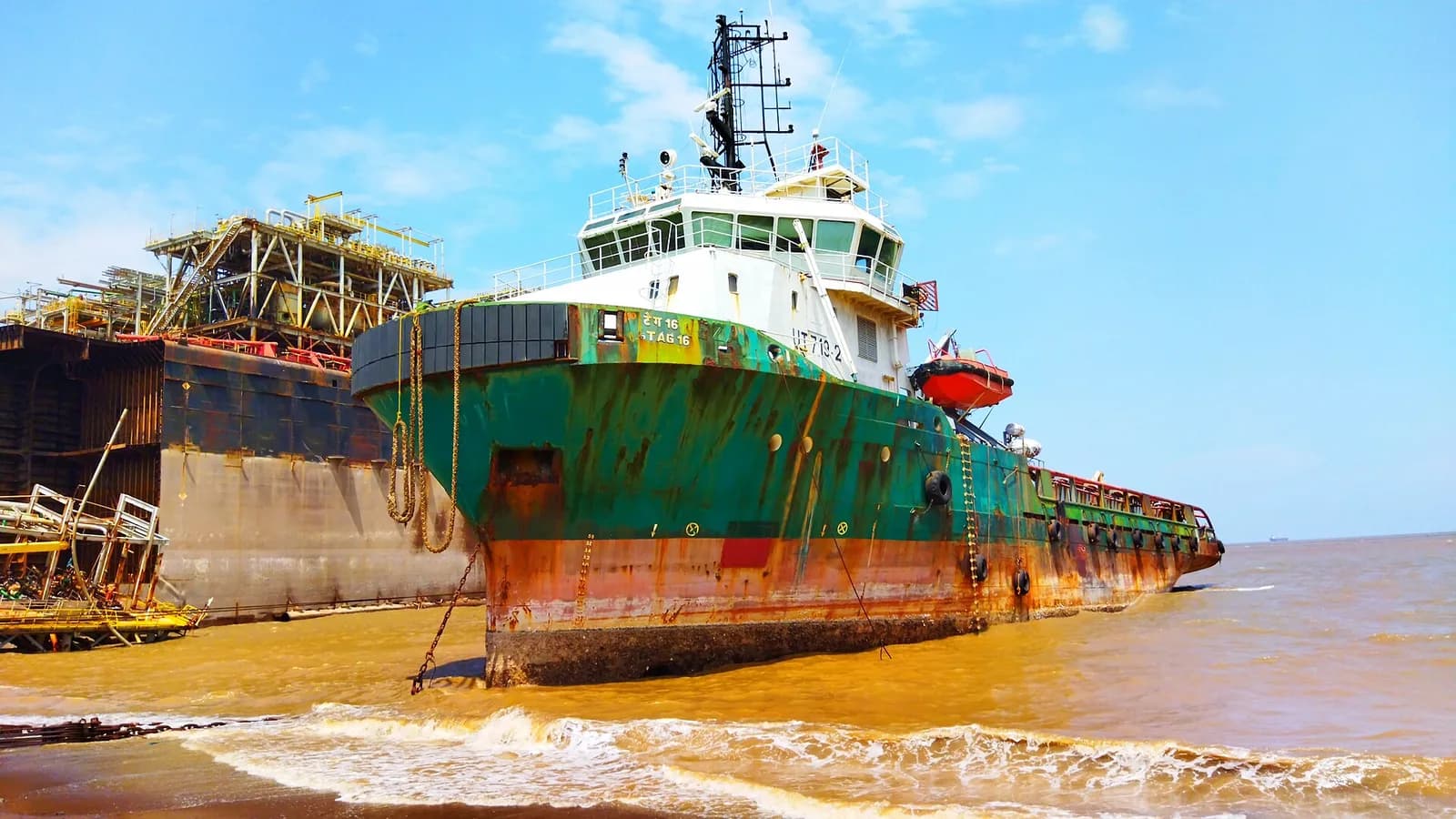
The Hong Kong Convention completed its first year in force on June 26, and Capital Link marked the anniversary with a webinar moderated by SSORP chief executive Anand Hiremath, joined by BIMCO Ship Recycling Alliance chair Nikos Mikelis, Vidhyadhar Rane of the Alang Sossiya association, Leela Group chief executive Vishaal Soni and Evangelos Chatzigiannis of GMS.
The scoreboard after twelve months is a paradox. Compliant recycling capacity has been built out faster than almost anyone forecast, at Alang above all, at precisely the moment when strong freight markets have left the yards with almost nothing to cut. The convention's first year has produced more certified plots than candidate ships.
Capacity raced ahead
At Alang, 115 of 128 plots now meet Hong Kong Convention standards, and a Rs 1,224 crore investment programme aims to double the site's capacity. Pakistan crossed a threshold of its own with its first two HKC-certified yards, Prime Green in January 2026 and Salam's International in March 2026. A year into the regime administered by the IMO, the certified infrastructure the convention was written to encourage largely exists, and it stretches across the same South Asian beaches that drew years of scrutiny from regulators and campaigners alike.
The ships never came
The demand side has gone the other way. NGO Shipbreaking Platform counted 321 vessels dismantled worldwide in 2025, with 85% of the tonnage ending up in South Asia. Bangladesh, still the highest-paying destination, took 57 vessels in the first half of 2025 against 89 in the same period of 2024. The cause is not regulation but the freight cycle: with dry bulk and tanker earnings strong, vintage ships that would normally be heading for the beach keep trading instead. Turkey's Aliaga is largely inactive, weighed down by the lira and regional tensions. The inversion of the usual order is what makes the moment strange: in past downturns the binding constraint was compliant capacity and ships queued for berths, while today the berths, freshly certified and audited, queue for ships.
Prices tell the same story. In early June, Best Oasis figures showed Pakistan as the firmest market at around $460 per light displacement tonne for bulkers, while India's recyclers' association added loading charges and payment terms of one to ten days. "A shortage of available recyclable tonnage has supported local prices," Best Oasis said in its June 6 report. Yards are, in effect, bidding against one another for a shrinking pool of candidates, and the ones that spent heavily on certification are competing hardest, because idle compliant plots still carry the cost of the upgrade that won them their certificates.
A call option on the next downcycle
The regulatory clock runs regardless of the freight cycle. Existing ships must obtain their Inventory of Hazardous Materials certificate at the first harmonised renewal survey after June 26 2025, with a hard deadline of June 26 2030, a mechanism explained in Varuna Sentinels' primer on the convention. That deadline, plus the arithmetic of an ageing world fleet, means the scrapping drought ends eventually. Freight cycles always turn, and when this one does, a backlog of deferred demolition will arrive looking for compliant berths all at once. Today's certified capacity is best read as a call option on that wave: expensive to hold through the drought, decisive when the cycle breaks. The yards that stay solvent until then will own the market the convention created.
What to watch
Near term, the squeeze tightens. The monsoon slows beaching work across South Asia through the summer, and scrap steel prices set the ceiling on what recyclers can pay for tonnage, so any softness in steel bites margins from one side while the tonnage shortage bites from the other. Watch whether Pakistan's certification momentum extends beyond its first two yards, whether Bangladesh rebuilds volume while defending its price lead, and how many of Alang's 115 compliant plots remain economically alive through the drought. The Hong Kong Convention's first year built the industry its drafters imagined. The second will test whether that industry can hold on until the ships finally arrive.
Cover image: Neilsatyam, CC BY-SA 4.0, via Wikimedia Commons.
Cover image: Bambhaniya Ravikumar, CC BY-SA 4.0, via Wikimedia Commons.

As Editor in Chief of The Maritime, I lead content development, interviews, and digital storytelling across our multimedia maritime platform. With over 10 years of experience in the maritime industry, I create and publish in-depth stories and video features that highlight key players, emerging trends, and operational realities across global shipping. Before launching The Maritime, I worked as a Vessel Operator at Imza Marine A.S., gaining hands-on commercial shipping and voyage operations experience. I also served as Marketing Communications Specialist at Gimas Ship Supply & Services, where I managed corporate communication, digital strategy, and industry outreach for shipowners and maritime clients. I hold a Master’s degree in Maritime Transportation Management from Istanbul Technical University and a Master’s degree in Publishing from Marmara University. My work is driven by the belief that the maritime world deserves strong, informed, and accessible media representation. I am committed to sharing the stories of maritime professionals and contributing to the sector’s visibility, knowledge exchange, and future development.