Technical Specifications
Overview
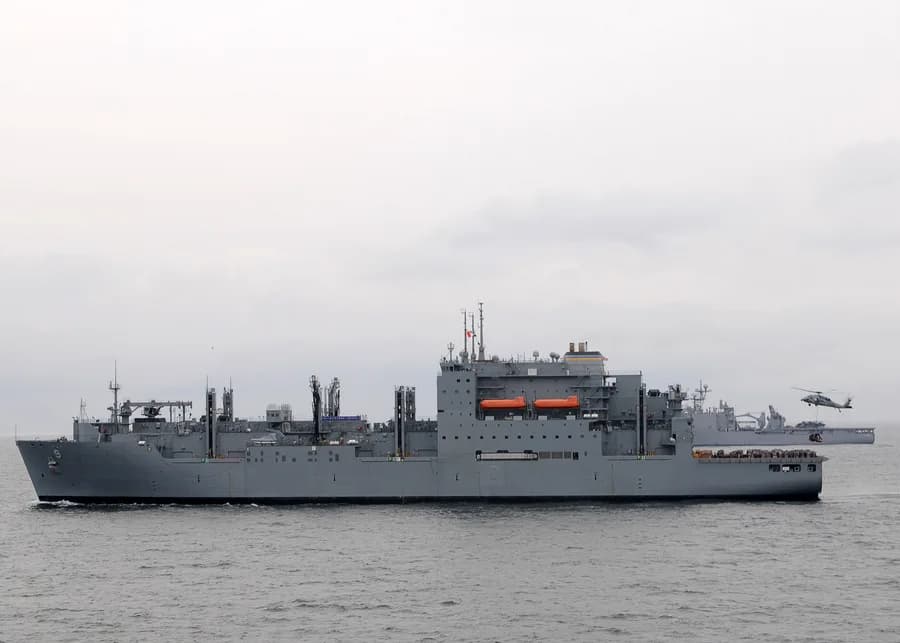
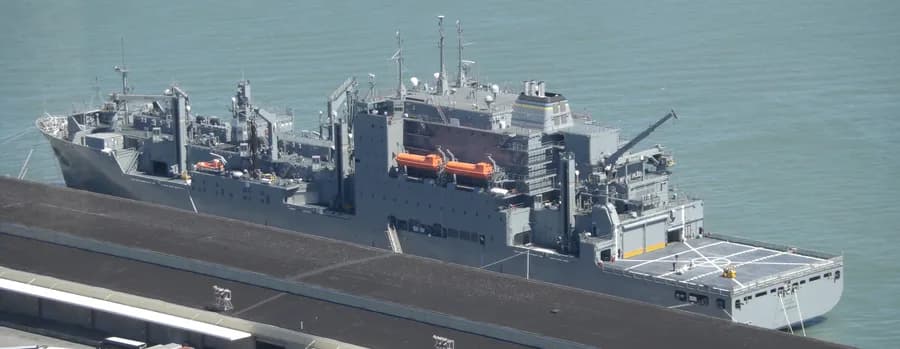
USNS Carl Brashear (T-AKE-7) is a Lewis and Clark-class dry cargo ship of the United States Navy, named in honor of Master Chief Boatswain's Mate Carl Brashear (1931–2006), one of the first African-Americans to become a US Navy Master Diver, despite having lost a leg in the 1966 Palomares incident. The contract to build Carl Brashear was awarded to General Dynamics's subsidiary National Steel and Shipbuilding Company (NASSCO) of San Diego, California, on January 11, 2005. Her keel was laid down on November 2, 2007. The completed ship was delivered to the Navy on March 4, 2009. During Operation Tomodachi, Carl Brashear loaded more than 800 pallets of humanitarian cargo at Sasebo's Juliet pier on March 20 and set sail later that day to join the Navy ships operating off northern Japan. Brashear completed 17 underway replenishment missions, delivering more than 1 million gallons (3,800 m3) of fuel to ships supporting Tomodachi.
Intelligence
Build Series
Sister hulls share a yard, segment, build year (±1) and deadweight (±3%): the cleanest comparables for valuation. Derived in-house from our fleet register; coverage is limited to hulls carrying a recorded builder, so a series may be incomplete.
Composite Risk
Some elevated factors (typically age or a lower-graded flag), but no acute ship-specific flag.
A coverage-weighted blend of the single component we could read for this hull; the weights renormalise over only the components present, so a thin read is never inflated and a hull is never credited a “safe 0” for a signal it has no row for. This headline is flagged low-confidence (a thin or structural-only read) and should not be treated as a verdict. Higher means riskier. Derived in-house from government-open port-State-control, flag, sanctions and our own vessel data; weight it by the coverage above.
Estimated
Other · summer draught 8.59 m · 35 t per cm immersion
Estimate only: modelled from deadweight (deadweight only) using a first-principles hydrostatic model, not measured hydrostatic tables. The design draught it is anchored to is unreliable across the fleet.
Commercial
Price it in the Route Planner between any two commercial ports: ballast and laden legs, two fuels at live bunker prices, port and canal costs, the weather on the way, and the TCE set against the market.
Typical Small handysize speed and burn. Replace them with the ship's own figures in the planner.

Visual Archive
Explore More