Technical Specifications
Overview
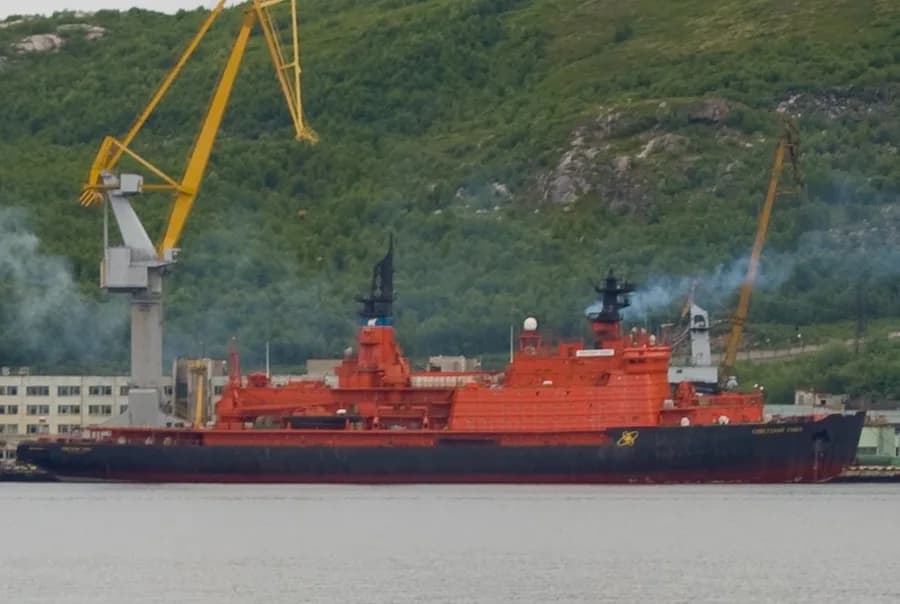
Sovetskiy Soyuz (Russian: Советский Союз, IPA: [sɐˈvʲetskʲɪj sɐˈjus] ; literally: Soviet Union) was the fourth Russian Arktika-class nuclear-powered icebreaker operated by FSUE Atomflot. The ship, which is named after the Soviet Union, was built by Baltic Shipyard in Leningrad and entered service in 1990. She was decommissioned in 2014. In January 2016, it was reported that the icebreaker will be converted into a command ship. However, this was later retracted and the nuclear-powered icebreaker is now slated for scrapping.
Composite Risk
Strong, corroborated adverse evidence: a detention, sanctions exposure or an AIS-gap / behavioural signal.
A coverage-weighted blend of the 3 components we could read for this hull; the weights renormalise over only the components present, so a thin read is never inflated and a hull is never credited a “safe 0” for a signal it has no row for. Higher means riskier. Derived in-house from government-open port-State-control, flag, sanctions and our own vessel data; weight it by the coverage above.
Owned by a sanctioned entity.
Screened against official OFAC, EU, UN and UK designations (In-house derivation over the OpenSanctions publishable subset, GLEIF LEI (CC0) and our own vessel/owner master. No new external source fetched.). An automated exposure signal for review, not a legal determination.
Transparency
Behavioural flags raised against this vessel, each shown with the raw evidence behind it. Derived in-house from data we are entitled to publish; informational, not a determination of wrongdoing.
Ageing vessel under a sanctioned or sanctions-exposed owner
Method: vessel age >= threshold AND owner is a sanctioned entity and/or operates sanctioned tonnage. Source: vessels (year_built/owner) + sanctioned_orgs + sanctioned_vessels.
Signals are a current-state view: a flag clears once the vessel stops tripping its detector. These are screening indicators, not a substitute for your own due diligence.
Commercial
Price it in the Route Planner between any two commercial ports: ballast and laden legs, two fuels at live bunker prices, port and canal costs, the weather on the way, and the TCE set against the market.
Fleet Management

Visual Archive